If you’ve been following all of the rumors and counter-rumors regarding the screens in Apple’s upcoming second-generation iPad, your head may still be spinning from the claims that Apple will either keep the 9.7” display at a lower resolution than any of its computers, or switch to a crazy high-density display better than any HDTV on the market. We still think the latter is far off (2012 at the absolute earliest), but here’s a related question for you: should Apple keep or lose the current iPad’s 4:3 aspect ratio?

The claim that Apple will eventually shift from a 1024×768 screen to a 2048×1536 screen without any intermediate steps is based upon three primary assumptions. First, that the 4:3 aspect ratio of the iPad is truly ideal for Apple’s vision of tablet computing, and second, that once Apple selects a specific aspect ratio, it preserves it so as to minimize disruption to third-party developers. Third, it assumes that Apple would sooner wait to use a custom, 10”-ish screen that most likely does not yet exist (apart from prototypes) than make even one incremental change between now and whenever such a part becomes available. Supporting this theory is the fact that the iPhone and iPod touch kept nearly the same 3:2 aspect ratio, 480×320 screens for three years before moving to a identical 3:2 aspect ratio, 960×640 screen. So while all of the aforementioned assumptions might prove to be true, there are other possibilities, and it’s worth noting that Apple has generally been pragmatic rather than dogmatic when making screen upgrades.


Historically, Apple has changed screen dimensions whenever a new and better part (a) offers what it feels is a valuable improvement to the product’s overall user experience and (b) becomes available in sufficient quantities to meet its needs without compromising its pricing structure.
For instance, Apple didn’t care one bit about making major changes to the iPod nano’s screen and UI, literally once per year after the second-generation model. It did whatever it felt was right for a given year, sometimes in response to consumer demands, other times on its own whims. One year, the screen shot up dramatically in resolution to accommodate video playback. Next year, it flipped on its side and the entire UI did, too. A year later, it grew taller by just enough pixels to make a new video camera easier to use. Then it shrunk and the entire aspect ratio changed for the “multi-touch” display. Of course, the full-sized iPod shifted multiple times to move from black and white to color for photos, then to a better screen for videos, stabilizing only at a point when Apple deemed it “classic” and effectively stopped caring about updating it.
And Macs have shifted from 4:3 to 16:10 or 16:9 aspect ratios over time, with inconsistencies even within product families: the 11” MacBook Air now has a 16:9 screen, while the 13” MacBook Air has a 16:10 screen. Apple’s desire to improve Macs’ suitability for video playback and games was one key motivator behind the move towards wider aspect ratios; the increased availability and popularity of wider screen components was another.

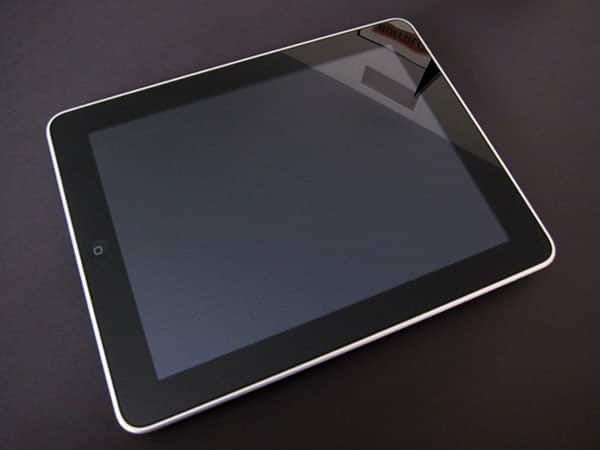
While the first-generation iPad shipped with a 1024×768, 4:3 aspect ratio screen, there’s nothing to say that this particular part was Apple’s top choice, or that its old TV-style aspect ratio is ideal for tablets in general. It’s possible that Apple went with the best part it could when it was designing the iPad back in 2009, and knew there would be issues as a consequence—black bars around upscaled, wider-screen iPhone and iPod touch apps, a need for developers to use a different ratio when making their art native to the iPad, and of course, big black bars when playing back movies and current TV shows. It could stick with these issues going forward, asking consumers and developers to just live with them, or it could address them by widening a new iPad’s screen. It’s perhaps notable that the first-generation iPad has just a little more black border on the top and bottom of the screen than on the left and right, hinting that there’s room for the screen to grow without increasing the device’s footprint; some extra pixels there wouldn’t hurt, and depending on whether Apple went with a 3:2 or 16:9 screen, could bring either all of the iOS devices or iPads and Macs into conformity.
Of course, there’s no evidence that Apple is going to do this, and the argument against it—that Apple will keep the iPad’s aspect ratio the same to keep tablet apps looking the same on all of its iPad-branded devices—is compelling.