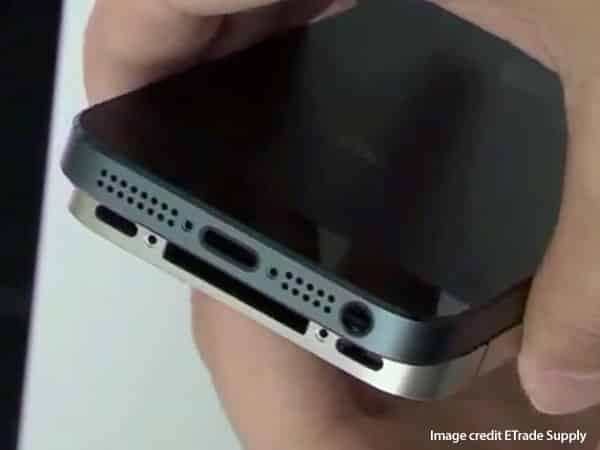
We’ve known for years that the change was coming, but the Internet caught fire yesterday when the latest of many reports “confirmed” that Apple will soon replace its 2003-vintage 30-pin Dock Connector with a smaller, 19-pin variant. With the change imminent, we’d like to take a step back and discuss what it will mean for the Apple accessory market—and why it will likely be less of a problem than some have suggested.

Let’s begin with a single number:
Three. That’s the number of speakers we’ve previewed or reviewed in the last year that are totally dependent on Apple’s older 30-pin connector for audio input. Fewer than 15 (way less than half) of all the speakers we’ve seen during that time period would only offer connectivity to a 30-pin-less iDevice via the aux-in port. In other words, the majority of fairly recent speakers we’ve tested would work just fine with future Apple devices, with or without a 30-pin Dock Connector.
Why? Most major speaker makers have embraced wireless streaming—for several years, iPod, iPhone, and iPad audio systems have been shifting to Bluetooth and AirPlay. As these wireless audio standards have become more popular, the need to physically dock your device has become less of a concern, and arguably a hindrance in some respects. The rise of the iPad has only accelerated this trend, as designing systems to gracefully dock a large tablet has challenged even skilled industrial design teams. It’s far easier to stream an iPad’s music wirelessly to a speaker than leave the iPad sitting in a dock, and users can keep doing other things with the iPad while it’s streaming.
The same is now true with iPhones and iPod touches, too.
Apple has surely noted this move towards wireless streaming, as it’s one of the largest retailers of accessories. It may have tacitly encouraged it: with ever-shrinking designs emerging from Jony Ive’s secret lair, the company knew it would eventually have to shrink the connectors on its devices. When better to do this than when dock reliance is on the decline?
Speakers are far from the only accessory market, but they’re definitely amongst the biggest-ticket items, and thus the ones that will cause the most groans regarding incompatibility. Other big-ticket accessories include car audio systems, video displays/projectors, and computer-like items such as hard drives and keyboards. Some of these accessories began to transition to wireless; others were wireless from the start and barely or never had Dock Connector-based options. Only Apple’s own iPad Keyboard Dock, for instance, uses a 30-pin connector—everything else relies upon Bluetooth wireless.
Before screaming “but the physical connector needs to remain the same for my old accessories!”, recall that Apple hasn’t guaranteed that the 30-pin Dock Connectors of earlier iPod accessories would work fully with iPhones, iPads, or even newer iPods. Thanks to a shift from FireWire charging to USB some years ago, pre-2005 iPods generally can’t charge on modern speakers without the help of somewhat obscure third-party adapters, and there are plenty of old speakers—probably the vast majority of them—that iPads can’t dock with at all, unless you buy an adapter. Those who want to charge and dock new iPhones will face a similar situation when Apple introduces a new connector this fall.
Apple has historically been willing to obsolete past products in the name of innovation, and though users aren’t always happy about the changes, both Apple and its developers have figured out ways to smooth the transitions. Savvy accessory developers have come up with workarounds, such as moving away from fixed-cord accessories to ones that offer USB ports, allowing consumers to plug in any type of charging cable they need. The same goes for auto makers, who often times now rely on either an aux-in port, USB, or—increasingly—Bluetooth for audio connectivity. Some accessories will need to be replaced, while others will only need a new adapter or replacement cable.
Given the huge number of “Made for iPod,” “Made for iPhone,” and “Made for iPad” (MFi) accessories it has sold, charged accessory makers to license, and jacked up consumer prices to support, it’s now Apple’s responsibility to make its new Dock Connector cables and adapters more affordable than their predecessors. The recent $9 MagSafe to MagSafe 2 adapter is an example of how this should work: a sub-$10 price for an adapter is reasonable to keep old accessories running with new devices when a connector shift is necessary. No one wants to pay more than that, and there’s no good reason users should have to do so. Nor should they have to deal with a bulky adapter; CableJive’s DockStubz suggests the maximum size such an adapter should be. Moreover, Apple should not block other companies from making their own custom adapters, as has happened in the past: if a developer wants to create an adapter that is specifically suited to its product or products, Apple shouldn’t stand in the way.
Indeed, Apple’s insistence on MFi licensing has created a reasonable expectation for purchasers of MFi-certified products that their recent purchases will continue to work with the latest iPhones/iPads/iPods.