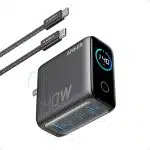

If you’ve ever tried to launch a tech accessory—an iPhone stand, an AirPods case cover, a cable organizer, a camera mount, a clip-on ring light—you already know the awkward gap between “prototype” and “production.”
3D printing is fast and flexible, but parts can look and feel different from the final product (surface finish, strength, snap fits, and heat resistance often don’t match). Full-scale injection molding delivers the real deal, but committing to tens of thousands of units before you’ve proven demand can be a painful (and expensive) bet.

That’s where low-volume injection molding comes in. It lets you manufacture real injection-molded parts—using production-grade plastics—without over-ordering or locking yourself into a risky inventory pile.
What “low volume” actually means (and why it matters)
Low-volume injection molding generally refers to producing a smaller run—often hundreds to a few thousand parts—using tooling approaches that are optimized for speed and cost rather than maximum lifetime. Think of it as “production realism” without “mass production commitment.”
For accessory brands, that matters because your first run is rarely your final design. You’ll discover:
- A latch needs 0.2 mm more clearance
- A snap hook is too stiff in cold weather
- A matte texture looks great but shows fingerprints
- Packaging needs a slightly different fit
- Customers want a different colorway than you expected
Low-volume runs let you learn those lessons with parts that match what you’ll sell.
The real advantage: production-like parts you can actually test
Tech accessories get abused—tossed in bags, left in hot cars, yanked off chargers, dropped on pavement. If your test samples don’t behave like the final material, you’ll miss issues until it’s too late.
With low-volume injection molding, you can test:
- Fit and tolerance (ports, buttons, magnetic alignment, hinge movement)
- Strength and fatigue (clips, snap features, thin walls)
- Finish and feel (textures, gloss, grip, scratch visibility)
- Material performance (heat resistance, UV stability, chemical resistance)
This is especially useful for accessories that need reliable tolerances—like MagSafe-compatible mounts, watch bands with locking geometry, or precision-fit shells.
When low-volume runs make the most sense
Low-volume injection molding is a strong fit if you’re in any of these situations:
- Launching a new product and want a realistic first batch for early customers
- Running a crowdfunding campaign and need dependable fulfillment quantities
- Selling in short cycles (seasonal colors, limited editions, collabs)
- Iterating fast based on customer feedback or retailer requirements
- Managing risk while testing demand across multiple SKUs
In other words: it’s ideal when uncertainty is high—and learning quickly is more valuable than squeezing every cent out of per-part cost.
What to watch for in design (so your first run doesn’t get stuck)
Injection molding rewards smart design. A few details can make the difference between “smooth run” and “endless revisions”:
- Draft angles: even a small draft helps parts release cleanly and reduces cosmetic scuffs.
- Uniform wall thickness: helps avoid sink marks and warping, especially on larger flat surfaces.
- Ribs instead of thick walls: adds stiffness without creating sink issues.
- Snap-fit geometry: test for assembly force and long-term fatigue.
- Gate placement and ejector marks: decide early what surfaces must stay pristine.
A good manufacturing partner will flag risks before the tool is made—because fixing design issues in CAD is cheap; fixing them after cutting steel is not.
Why many brands source small runs from China
For accessory businesses, China can be attractive for low-volume molding because the ecosystem is built around fast iteration, broad material availability, and experienced mold-making. The key is choosing a supplier that’s comfortable with smaller runs and tight timelines—not just huge production orders.
If you’re evaluating options for low volume injection molding in China, focus on practical questions like:
- What tooling approach is used for low-volume runs (and what’s the lead time)?
- What plastics are available that match your real-world needs (heat, drop, texture)?
- What quality checks are standard (dimensional inspection, cosmetic standards, sampling)?
- How are revisions handled if you need to tweak fit or finish after the first batch?
A simple way to decide: low-volume vs full production tooling
Ask yourself two things:
- How confident am I in demand?
- How likely is the design to change after real customer use?
If either answer is “not totally sure,” low-volume injection molding is usually the smarter first step. You’ll get parts that look and perform like real production—without betting the brand on a single big run.