Modern life runs on power. We depend on our smartphones, laptops, and wireless accessories for work, study, and connection. But all too often, batteries run out at the worst possible time. That’s why a power bank has become one of the most important gadgets you can carry every day.
Daily Scenarios Where a Power Bank Saves the Day
Commutes and Public Transport
For many people, daily commutes stretch over an hour or more. Trains and buses are ideal places to watch videos, listen to podcasts, or scroll through social media. The downside? Continuous screen time drains phone batteries quickly. Without a power bank, you risk stepping off the train with only a few percent of charge—hardly enough for calls, navigation, or mobile payments.
Work and Study on the Go
Remote work and digital learning mean more of us carry laptops and tablets everywhere. Whether working from a café, studying in a library, or sitting in an airport lounge, being unplugged can derail productivity. A power bank that supports fast charging for laptops ensures that long work sessions are not cut short.
Social Life and Entertainment
Phones are central to how we socialize—taking photos, sharing updates, or streaming music at a gathering. Few things kill the mood like a dead battery when you’re capturing moments or handling mobile payments with friends. Having a power bank in your bag ensures you never miss out.
Emergencies
Sometimes, a charged phone is more than a convenience; it’s a safety net. Imagine trying to call for help, access digital tickets, or use navigation only to discover your battery is dead. A power bank provides assurance that you can always reach loved ones or emergency services.
What to Look for in a Good Power Bank
Capacity (mAh / Wh)
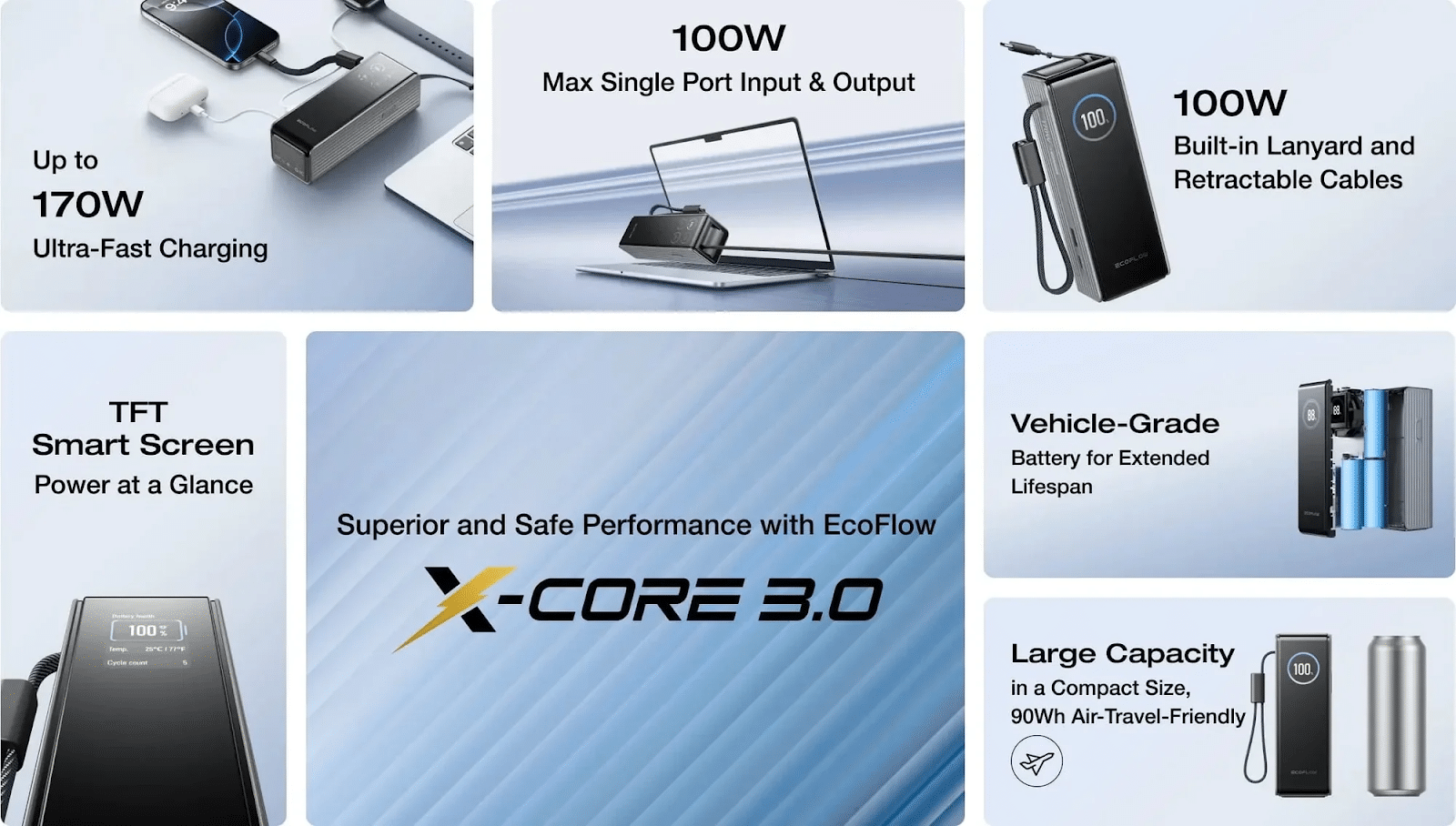
Capacity determines how many times you can recharge your devices. For daily use, a 10,000mAh model is enough to recharge a smartphone two or three times. Heavier users, or those who carry multiple devices, may prefer 20,000–30,000mAh. If you travel by air, keep in mind that most airlines limit carry-on power banks to under 100Wh (roughly 27,000mAh).
Charging Speed
Not all chargers are created equal. Basic units trickle power, while modern models offer 18W, 60W, or even 100W output through USB-C Power Delivery. If you want to charge laptops or gaming devices, high-wattage support is essential. For phones and tablets, fast charging ensures you can boost your battery quickly during short breaks.
Port Options
A good power bank should serve more than one device at once. Multiple USB-C and USB-A ports allow you to charge a laptop, phone, and wireless earbuds simultaneously. Smart distribution technology is an added advantage, ensuring each device receives the right current without overload.
Size and Weight
Daily life often requires compromise between portability and capacity. A slim 10,000mAh unit slides into a pocket easily, while a larger 20,000mAh block might suit those who travel frequently with multiple devices. The right balance depends on whether you prioritize mobility or power reserve.
Safety Features
Reliable power banks come with built-in protections against overcharging, overheating, and short circuits. These safeguards keep both your devices and the power bank itself safe, reducing long-term risks.
How Power Banks Improve Productivity and Peace of Mind
Avoiding Battery Anxiety
“Battery anxiety” is real. Watching your charge tick down while waiting for an important call can be stressful. A power bank removes this worry, allowing you to focus on your tasks.
Staying Connected
From replying to work emails to joining video calls, connectivity is central to modern productivity. A portable power source ensures that you remain online without interruptions, whether in a meeting, on a train, or in transit between destinations.
Making Travel Smoother
Travelers know how difficult it can be to find a working outlet in airports or train stations. With a power bank, you don’t need to hunt for sockets or queue at crowded charging stations. It’s your personal energy source, ready when you need it.
Everyday Security
Even in the city, small outages or unexpected blackouts can happen. Having backup power at hand ensures that critical devices—phones, routers, or even small lights—can keep running until the grid returns.
Lifestyle Integration: Choosing the Right Power Bank for You
Students
Students spend long hours on campus, often jumping between classes, study halls, and activities. A lightweight 10,000–15,000mAh model ensures their phones and tablets stay powered all day without adding too much weight to a backpack.
Working Professionals
For business users, laptops and smartphones are equally critical. A high-wattage power bank with USB-C PD and multiple outputs is ideal. It guarantees that devices used for meetings, presentations, or travel are always ready.
Travelers
People who travel frequently, especially internationally, should choose a high-capacity model that stays within airline limits. Compact designs with built-in cables or foldable plugs add convenience when moving quickly through airports.
Tech Enthusiasts
Those who carry multiple gadgets—wireless earbuds, smartwatches, gaming consoles—benefit from feature-rich power banks. Look for models with wireless charging pads, app integration, or LCD displays for precise monitoring.
Conclusion
In today’s connected world, a power bank is more than just a backup battery—it’s a daily essential. It keeps your devices running, prevents interruptions, and provides peace of mind in emergencies. Choosing the right one means you’re always ready, no matter where life takes you.