Why certain electric bikes feel as if you are merely continuing your peddling, whereas others feel as if they are the thinking caps, this is sometimes due to a very small yet very important part, which is the sensor. With regards to eBikes, the kind of sensor your bike is fitted with can drastically alter your riding experience, from a clunky and robotic ride to a smooth and natural ride.
The market is controlled by two major types: torque sensors and cadence sensors, and it is important to know the difference between them to find eBikes with the right combination of features and ride that is right for you. Let us have a detailed discussion on both sensor types so bikers dont regret their decision.
Understanding Cadence Sensors: The On/Off Approach
Cadence sensors use a simple on-off system that detects pedaling motion rather than pressure. When you pedal, the motor activates; when you stop, assistance cuts off, offering predictable support for relaxed, everyday electric bike riding.
How Cadence Sensors Work
Cadence sensors operate on a relatively straightforward principle: they detect whether you’re pedaling or not. Mounted near the crank or bottom bracket, these sensors use magnets to register pedal rotation. The moment you start pedaling, the sensor triggers the motor to assist. Stop pedaling, and the motor cuts off.
The Riding Experience with Cadence Sensors
What’s it like to ride with a cadence sensor? Imagine always having a gentle push from behind, ready whenever you need it. The help comes on fast and stays steady, which is great in some situations. If you’re looking for a no-fuss, reliable boost—maybe you just want to cruise to work without sweating- this setup makes things easy.
Advantages and Limitations
- The primary advantage of cadence sensors is their affordability and simplicity.
- They’re less expensive to make and maintain, so eBikes with them usually cost less.
- If you’re not bothered about squeezing out every bit of efficiency or want a bike that’s easy to use, this kind of sensor really fits the bill.
Still, there are some downsides:
- Battery life isn’t great, since the motor gives you the same push no matter how hard you’re pedaling.
- You might end up draining the battery faster, especially if you forget to lower the assist on easy stretches.
- And the ride can feel disconnected—you don’t get that sense of your effort matching the help you get.
Exploring Torque Sensors: The Intelligent Response
Torque sensors measure how hard you pedal and adjust the motor’s power accordingly. This intelligent system provides smoother, more natural assistance, giving riders precise control and a responsive, effortless cycling experience.
The Technology Behind Torque Sensors
Torque sensors are a more advanced technology of eBike support. Instead of just telling you whether you are pedaling or not, they use torque sensors to tell you how hard you are pushing on the pedals. They would normally operate on strain gauges or some other technology that is sensitive to pressure and is built into the bottom bracket, crank arm, or rear axle.
The Premium Riding Experience
Riding an eBike with a torque sensor is usually referred to as a superpowered regular bike. The aid does not seem like it is pushing you along, but it is a kind of extension of your effort. This makes it have a very smooth and natural ride that is valued especially by experienced bicycle users.
Performance and Efficiency Benefits
In addition to the excellent feel, the torque sensors have a tangible performance benefit.
- They use much more efficient battery consumption since they will only assist as much as is necessary, depending on how hard you really work.
- This normally corresponds to a 20-30 percent increase in range in comparison with the cadence sensor bikes on similar conditions.
- Torque sensors also encourage healthier lifestyles and outdoor riding.
- Due to the effort required to attain more aid, you tend to be more involved in the physical experience of riding a bike.
A few cons are:
- The primary drawback is cost. Torque sensors are harder and more costly to produce and can generally increase the price of an eBike by a few hundred dollars.
- They are also more delicate and might need professional calibration or servicing in the event of problems.
- Nevertheless, to a large number of riders,s the additional ride quality and efficiency make this investment worth considering.
Heybike’s Approach: Combining Technology and Value
Heybike combines advanced technology with affordability, offering electric bikes that are efficient, reliable, and user-friendly. Their approach ensures riders get high-quality performance of the best ebike for commuting and smart features without compromising value or accessibility.
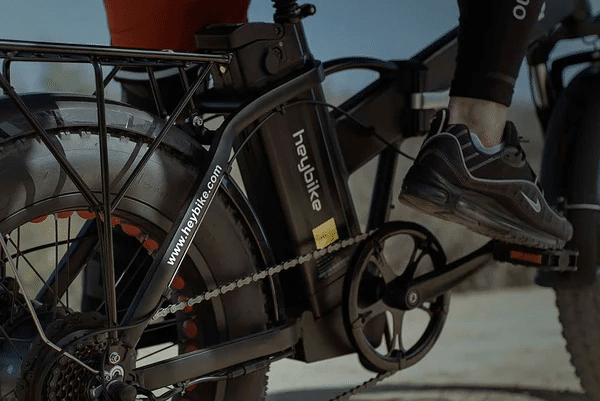
Torque Sensor Integration in Heybike Models
-
Sensor in Alpha ebike
The ALPHA pairs its torque sensor with a strong mid-drive motor, so every ride feels natural and easy. Whether you’re weaving through city streets or hitting some off-road trails, the bike reacts to your pedaling in real time. You stay in control, and the ride feels efficient. Five levels of pedal assist let you dial in just how much boost you want, and the torque sensor always keeps it feeling natural—never jerky or overdone.
-
Sensor in Helio F ebike
Then there’s the Helio F, which uses its torque sensor to turn a simple folding commuter into something way more refined. Even though the design is compact and light, you still get a ride that feels much more powerful and premium than you’d expect from its 250W motor. The torque sensor knows exactly when to give you a little extra help, so the assist always matches your effort.
Final Talk
The sensor on your eBike might be small, but it makes a huge difference in how the bike feels. Cadence sensors keep things easy and affordable, giving you steady power that’s great for simple commutes. Torque sensors, on the other hand, offer a smoother, more connected ride and better efficiency. They cost a little more, but for riders who care about those details, they’re worth every penny.