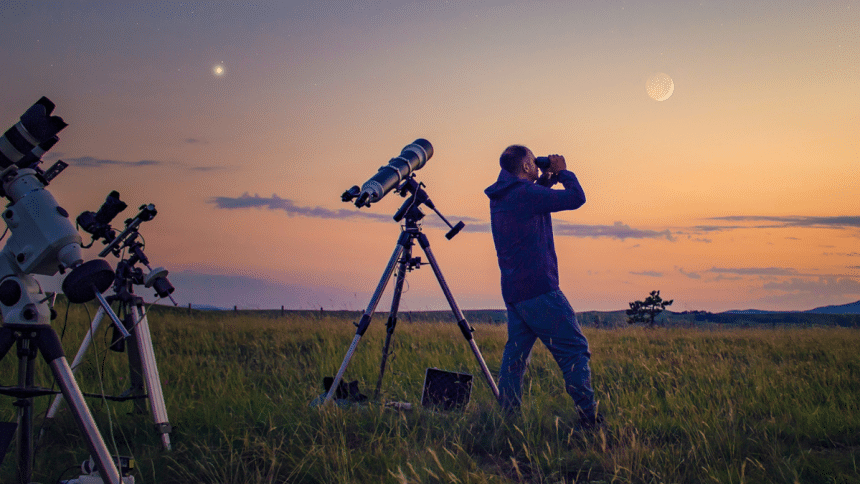
Astrophotography has exploded in popularity over the past decade, allowing amateur astronomers and photography enthusiasts alike to capture distant galaxies, glowing nebulae, and star-filled landscapes from their own backyards. Among the different telescope designs available, refractor telescopes have quietly—but consistently—maintained a reputation as a top-tier choice for astrophotographers.
But what makes refractors so well-suited for astrophotography? From their optical performance to ease of use, this article explores the characteristics that set refractor telescopes apart.
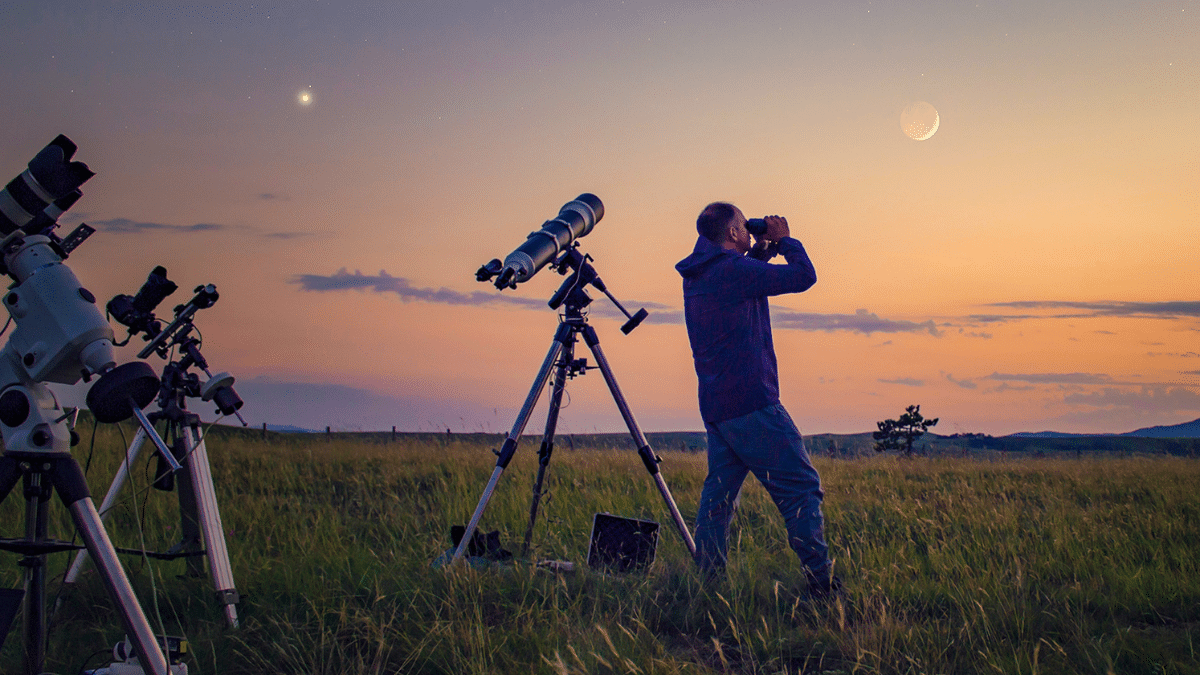
What Is a Refractor Telescope?
Refractor telescopes use a series of lenses to bend (or “refract”) light and focus it into an image. This design differs from reflectors, which use mirrors, and compound telescopes like Schmidt-Cassegrains that use a combination of both.
The two main types of refractor telescopes relevant to astrophotography are:
- Achromatic refractors, which use two lenses to reduce chromatic aberration but may still exhibit some color fringing around bright stars.
- Apochromatic refractors (APOs), which use advanced glass types (such as FPL-53 or FCD100) and more complex lens groupings to virtually eliminate chromatic aberration. These are the gold standard for serious astrophotographers.
Some high-end telescopes in the UK also use Petzval designs, which add additional elements to produce flat imaging fields without needing an external field flattener—a significant benefit for wide-field imaging.
Why Refractors Excel in Astrophotography
While other telescope designs have their strengths, refractors bring a unique blend of optical precision, mechanical simplicity, and imaging quality that makes them a natural choice for astrophotography. Here’s why:
1. Superior Optical Quality
Refractors offer excellent image contrast and sharpness. Because they don’t have a secondary mirror in the light path (unlike reflectors), there’s no central obstruction to scatter light or reduce contrast. This makes refractors especially good at resolving fine details in stars, star clusters, and lunar features.
Additionally, refractors have sealed optical tubes, which means less dust and fewer air currents inside the telescope—both of which can degrade image quality. Their optics tend to stay in alignment permanently, requiring far less maintenance than reflectors.
2. Minimal Chromatic Aberration (in APOs)
One of the key drawbacks of simpler refractors is chromatic aberration—the purple or blue fringing that can appear around bright stars. This happens when different wavelengths of light fail to converge at the same point.
Apochromatic refractors solve this issue by using exotic glass and multiple lens elements to bring three wavelengths (typically red, green, and blue) into focus simultaneously. The result is a sharp, color-accurate image without the need for post-processing corrections. For astrophotographers who value clean, true-to-life star colors, this makes APO refractors highly desirable.
3. Flat Imaging Fields
Astrophotographers using large sensors quickly learn that telescopes often produce images that are sharp in the center but blurry at the edges due to field curvature. To fix this, many telescopes require field flatteners—optical accessories that must be carefully spaced.
Some refractor designs, especially Petzval or quintuplet configurations, build this correction directly into the telescope’s optics. This means users get a flat, sharp image across the entire sensor without worrying about backfocus distance or alignment issues. William Optics Telescopes, for example, have become especially popular for offering high-quality apochromatic refractors with built-in field flatteners, making them a top choice among both beginner and experienced astrophotographers.
4. Ease of Use and Portability
Unlike reflector or compound telescopes, refractors are mechanically simple. There are no mirrors to align (collimate), and most models are relatively lightweight and compact. This makes them ideal for beginners and astrophotographers who need a portable setup for travel or remote imaging.
Because of their lower weight, refractors also place less demand on mounts. A small apochromatic refractor can be used effectively on a lightweight equatorial mount or even a modern harmonic drive mount, without sacrificing tracking precision. This makes refractors a common component in highly mobile astrophotography rigs.
Refractors vs. Other Telescope Types
Each telescope design has its place, but when it comes to deep-sky imaging, refractors offer a combination of strengths that’s hard to match.
- Reflectors (e.g., Newtonians) provide large apertures at a lower cost but require frequent collimation and often suffer from coma—a distortion that causes stars near the edges to look like comets.
- Schmidt-Cassegrains (SCTs) offer long focal lengths ideal for imaging small, distant targets like planetary nebulae or galaxies. However, they tend to be heavier, more expensive, and require longer exposure times due to their slower focal ratios.
Refractors may have smaller apertures than these alternatives, but their superior image quality, simplicity, and minimal maintenance make them a favorite, especially for wide-field imaging.
Ideal Use Cases for Refractor Telescopes
Refractors are exceptionally well-suited for several types of astrophotography:
- Wide-field deep-sky imaging of large targets like the Andromeda Galaxy, Orion Nebula, or Milky Way star fields.
- Use with DSLRs, mirrorless cameras, or cooled astronomy cameras.
- Building lightweight, travel-friendly imaging setups for dark-sky expeditions or mobile observatories.
- Ideal for beginners, thanks to their plug-and-play nature and minimal maintenance requirements.
Despite their smaller apertures, refractors punch well above their weight when paired with a sensitive camera and tracking mount. Many award-winning images in the astrophotography community are captured with 60–100mm apochromatic refractors.
Final Thoughts
While every telescope design has its strengths and compromises, refractor telescopes offer an elegant, reliable, and high-performance solution for astrophotography. Their combination of color correction, sharpness, flat field imaging, and ease of use makes them a natural first choice for beginners and a trusted tool for experienced imagers.
Whether you’re capturing your first star trails or compiling a multi-hour exposure of a deep-sky target, refractors provide the optical quality and simplicity needed to focus on what matters most: the sky itself.