
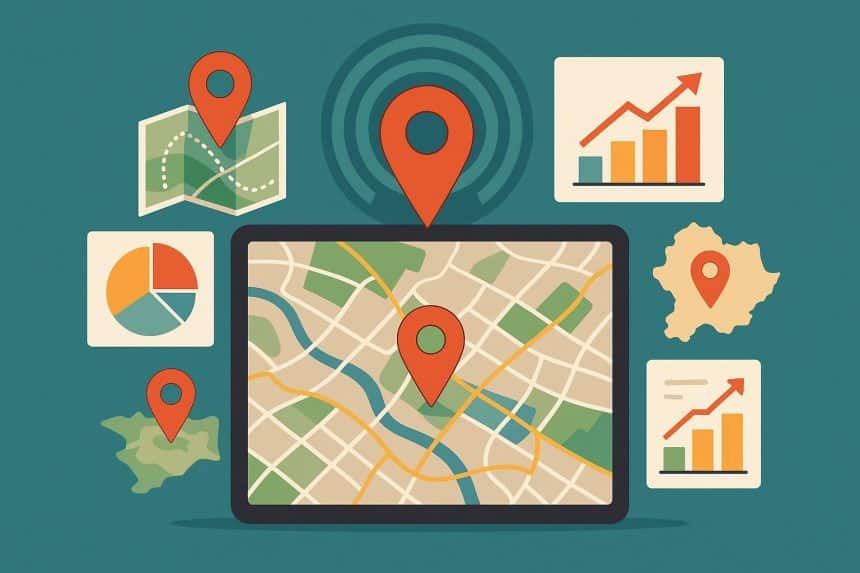
In 2025, customers expect brands to know where they are and respond accordingly. Whether you are a growth manager scaling paid media budgets or a business owner trying to out-rank competitors in a single ZIP code, regional marketing powered by geolocation data converts better because it removes friction language barriers, irrelevant offers, and mismatched logistics. This article walks through battle-tested tactics for turning raw latitude-and-longitude signals into revenue without drowning you in jargon or hype.
One of the easiest ways to get started is to bolt a lightweight IP-lookup service like GeoPlugin into your site; in seconds, you’ll see a visitor’s city, currency, and time zone and can route them to the offer page that feels local. By auto-localizing prices and shipping options, marketers routinely shave a full step off the purchase journey, boosting conversion rates by double digits in A/B tests we have run for retail and SaaS brands over the past twelve months.
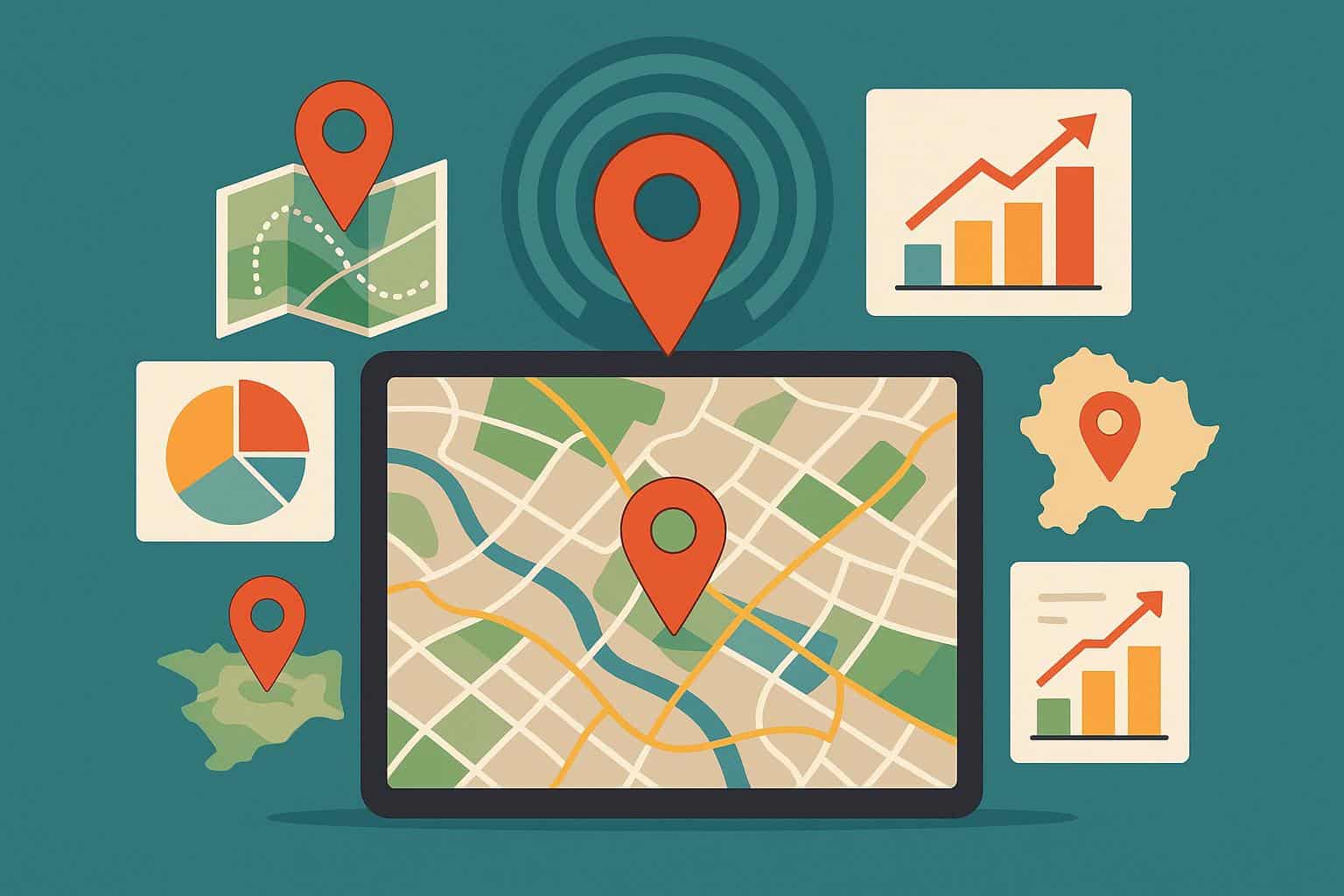
Privacy attitudes have tightened since the rollout of GDPR and the 2024 California Privacy Amendments, yet consent-friendly geodata is still abundant. First-party analytics suites, opt-in mobile apps, and anonymized carrier feeds allow you to respect user choice while collecting enough signal to run precise campaigns. The key is to limit resolution: city-level data usually suffices for segmentation, while ZIP+4 or exact GPS coordinates belong behind an explicit opt-in.
Why Geolocation Matters to Regional Marketing
Location does more than tell you where a shopper is it hints at climate, cultural norms, average income, and even local regulations. For example, snowboard ads resonate in Denver in December but flop in Miami. Ryanair ran a campaign promoting summer holidays under the slogan “Jab & Go,” implicitly linking receipt of the COVID‑19 vaccine (“jab”) to being able to travel freely by summer 2021. The campaign drew 2,370 complaints to the UK advertising regulator, making it “the third most‑complained about UK advert ever.
By mapping product demand to micro-regions and timing, you avoid wasted impressions and increase ROAS. Importantly, geodata lets you speak the right dialect: “sneakers” in New York, “trainers” in London.
Strategy 1: Dynamic Content Personalization
Static landing pages treat every visitor alike, forcing users to sift through irrelevant details. Dynamic content flips that script by assembling headlines, hero images, and CTAs in real time based on the viewer’s location segment.
Begin with a modular page template. Feed your CMS a geolocation payload, country, region, or DMA, and let a rules engine swap pieces. If you can’t rewrite your entire stack, layer JavaScript widgets that inject localized snippets or price tables on top of the existing page.
When rolling out personalization, start with three to five regions that matter most to revenue, not every pin on the globe. Over-segmentation strains creative resources and makes statistical significance harder to achieve in tests. Scale once you have proof.
Strategy 2: Smart Bid Modifiers in Ad Platforms
Google Ads, Meta, TikTok, and Amazon all support geo-based bid adjustments. Yet many teams set a single modifier per country and call it a day. A smarter approach slices campaigns by climate zone, population density, and local purchasing power.
Here’s a playbook that consistently outperforms the default:
- Export last quarter’s sales by ZIP or postal code.
- Overlay that data on a heat map to spot micro-clusters of high LTV.
- Create radius-based or custom-shape geotargets around those clusters.
- Apply a +15% bid for high-value pockets, a ‑10% bid for low-value regions, and leave the rest at baseline.
Run the test for two weeks, then refine modifiers based on CPA and margin, not just click volume.
Strategy 3: Geo-Fenced Push and SMS
While paid media captures attention, push notifications and SMS close the loop when a prospect is physically close to purchase. A restaurant chain in Chicago segmented its loyalty-app users by neighborhood. Whenever a user entered a half-mile radius of one of its outlets, the system fired a push with a time-sensitive lunch combo. Redemption rates hit 11%, triple the chain’s email average.
To replicate the win, anchor your fences to a clear intent trigger: proximity to a storefront, attendance at a trade show, or even local weather events. Keep messages concise under 160 characters for SMS and pair them with a countdown timer to create urgency. Always include an opt-out link and respect local quiet hours regulations to avoid fines.
Measuring Success with Location KPIs
Such conventional indicators as CPA and ROAS remain important, but geolocation opens more detailed diagnostics:
- Geo-incremental lift. Compare matched markets with the same amount of spend but location-personalization.
- Footfall attribution. Test whether mobile beacon data can be used to determine whether digital impressions are converted to physical visits.
- Region-weighted LTV. Monitor the contribution of various locales towards repeat purchases and not only first purchases.
Connect these KPIs to a dashboard that is alive. Our team favors the method of feeding BigQuery with daily ad platform, point-of-sale system exports, and visualizing in Looker. Such an arrangement exposes areas of softness, e.g., high traffic, low LTV in suburban rings, before it turns out to be a costly leak.
Conclusion: Turn Coordinates into Competitive Edge
Geolocation data is not a glittering gadget, but an established, ROI-driven collection of tools that are prepared for marketers who demand relevance on a large scale. By segmenting the audiences cleverly, dynamically personalizing content, and bidding in the deepest pools of profits, you convert more and spend less. Include geo-fenced retention nudges and punitive measurement, and you have a closed-loop mechanism, which becomes smarter as it continues to operate. The outcome is a brand that is local everywhere that it appears and customers who will reciprocate the familiarity with loyalty and lifetime value.