Crypto markets remain volatile in 2025, but one trend has become clear: more people are using mobile apps to swap tokens, not just trade on big exchanges. According to TokenInsight’s Q2 2025 report, the top 10 crypto exchanges recorded a combined trading volume of $21.6 trillion, down 6.2% from the prior quarter as market activity cooled.
At the same time, non-custodial “instant swap” platforms are carving out their niche. These apps prioritize speed, privacy, and broad token support, making them an increasingly attractive option for both casual holders and active DeFi users. Below, we’ll walk through how these swap apps work on iPhone, what to watch out for, and which ones are most compelling in 2025.
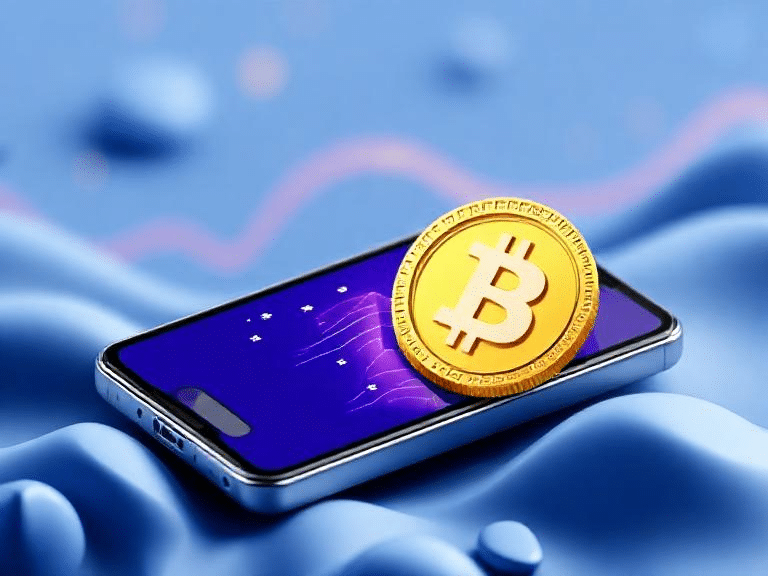
Market Context
Crypto swap apps have become increasingly relevant as the market evolves. Several factors contribute to their growing importance:
- Shifting Trading Patterns
Although the total cryptocurrency market cap rebounded to around $3.46 trillion in Q2 2025, trading volume on major centralized exchanges has softened. Reports show that average daily spot volume declined from approximately $51 billion in Q1 to $40 billion in Q2, indicating that many users are seeking alternatives to traditional exchange trading. - Cross-Chain Demand
As DeFi platforms and multi-chain networks expand, users increasingly need to move assets across different blockchains. Swap apps provide a convenient solution by aggregating liquidity from multiple sources and facilitating cross-chain transactions without complex manual steps. - Self-Custody and Security Trends
Concerns about centralized custody — whether from hacks, regulatory issues, or platform failures — have encouraged users to adopt non-custodial solutions. Swap apps allow users to maintain control over their private keys while still accessing convenient swapping features. - Convenience and Accessibility
Mobile-first swap apps eliminate friction associated with exchange accounts, lengthy verification processes, or order-book trading. For casual users or those making occasional swaps, this convenience is a major advantage. - Portfolio Flexibility
With the ability to swap tokens instantly, users can rebalance their portfolios or quickly respond to market opportunities. This flexibility is particularly useful for managing exposure across multiple chains and token types.
In summary, swap apps have grown from auxiliary tools into essential instruments for modern crypto users. They offer an efficient bridge between wallets, liquidity sources, and blockchains, meeting the evolving needs of both casual and more experienced investors.
How Crypto Swap Apps Work on iPhone
Despite their simplicity on the surface, crypto swap apps execute a fairly technical sequence of routing, quoting, and settlement behind the scenes. One common example is moving assets across chains — say, performing an eth to sol exchange — which many mobile apps now handle automatically by sourcing liquidity and bridging routes in the background.
The process usually follows several steps:
1. Selecting tokens.
A user chooses the asset they hold and the one they want to receive. Apps automatically check supported chains, liquidity, and bridge availability.
2. Rate calculation.
The app pulls quotes from DEX aggregators, liquidity pools, or routing engines. Users typically choose between fixed and floating rates. Fixed rates lock the price momentarily; floating ones track the live market.
3. Network fee estimation.
Network fees vary substantially across blockchains. Ethereum can frequently push above $5–$10 during peak activity, while Solana transactions usually remain below $0.01.
4. Execution and settlement.
Once a user confirms the swap, the app processes the transaction. Cross-chain swaps may involve several intermediate steps, but they appear seamless on the user side. Settlement time depends on congestion and chain characteristics.
5. Delivery of assets.
The destination asset arrives in the wallet after final confirmations. Some apps show routing details, including slippage and final execution price, offering transparency into what influenced the output amount.
Key Metrics to Evaluate Swap Apps
When comparing swap apps on iPhone, it’s helpful to understand how token prices relate to each other in practice, not just in the interface. Rates between major assets like ETH and SOL can shift quickly depending on liquidity and market activity, and resources that track current ETH–SOL conversions make it easier to gauge whether a quoted swap rate is reasonable before you proceed.
Metric | Why It Matters |
| Supported Chains / Assets | Determines flexibility and whether your desired tokens are supported. |
| Rate Model (Fixed vs Floating) | Affects cost predictability and execution risk. |
| Swap Latency | How quickly the swap completes impacts usability. |
| Liquidity Depth | Low liquidity can increase slippage or cause failed swaps. |
| Security Model | Non-custodial = full control of private keys, but also full responsibility. |
| KYC / Limits | Larger swaps may require identity verification. |
| User Feedback | Shows real issues: stuck trades, support quality, or delay patterns. |
In-Depth Analysis
1. ChangeNOW
Functionality & Token Coverage
ChangeNOW is a non-custodial crypto swap platform that allows users to exchange cryptocurrencies without registering an account. It supports over 400 tokens, including major cryptocurrencies like Bitcoin, Ethereum, Solana, and a wide range of altcoins. The platform offers both fixed-rate and floating-rate swaps, allowing users to choose between price predictability and market-driven rates.
Swap Mechanics & Fees
- Offers fixed-rate swaps, where the exchange rate is locked at confirmation, and floating-rate swaps, which adjust to current market conditions.
- Fees generally range from 0.5% to 4%, depending on the token pair and blockchain used.
- Aggregates liquidity from multiple sources to provide competitive rates and execution speed.
User Experience & Accessibility
- Intuitive interface for selecting tokens, amounts, and swap type.
- No account registration is required for most swaps, which simplifies onboarding and enhances privacy.
- Supports mobile and desktop use, with multiple fiat onramps available.
Security & Infrastructure
- Non-custodial design ensures users retain control of funds; ChangeNOW never holds assets.
- KYC is required only for larger transactions, ensuring regulatory compliance while maintaining privacy for small to mid-size swaps.
- Transactions are transparent and executed directly to user wallets.
Ecosystem & Additional Features
- Offers its own utility token NOW (ERC-20 and BEP-20), used for cashback and staking. Total supply is approximately 200 million tokens, with periodic burns to reduce circulation.
- Optimized for fast execution, though extremely large swaps may depend on liquidity availability.
2. Trust Wallet
Functionality & Multi-Chain Support
Trust Wallet is a fully non-custodial mobile wallet that gives users complete control over their private keys. It supports over 100 blockchains, including Ethereum, Solana, BNB Chain, Polygon, and more, and allows access to millions of tokens.
DeFi & Swap Integration
The app includes a built-in dApp browser, enabling users to interact with decentralized applications directly from the wallet. In-wallet swaps are supported through liquidity aggregators, providing competitive rates across multiple decentralized exchanges.
Staking & Rewards
Trust Wallet supports staking on 20+ Proof-of-Stake networks, allowing users to earn rewards while retaining full custody of assets. This includes popular chains such as BNB Chain, Solana, and Polygon.
Security & User Control
As a non-custodial wallet, private keys remain on the device, giving users complete control over funds. The wallet provides encrypted backups and biometric authentication to secure access. Trust Wallet’s infrastructure integrates with providers like NOWNodes to support 120+ networks reliably.
User Adoption & Scale
- 122+ million downloads globally as of 2024.
- 17+ million monthly active users by 2025.
- Continuously expanding: 30+ new networks added in 2023 alone.
Network Fees & Swap Considerations
While Trust Wallet does not charge internal swap fees, blockchain network (gas) fees apply, particularly on Ethereum. Liquidity for uncommon token pairs may also vary, affecting swap execution.

3. MetaMask Mobile
Functionality & Blockchain Support
MetaMask Mobile is a non-custodial wallet primarily designed for Ethereum and other EVM-compatible chains. It allows users to manage Ethereum, ERC-20 tokens, and assets on networks such as Polygon, Binance Smart Chain, Avalanche, and more.
DeFi & Swap Integration
The app provides a built-in swap feature that aggregates liquidity from multiple decentralized exchanges, offering competitive rates for token conversions. Users can view estimated slippage, gas fees, and price impact before confirming a swap. (cointelegraph.com)
Security & User Control
MetaMask Mobile stores private keys on the user’s device, ensuring full custody of funds. Security features include encrypted backups, biometric access, and password protection. Being non-custodial, users are responsible for managing their seed phrases. (metamask.io)
Cross-Chain & DeFi Access
- Supports multiple EVM-compatible chains natively; cross-chain swaps require bridges or third-party integrations.
- Users can connect to thousands of dApps through the built-in Web3 browser, including lending platforms, DEXs, NFT marketplaces, and staking protocols.
Adoption & Usage
- MetaMask has over 30 million monthly active users as of 2024. (dappradar.com)
- The swap feature supports hundreds of ERC-20 tokens and multiple chains, with daily swap volumes exceeding $50 million on mobile.
Performance & Fees
- Gas fees depend on the blockchain used; on Ethereum, costs can fluctuate significantly during network congestion.
- Slippage may occur for low-liquidity token pairs, as swaps rely on aggregated liquidity from multiple DEXs.
User Experience
MetaMask Mobile provides a balance between flexibility and accessibility, suitable for both intermediate and advanced users interacting with DeFi. Its interface allows managing multiple wallets, tracking assets across chains, and performing swaps directly from the app.
4. Exodus Wallet
Functionality & Multi-Asset Support
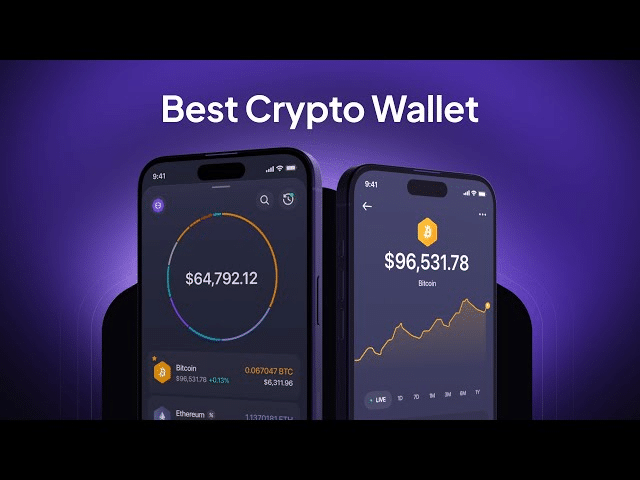
Exodus Wallet is a non-custodial desktop and mobile wallet that supports over 250 cryptocurrencies, including Bitcoin, Ethereum, Solana, and a wide range of altcoins. Its design focuses on portfolio management, allowing users to track multiple assets in one interface.
Swap Feature & Liquidity
- Exodus offers an integrated swap feature powered by third-party liquidity providers and aggregators, enabling users to exchange one crypto for another directly within the wallet.
- Fees start from approximately 0.5%, depending on the network and token.
- Cross-chain swaps are supported for major networks, with execution typically taking a few minutes for standard amounts.
User Experience
Exodus Wallet provides a visually intuitive interface, displaying balances, charts, and transaction history. The mobile and desktop apps are synchronized, allowing portfolio management across devices. Biometric authentication and encrypted backups are standard security measures.
Security & Custody
- Being non-custodial, Exodus users retain full control of their private keys.
- Swaps involve third-party liquidity providers, meaning the platform does not hold funds centrally.
- Regular app updates and open support documentation enhance transparency and user confidence.
Adoption & Performance
- Exodus reports over 13 million users across desktop and mobile as of 2025.
- Daily swap volumes exceed $40 million, reflecting active usage among retail users.
- Performance is generally smooth; however, for niche tokens or very large swaps, execution may be subject to liquidity and network conditions.
DeFi & Additional Features
- Exodus includes staking for supported PoS networks.
- Portfolio analytics help users monitor gains, losses, and token distribution.
- Integrated fiat onramps allow users to buy crypto directly via credit card or bank transfer.
5. NOW Wallet
Functionality & Token Coverage
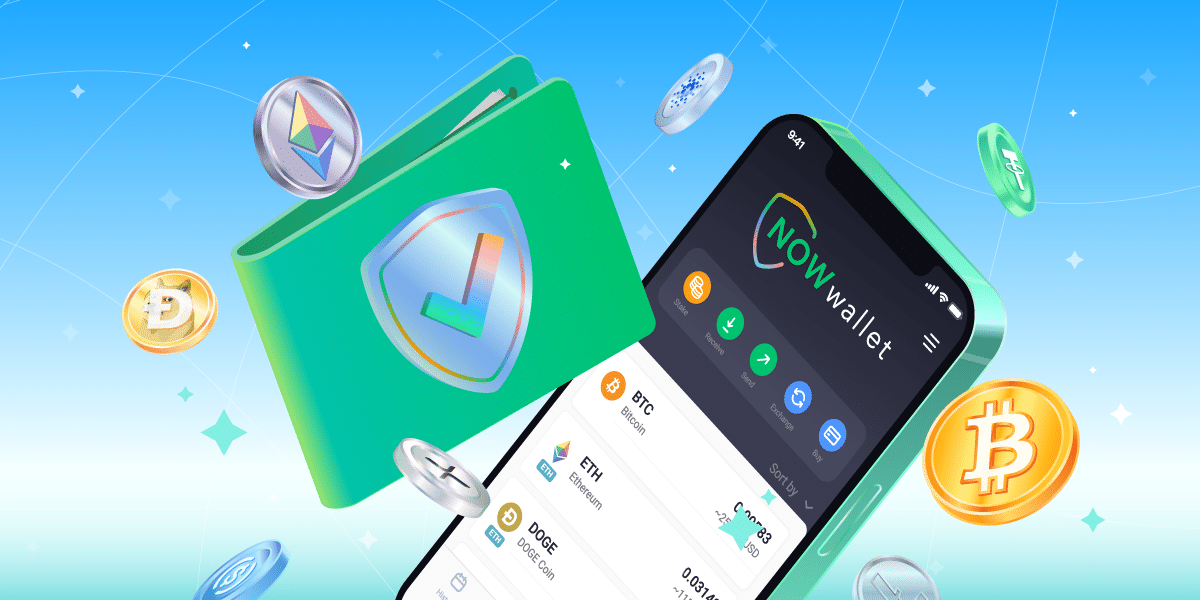
NOW Wallet is a non-custodial crypto swap platform designed for fast and secure token exchanges. It supports over 400 cryptocurrencies, including major assets like Bitcoin, Ethereum, and Solana. Users can perform cross-chain swaps directly from their wallet, typically completed within minutes.
Swap Mechanics & Fees
- Offers both fixed-rate swaps, locking in the rate at confirmation, and floating-rate swaps, which adjust to current market conditions.
- Fees range from 0.5% to 4%, depending on the token pair and blockchain used.
- Aggregates liquidity from multiple sources to provide competitive execution rates.
User Experience & Accessibility
- Intuitive interface for selecting tokens, amounts, and swap type.
- No account registration is required for most swaps, enhancing privacy and accessibility.
- Available on mobile devices, optimized for iPhone use.
Security & Infrastructure
- Non-custodial design ensures users retain control of funds.
- KYC is required only for larger transactions, keeping smaller swaps private and compliant.
- Transactions are executed directly to user wallets.
Ecosystem & Additional Features
- NOW Wallet integrates with staking and utility token features for enhanced engagement.
- Optimized for fast execution; extremely large swaps may depend on liquidity availability.
Conclusion
By 2025, crypto swap apps on iPhone have become essential tools for users, enabling fast and convenient token exchanges across multiple blockchains without relying solely on centralized exchanges. Each platform offers different strengths: some, like ChangeNOW, focus on broad token coverage and cross-chain swaps, while others, such as Trust Wallet and MetaMask Mobile, prioritize self-custody, DeFi integration, or user experience. NOW Wallet provides another viable option for secure, non-custodial swaps.
Trade-offs are inevitable. Faster execution may involve higher fees, fixed-rate swaps offer predictability but may be less favorable than floating rates, and cross-chain bridges carry additional risk. Users should choose apps according to their priorities—speed, security, token availability, or simplicity—while following best practices: testing swaps in small amounts, monitoring slippage, keeping sufficient native tokens for fees, and verifying recipient addresses carefully.
When used thoughtfully, swap apps provide a flexible, efficient, and increasingly mainstream method for managing cryptocurrency on mobile devices.