Your iPhone, iPad, and Apple Watch aren’t just communication and entertainment devices—they’ve quietly become one of your most powerful health management tools. Yet most Apple users barely scratch the surface of what their devices can do for their wellbeing.
Apple has invested heavily in health features over the years, integrating sophisticated health tracking, wellness monitoring, and healthcare integration directly into the heart of their ecosystem. The ecosystem is designed to work seamlessly across devices, collecting data intelligently and presenting it in ways that actually matter to your life. But knowing what’s available and how to use it effectively is another story entirely.
The Apple Health Ecosystem Foundation
The foundation of Apple’s health strategy is the Health app—a central hub where all your health and fitness data converges. Since its introduction, Apple has continuously expanded its capabilities, making it genuinely useful rather than just another app taking up storage.
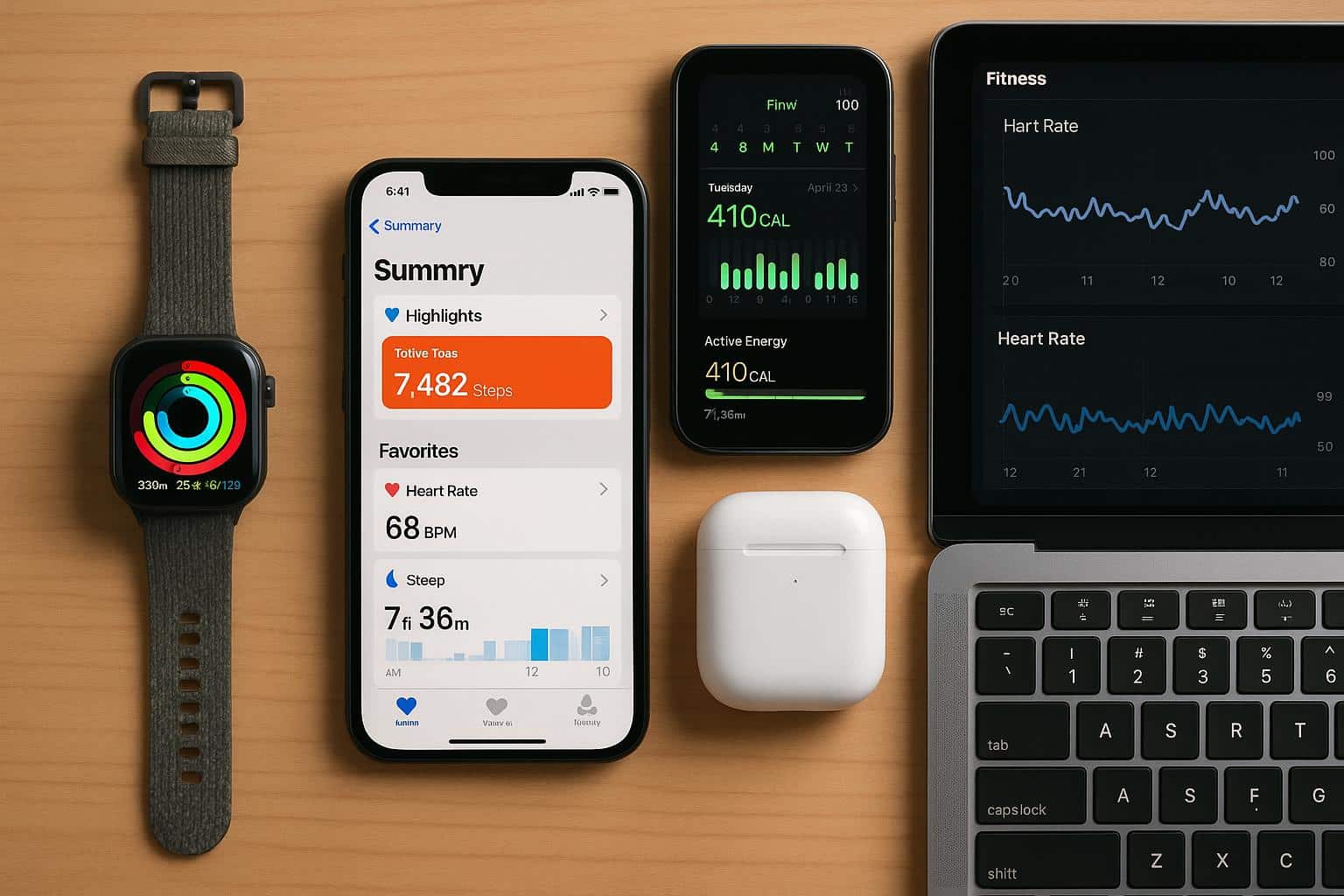
Here’s what most people don’t realize: your Health app is already collecting more data about you than you’re probably aware of. Your iPhone passively tracks your movement throughout the day. Your Apple Watch monitors your heart rate continuously. Various apps are logging workouts, nutrition, sleep patterns, and more. The brilliance of the Health app is that it consolidates all of this disparate data into one accessible, privacy-respecting location.
The data collection happens quietly. You don’t need to manually input everything—the system is designed to gather information automatically. This means less friction for you, and more comprehensive data to actually work with when making decisions about your health.
Heart Rate Monitoring: The Gateway Feature
Start here if you’re new to health tracking on Apple devices. The Apple Watch’s optical heart rate sensor is remarkably accurate and provides real-time data that was previously only available through professional medical devices.
Why does this matter? Your resting heart rate is one of the most direct indicators of cardiovascular fitness and overall stress levels. When you have continuous access to this data, you start noticing patterns. You see which activities genuinely elevate your heart rate. You notice how stress, sleep, caffeine, and exercise all influence this critical metric.
The real value emerges when you move from passive observation to active insight. The Health app can alert you to irregular rhythms, and Apple Watch can even take an ECG reading—something that used to require a trip to your doctor’s office. For people with certain conditions, having this data available immediately is genuinely powerful.
Sleep Tracking: The Underestimated Vital Sign
While heart rate tracking gets the headlines, sleep tracking might be the most valuable health feature in the Apple ecosystem. Sleep quality directly impacts everything: mood, cognitive function, immune response, metabolism, and long-term disease risk.
Your Apple Watch becomes a sleep laboratory that sits on your wrist. It tracks not just how long you sleep, but the quality of that sleep by monitoring your movements and heart rate patterns throughout the night. This data, over time, reveals your genuine sleep patterns and trends.
Apple’s approach here is refreshingly non-judgmental. The app doesn’t shame you for sleeping poorly—it simply provides the data and lets you make your own conclusions. But when you see objective evidence that you sleep better after skipping evening caffeine, or that your sleep improves during weeks when you exercise, the information becomes actionable.
The feature also integrates with other Apple ecosystem elements. You can set Wind Down schedules that prepare your iPhone and iPad for bedtime, reducing blue light exposure and notifications. Your devices actively support better sleep through their design.
Activity Tracking Beyond Step Counts
The Apple Watch’s activity tracking system is far more sophisticated than most people realize. It tracks three metrics—Move (calories burned), Exercise (minutes of activity), and Stand (times you stood during the day). This simple framework is genuinely useful because it encourages different types of daily movement.
The rings system is addictively motivating without being obnoxious. There’s something satisfying about closing your rings each day, but the system is flexible enough to work with your real life. You can adjust your daily calorie goal, and it learns from your patterns over time.
What’s brilliant here is the variety of workouts the system recognizes. Whether you’re cycling, swimming, running, doing yoga, or strength training, Apple Watch captures the data differently based on the activity type. This specificity matters because different exercise types stress your body in different ways.
Medication Tracking and Health Records
A feature that’s genuinely game-changing but underutilized: you can store your medications, supplements, and dosage schedules directly in the Health app. Set reminders, track adherence, and have your medication history instantly accessible—particularly valuable when visiting healthcare providers.
The Health Records feature is even more powerful. If your healthcare provider participates in the HealthKit integration, your medical records, test results, and clinical notes can sync directly to your iPhone. No more hunting through emails for lab results or trying to remember what your doctor said about that test from six months ago.
This integration is where your Apple device becomes genuinely useful in healthcare coordination. You have your data in one place, accessible anywhere, anytime. This matters when you need to reference something quickly or share information with a new provider.
Building Your Healthcare Integration Strategy
Here’s where most Apple users miss an opportunity: having good data on your Apple devices is only part of the equation. The real value emerges when you integrate this health data into your actual healthcare.
Start by identifying a primary care provider who’s willing to work with your data. Many healthcare offices now accept health information through various platforms. Find a provider who values the health data you’re collecting and can help you interpret it meaningfully.
Second, use your Apple health data to prepare for appointments. Before you see your doctor, review your data. What patterns have you noticed? What questions do you have based on the information your devices are collecting? Walking into an appointment with specific, data-backed observations is far more productive than vague descriptions of how you’ve been feeling.
Third, communicate openly with your healthcare provider about the data you’re collecting. Different providers have different perspectives on wearable data. Some find it incredibly valuable. Others are skeptical. The key is finding alignment—you want a provider who respects the information your devices are providing while also maintaining healthy skepticism about the limitations of wearable data.
Finding the Right Healthcare Partner
This is where the technology conversation intersects with the real-world healthcare system. You can have the most comprehensive health data in the world, but it only becomes useful when you’re working with a healthcare provider who understands your goals and respects your data.
Finding that provider used to be genuinely difficult. You’d call offices, navigate insurance networks, check multiple websites, and still not know if they actually accepted your insurance or had availability. Now, streamlined healthcare provider platforms make this process significantly easier. You can search by specialty, location, and insurance, see real-time availability, and book appointments—all without the traditional phone tag that used to be required.
When you’re looking for a healthcare provider who will integrate well with your data-driven approach to health, you can be intentional about it. Look for providers who mention HealthKit integration or EHR systems that communicate with Apple Health. Ask about their approach to patient data. Platforms like Vosita make finding these aligned providers seamless—you can search by specialty, location, insurance, and availability without the traditional friction. The right provider partnership makes your Apple health data infinitely more valuable.
The Privacy Dimension
Apple’s health privacy approach is worth highlighting here. Your health data on Apple devices is encrypted and stays on your device by default. You choose what you share, with whom, and for how long. This design philosophy is fundamental to why many people trust Apple with their most sensitive health information.
Unlike services that monetize health data, Apple’s approach respects your privacy by design. Your heart rate, sleep patterns, medication list, and all other health information remains under your control. When you decide to share it with a healthcare provider, that’s your choice. This matters more than most people realize.
Putting It All Together
The true power of Apple’s health ecosystem emerges when you use it as a complete system: continuously collect data through your devices, review the insights regularly, share relevant information with your healthcare provider, and use that partnership to make informed decisions about your wellbeing.
Your Apple Watch or iPhone becomes an extension of your healthcare practice rather than just a fitness tracker. Your devices provide objective data that helps you and your healthcare provider understand what’s actually happening with your health rather than relying solely on how you feel or remember things.
This is health management in the modern era: technology designed to be so intuitive that it disappears into your daily life while quietly providing the information you need to make better decisions about your wellbeing.
Your Apple ecosystem can be a powerful tool for health management, but it works best when integrated with actual healthcare. Taking time to establish care with a healthcare provider who respects the data your devices provide is the final piece of an effective health management system. Start tracking today, and make healthcare access a priority—that’s when the real benefits emerge.