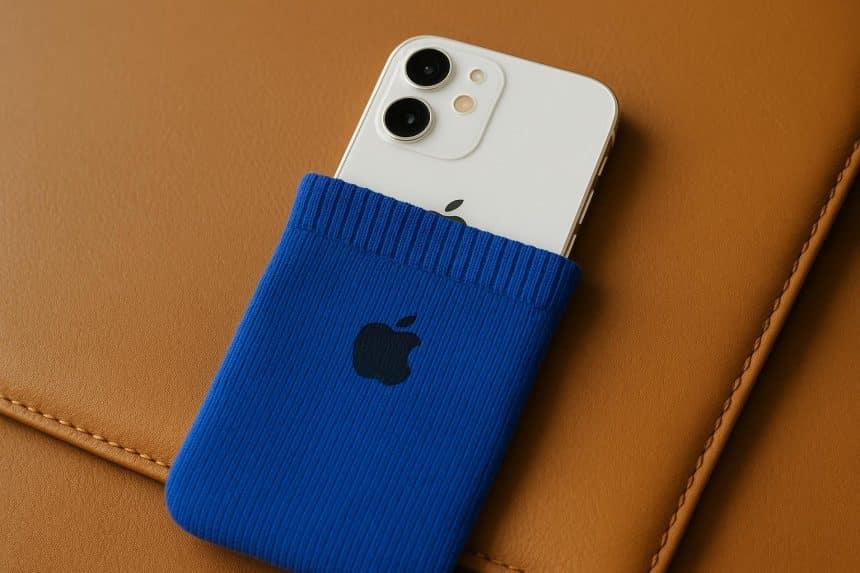
In November 2025, Apple debuted a special-edition accessory that immediately sparked criticism and confusion across social media and tech forums. The product in question? The iPhone Pocket, a limited-edition collaboration with the legendary Japanese fashion house Issey Miyake. Described as both a crossbody strap accessory and a knitted piece of fabric designed to snugly encase the iPhone, this seemingly simple product triggered a firestorm of debate.
The controversy centers largely on the price point. The short strap design retails for $149.95, while the long strap version commands $229.95—or a cool $230 for what many observers describe as essentially a fancy sock. Almost immediately, comparisons began flooding in to Apple’s much older and much cheaper iPod Socks, a playful accessory from the early 2000s that cost a fraction of the price.
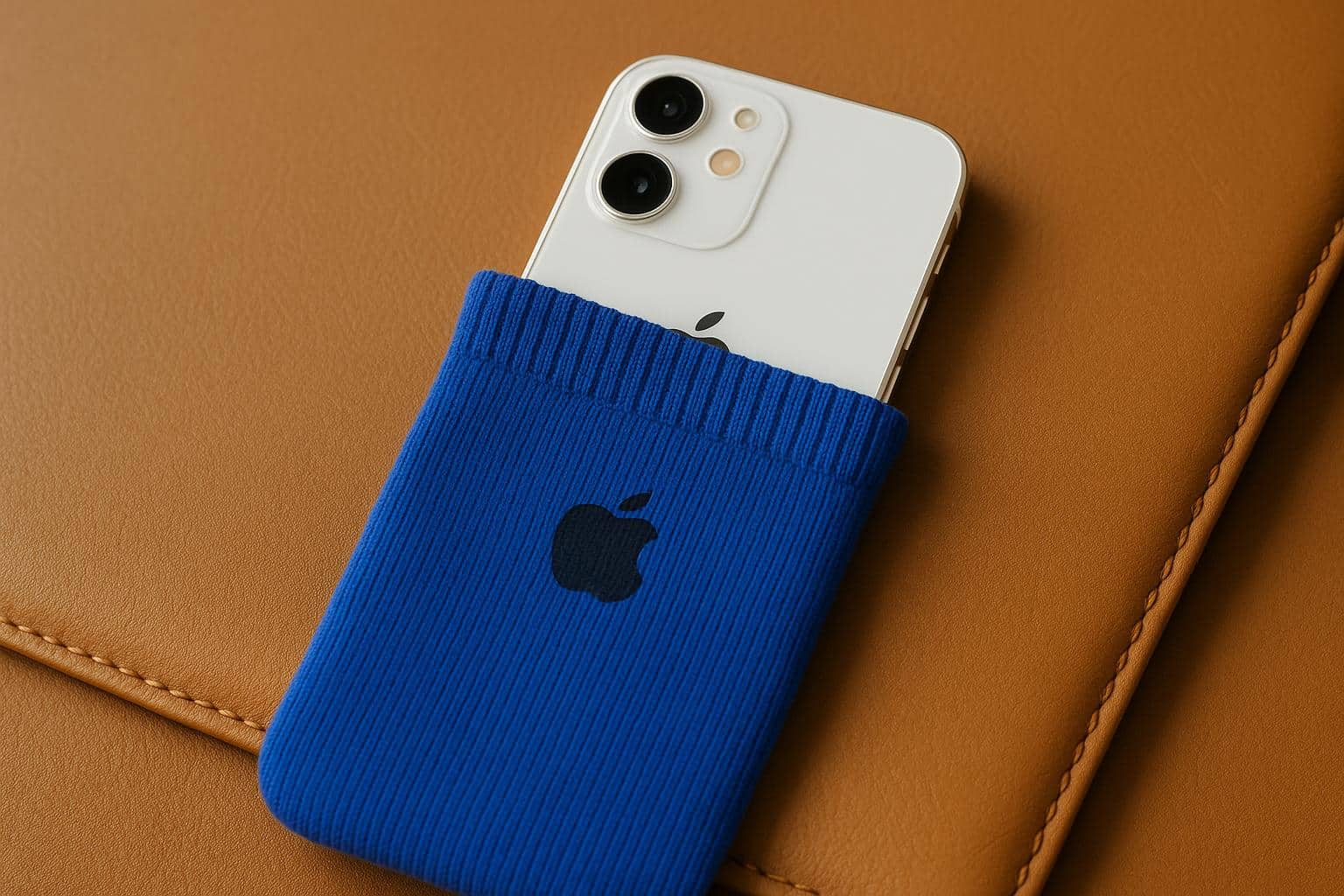
The original iPod sock was presented by Steve Jobs, jokingly, as “cutting-edge technology”. The new version seems to take itself much more seriously. What’s this new accessory say about changes in Apple’s brand image over the years and culture in general?
Design, Function, and Fashion Pedigree
The Issey Miyake Collaboration and Design Philosophy
The collaboration carries deep symbolic weight. Issey Miyake was the designer behind the iconic black turtlenecks worn by late Apple co-founder Steve Jobs, making this partnership a tribute to Apple’s design heritage. The iPhone Pocket was inspired by the concept of “a piece of cloth” and features a singular 3D-knitted construction that creates a seamless, single-piece accessory, eliminating cutting and waste in the manufacturing process.
The design itself is technically sophisticated, featuring a ribbed open structure that fully encloses the iPhone while remaining flexible enough to expand and fit other everyday items like AirPods or keys. When stretched, the textile subtly reveals its contents and allows users to peek at the iPhone display without removing the device. The Pocket can be worn multiple ways—crossbody, handheld, or tied onto a bag—offering versatility in how fashion-conscious users carry their devices.
Pricing and Availability Breakdown
To understand the sticker shock, consider this comparison: a six-pack of the original iPod Socks retailed for $29 in 2004, which translates to about $50 in today’s dollars. The iPhone Pocket costs roughly three to five times this amount for a single unit.
The short strap comes in eight playful colors including lemon, mandarin, purple, pink, peacock, sapphire, cinnamon, and black. The long strap is available in three more subdued options: sapphire, cinnamon, and black. As a special-edition release, sales began November 14 in select markets including France, Greater China, Italy, Japan, Singapore, South Korea, the UK, and the U.S.
Physical availability is highly restricted, limited to select Apple Store locations in major fashion capitals such as Shanghai, New York City, London, Milan, Paris, Tokyo, Hong Kong, and Singapore. This scarcity-driven approach signals that Apple is positioning the iPhone Pocket as an exclusive luxury item rather than a mass-market accessory.
Public and Critical Response: Sock or Status Symbol?
Critics and Skeptics
The response from critics has been swift and merciless. Social media erupted with comments mocking the accessory as “$230 for a cut-up sock” and declaring the whole concept “ridiculous.” Many consumers noted they would rather spend their money on an Apple Watch SE or AirPods Pro—devices that offer actual technological functionality.
Prominent technology reviewer Marques Brownlee weighed in, claiming that this release “feels like a litmus test for people who will buy/defend anything Apple releases.” His critique resonated with those who see the iPhone Pocket as emblematic of Apple pushing pricing boundaries beyond reason.
Practical concerns also emerged. Critics noted that the design, which lacks a secure fastening or zip, could make the phone an easy target for thieves or phone snatchers, particularly in cities like London known for mobile device theft. The accessory is primarily a carrying and fashion item, offering minimal protection against drops or impacts—a significant limitation for a product designed to house a device that can cost over $1,000.
Defenses and the Fashion Viewpoint
Not everyone views the iPhone Pocket through a negative lens. Some users expressed genuine love for the product, citing nostalgia for the original iPod Socks and Y2K fashion trends. For these consumers, the accessory is “whimsical and a nod at Apple of the early 2000s,” capturing a playful spirit that Apple once embodied more freely.
Several commentators emphasized a crucial point: if consumers find the product absurd, it simply means they are not the target audience. This is a fashion collaboration, not a technology product, and should be evaluated through that lens.
Fashion insiders defended the pricing as entirely appropriate for a designer collaboration. Issey Miyake does not produce cheap products, and the price point is typical for luxury fashion accessories. Vogue reportedly declared the iPhone Pocket “could just be the season’s must-have accessory,” signaling fashion world approval even as the tech community remained skeptical.
Brand Image and Strategic Fit: The Road to Luxury
The Evolution from iPod Socks to iPhone Pocket
To understand where Apple is going, it helps to look at where it’s been. The original iPod Socks, sold from 2004 to 2012, were a low-cost, multi-colored accessory priced at $29 for a pack of six. Steve Jobs introduced them with a sense of playful absurdity, acknowledging their inherent silliness while offering them as an inexpensive way to protect and personalize iPods. In a recent interview, Glenn Lurie of Synchronoss and AT&T reminisced on brokering an exclusive cellular deal with Jobs. Part of the deal was that Jobs and Apple would maintain complete creative control over the iPhone and all its accessories, allowing them to be more tongue-in-cheek with marketing incentives.
The the new iPhone Pocket ditches this humor for earnest luxury positioning. While it serves as the spiritual successor to the iPod Socks, the drastically different financial and fashion positioning marks a fundamental shift in Apple’s brand identity. Where the iPod Socks said “we’re fun and don’t take ourselves too seriously,” the iPhone Pocket declares “we’re a luxury brand worthy of standing alongside haute couture.”
Apple’s Luxury Gambit
The iPhone Pocket fits squarely into Apple’s broader strategy of positioning itself as a luxury brand and comprehensive lifestyle technology company. Apple’s Industrial Design VP, Molly Anderson, noted that accessory choice is increasingly a reflection of a user’s personal style—a signal that Apple views these products as extensions of identity, not just functional tools.
This isn’t Apple’s first foray into high-fashion collaborations. The partnership with French luxury brand Hermès for Apple Watch straps, which retail for $300 to $1,500, set a precedent for Apple accessories commanding extraordinary price premiums. The Hermès collaboration proved that Apple’s customer base includes consumers willing to pay luxury prices for designer branding, even when the underlying technology remains identical to standard models.
Accessories represent a crucial part of Apple’s strategy for extracting premium margins from customers already invested in the ecosystem. Industry analysts suggest the gross margin on the iPhone Pocket likely exceeds 85%—a staggering figure that demonstrates the profitability of luxury positioning, even for products with relatively simple construction.
The Asia Market Driver
Crossbody phone holders are hugely popular in places like China, Japan, and South Korea, where they represent a common and fashionable way to carry mobile devices.
Apple is pushing aggressively into large Asian markets, and launching the iPhone Pocket is about getting into a fashion segment that could directly impact iPhone sales in the region. By offering a premium, Apple-branded solution for a carrying method that’s already popular, the company positions itself to capture market share from third-party accessory makers while reinforcing its luxury brand image.
The iPhone Pocket also represents Apple’s experimentation with wearable iPhone accessories beyond just rigid cases, testing the market in fashion-forward regions to gauge consumer appetite for fabric-based carrying solutions. If successful, it could open up an entirely new category of high-margin accessories.
Is the Price Worth the Prestige?
The iPhone Pocket highlights Apple’s ongoing tightrope walk between being a tech innovator and a luxury lifestyle brand. The company has successfully commanded premium prices for its devices by delivering genuine technological value, superior design, and a seamless ecosystem. But accessories like the iPhone Pocket test different boundaries—ones where the value proposition rests primarily on brand prestige and fashion credibility rather than functional superiority.
There’s a real risk of brand dilution here. Pushing fabric accessories at luxury prices without comparable technological differentiation risks appearing extractive rather than aspirational. If consumers perceive Apple as cynically exploiting brand loyalty to sell overpriced products, it could damage the company’s carefully cultivated reputation for delivering genuine value alongside premium aesthetics.
Yet Apple has proven remarkably adept at navigating these waters before. The Hermès Apple Watch partnership, initially met with skepticism, has become an established and successful product line. AirPods Max, priced at $549, faced similar criticism but found their audience among consumers prioritizing design and integration over pure audio fidelity per dollar spent.
Whether the iPhone Pocket becomes a highly coveted status symbol for early adopters in fashion capitals or a curious footnote like the iPod Socks remains to be seen. What’s certain is that the controversy serves as a revealing test of brand loyalty and the limits of premium pricing. In launching this accessory, Apple is making a bold statement: we’re not just a technology company anymore—we’re a luxury fashion house that happens to make exceptional technology.
For consumers, the choice is clear. If you see a beautifully designed Issey Miyake collaboration that brings joy and style to an everyday object, $230 might seem entirely reasonable. If you see an overpriced sock with an Apple logo, you’re probably not the target audience—and that’s exactly the point.