Have you ever needed to pull the spoken content from a YouTube video and convert it into text—maybe to write an article, create captions, produce social content, or summarize a long tutorial? It’s a common need, especially now that video has become one of the fastest-growing formats online. Turning a video into a transcript makes the information easy to skim, search through, analyze, or repurpose.
The catch? Not every YouTube video includes built-in captions, and even when it does, the auto-generated transcript is often inaccurate—especially with fast speakers, technical jargon, or strong accents. That’s where AI-powered YouTube transcript generators step in. These tools extract spoken audio from any YouTube link and convert it into clean, readable text you can reuse however you like.

In this detailed guide, you’ll explore 10 of the most reliable YouTube transcription tools, understand what they do, learn when to use them, and discover features to consider before choosing one. Whether you’re a creator, educator, writer, researcher, or marketer, this list will help you find the right solution.
🔍 Quick Highlights
- Understand how YouTube transcript generators work and why they’re helpful
- Learn how to generate transcripts even when YouTube captions aren’t available
- Compare 10 popular tools with strengths and drawbacks
- Discover which features matter most depending on your workflow
- Get ideas for making the most of your transcripts—from research notes to SEO-friendly blog posts
What Is a YouTube Transcript Generator?
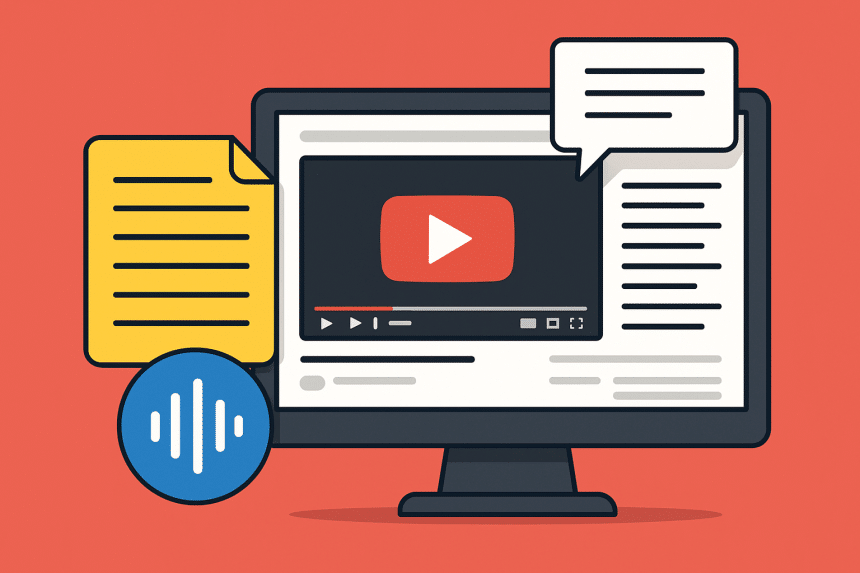
A YouTube transcript generator is an AI-driven tool that extracts spoken audio from a YouTube video and turns it into written text automatically. Instead of manually typing the dialogue word-for-word, these tools use speech recognition technology to identify words, break them into readable lines, and create structured text.
Advanced generators offer features such as:
- Timestamps
- Speaker differentiation
- Multilingual transcription
- Automatic summaries
- Keyword extraction
- Subtitle export formats like SRT or VTT
- Editing or formatting tools
Why does this matter? Because transcripts make video content far more accessible and flexible. Students can pull notes from lectures. Journalists can extract quotes. Marketers can repurpose long videos into blogs or captions. Researchers can analyze discussions quickly. And creators can add subtitles to boost viewer retention.
Best of all, these tools work even when YouTube doesn’t provide a transcript or when the automated captions are inaccurate.
How to Use a YouTube Transcript Generator (Simple Guide)
Although every tool has its own interface, most follow the same basic steps. Here’s a simple walkthrough using RecCloud as an example:
Step 1 — Copy the YouTube video link:
Open YouTube, find the video you want, and copy the URL from the address bar.
Step 2 — Open the transcription tool:
Visit the RecCloud YouTube transcript generator.
Step 3 — Paste the URL:
Insert your link into the input box on the page.
Step 4 — Choose your preferred language:
Select a language if you want translation or multilingual transcripts.
Step 5 — Generate the transcript:
Click Get Transcript and give the AI a moment to process.
Step 6 — Export your file:
Download your transcript as an SRT file (timestamps included) or in other formats.
That’s all it takes. Whether you’re transcribing a short tutorial or a multi-hour conference recording, AI can handle the workload in minutes.
💡 When to Use a Transcript Generator
YouTube transcription tools are useful across countless scenarios. Here are some of the most common:
For Content Creation
- Transform long videos into articles, newsletters, captions, or social snippets
- Extract key quotes for marketing assets
- Repurpose old videos into fresh written content
For Education
- Turn lectures into study notes
- Convert complex explanations into written summaries
- Provide text for accessibility or revision
For Research
- Quickly review interviews, case studies, or webinars
- Extract insights without watching entire videos
For Accessibility
- Provide text for audiences who are deaf, hard of hearing, or non-native speakers
For Multilingual Teams
- Translate transcripts to broaden reach across languages
For Organization
- Create time-stamped notes so teams can navigate videos faster
Top 10 YouTube Transcript Generator Tools (Pros & Cons)
Below is an expanded overview of the most reliable tools currently available, including strengths and limitations.
1. RecCloud YouTube Transcript Generator
Why it stands out:
RecCloud is a fast, accurate tool that produces timestamped transcripts directly from any YouTube URL. It supports multiple languages, making it ideal for international audiences.
Pros:
- Exports SRT subtitles
- High accuracy
- Supports many languages
- Easy to use
Limitations:
- Limited customization options
- No advanced in-tool editing
2. OpusClip
Why it stands out:
Best known for creating viral video clips, OpusClip also includes a simple transcript generator for YouTube.
Pros:
- Exports transcripts as TXT or SRT
- Fast processing
- Integrates well with video clipping features
Limitations:
- No preview screen
- No editing tools
3. NoteGPT
Why it stands out:
Great for batch transcription and includes optional mindmaps and summaries.
Pros:
- Supports multiple languages
- Timestamped transcripts
- Helpful summary generation
Limitations:
- Requires account for exporting
- No speaker labels
- Limited formatting options
4. Tactiq
Why it stands out:
Originally built for meeting transcription, but surprisingly effective for YouTube.
Pros:
- Clean transcript structure
- Timestamped text
- Easy export
Limitations:
- No speaker labels
- Minimal formatting
5. Kome AI
Why it stands out:
Transcribes in over 120 languages—perfect for global users.
Pros:
- Broad language support
- Very fast processing
- Simple interface
Limitations:
- No timestamps
- No export formats besides copying text
6. Maestra
Why it stands out:
A user-friendly option with multiple export types.
Pros:
- Generates summaries and chapters
- Easy exports
- Free to use for quick tasks
Limitations:
- Lacks timestamp accuracy
- Not ideal for editing-heavy workflows
7. Noteey
Why it stands out:
Excellent for students needing quick text extraction.
Pros:
- Simple, lightweight tool
- Provides summaries
- Supports timestamped notes
Limitations:
- No exporting
- Less accurate with unclear audio
8. Vomo
Why it stands out:
A fast, minimalistic tool for basic transcription needs.
Pros:
- Very easy to use
- Good for quick summary extraction
- Lightweight platform
Limitations:
- Missing punctuation
- No timestamps
- No real editing features
9. Krisp
Why it stands out:
Known for noise suppression, which boosts transcript quality for noisy audio.
Pros:
- Great accuracy even with background noise
- Timestamp support
- Easy to process long videos
Limitations:
- Fewer export options
- Limited editing controls
10. Notta
Why it stands out:
A robust transcription tool with multiple export formats and AI summaries.
Pros:
- Exports TXT, SRT, PDF, DOCX
- Multilingual support
- Summaries included
Limitations:
- Uploading and processing can be slow
- Some features are paywalled
What to Look for When Choosing a Transcript Generator
Before picking a tool, consider these essential features:
✔ Accuracy
A reliable generator should handle varying accents, noisy audio, and fast speech with minimal errors.
✔ Multilingual Support
If you work with international content, check how many languages the tool offers.
✔ Export Formats
SRT, VTT, TXT, DOCX, or PDF—choose a tool that supports the formats you need.
✔ Editing Tools
Useful for adding speaker tags, correcting mistakes, or formatting text for publication.
✔ AI Summaries
Helpful when you want quick takeaways instead of reading full transcripts.
✔ User Experience
A simple, intuitive layout saves time, especially for daily use.
✔ Cost & Accessibility
Some tools are free, while others require subscriptions or account creation.
Final Thoughts
YouTube transcript generators are powerful tools that transform video content into searchable, editable text within minutes. Whether you’re a student taking notes, a marketer repurposing content, or a professional analyzing interviews, these tools can dramatically speed up your workflow.
By evaluating accuracy, language support, export flexibility, and editing features, you can pick the right generator for your needs. Once you integrate them into your routine, video content becomes easier to understand, share, and repurpose across any platform.