The emergence of 5G technology has completely transformed mobile telecommunications. It gave providers a chance to introduce a wide range of new services and support emerging IoT devices. Private networks, in comparison to public networks, are focused on businesses and their needs.
Operators customize their system to serve manufacturing plants, large office buildings, campuses, and other private infrastructure. Some of the main characteristics of these networks are ultra-low latency and proactive cybersecurity. While public networks give operators a chance to generate more revenue, they also come with their fair share of challenges.
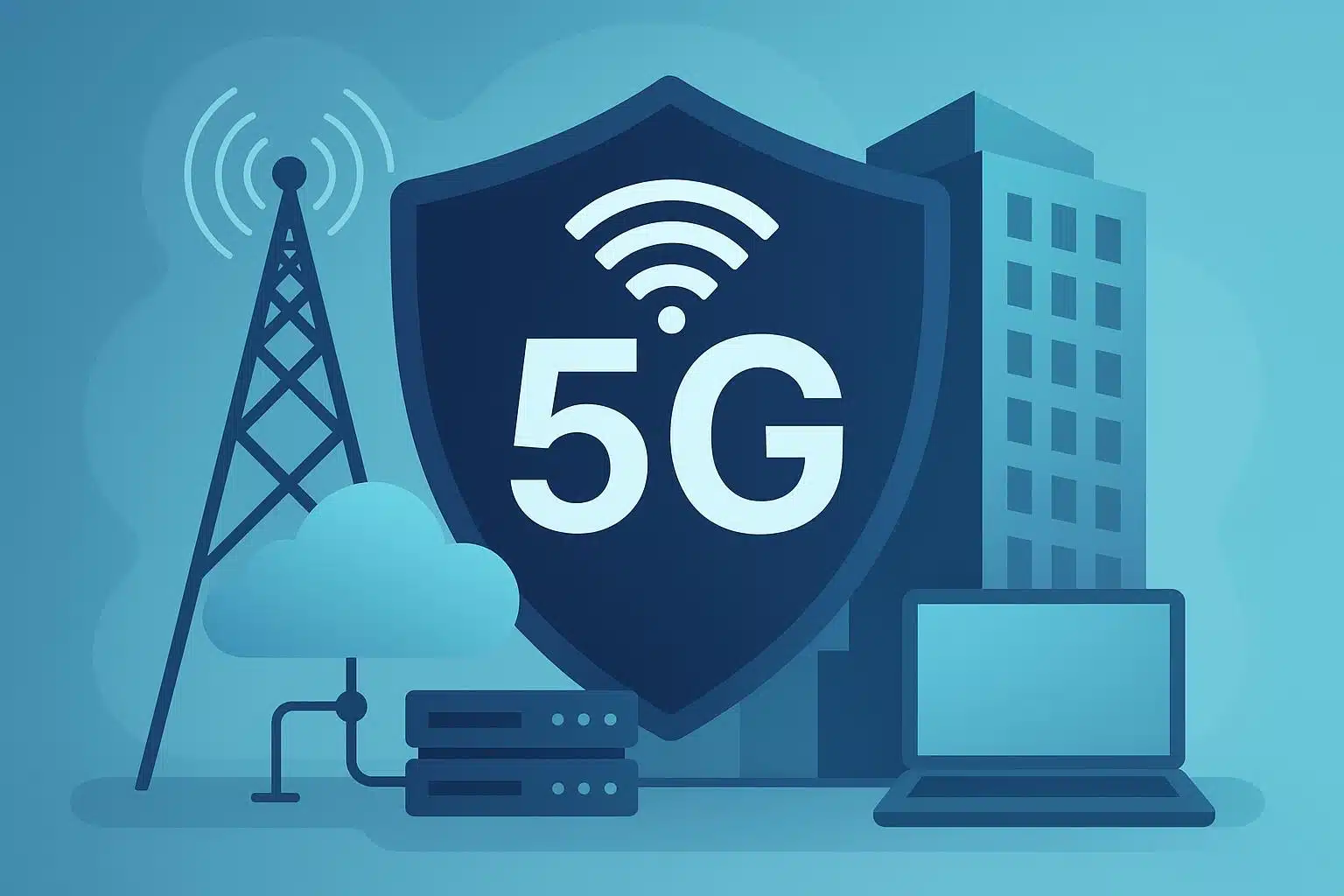
In this article, we’ll talk about the biggest advantages and disadvantages of commercial 5G, and why you should introduce this technology as soon as possible.
4 Biggest Opportunities
After introducing 5GC solutions into your offer, you’ll be able to benefit from the following features:
New Revenue Streams
Private 5G enables operators to diversify their revenue streams. With this technology, you can help large power plants, hospitals, and other enterprises automate their daily operations. Most notably, 5G allows businesses to introduce IoT devices and robots, which require ultra-low latency to be effective.
Private networks are already in high demand, but their popularity will only rise in the following years. The market’s CAGR is projected to increase by 42% from 2024 to 2027, giving fast adopters a chance to expand their user base if they respond in time. They can capitalize on cybersecurity services, application enablement, managed services, and other modern offers.
Customization and Control
One of the most enticing aspects of private 5G is that it gives businesses full control over their networks. As more and more enterprises seek customized solutions, this technology ensures high performance tailored to each company’s unique needs. By relying on slicing, companies can also mitigate some potential cyber risks.
Slicing enables companies to allocate bandwidth to specific requirements. Whether they need to focus on mission-critical communication, augmented reality, or IoT sensors, 5G gives them much-needed flexibility. This unique feature gives operators a chance to differentiate their services from competitors, giving subscribers completely new services.
Industrial Transformation
The potential of private 5G networks is perhaps most noticeable in vertical industries. Modern factories rely on this technology to automate daily workflow, streamline maintenance, and introduce real-time monitoring. All of these features lead to enhanced safety, minimized downtime, and greater efficiency.
The reliability of private 5G networks is crucial for businesses such as healthcare, as hospitals and clinics must protect patients’ data. Furthermore, 5G ensures that the equipment will work as intended during sensitive medical procedures. Utility and energy companies use the network to perform predictive analytics, monitor the grid, and manage assets remotely.
Opportunity for Partnerships
By introducing 5G technology into their standard offer, carriers set the basis for new partnerships. They can collaborate with various vendors, cloud providers, and systems integrators to develop innovative bundles for different types of clients. These solutions combine the best of enterprise IT systems with modern connectivity practices.
Besides introducing new services through these partnerships and improving user experience, carriers differentiate themselves in saturated markets. Operators position themselves as industry leaders, often forcing their competitors to adapt to their actions.
5 Biggest Challenges
Although 5G is a transformative technology, introducing it into your service offer requires hefty investment and major structural changes. Here are some of the biggest issues companies face when introducing private 5G into their offer:
Spectrum Availability
Each country can introduce its own policies regarding spectrum allocation. Among other things, countries’ institutions can reserve certain bands for commercial purposes. As a result, carriers’ roles might be reduced during deployments.
Another issue is that each business can directly buy spectrum from the government, completely bypassing providers. The best way for operators to address this issue is by negotiating with the government. They should lobby with the local government to change the rules of the game and gain a better position.
Complex Business Model
Finding a sustainable business model is another major hurdle when introducing private 5G networks. Operators must determine what kind of services they want to provide to business users. For example, they can only deploy and maintain networks, offer managed services, or act as service brokers, leasing their own spectrum to others.
Each of these business models comes with its pros and cons. Companies must determine which is most suitable for their long-term plans and aligns with their brand identity. The choice will also vary based on a carrier’s market position and capabilities.
High Investment
If you wish to deploy 5G, you’ll have to make a significant investment. The technology requires new infrastructure, including edge computing facilities, cell towers, and secure cores.
Many companies are under pressure to make profits as soon as possible. As a result, they’re often reluctant to include 5G private networks in their offer. Carriers often struggle to justify the costs, which is especially noticeable in low-margin markets.
Operational Complexity
Private networks, in particular, have to be customized for each subscriber company. Every business has unique reliability, security, and compliance needs, which adds another layer of complexity.
Managing 5G networks requires new skills and, sometimes, new employees. On top of that, operators must introduce advanced security measures and advanced capabilities to cater to a wide range of users.
Non-Operators Competition
Large companies such as Google Cloud and Microsoft Azure now compete in the 5G space, offering businesses reliable connectivity via the cloud. On top of that, traditional carriers also have to compete against equipment vendors and system integrators that offer turnkey deployments.
A lot of these providers offer users direct access to 5G solutions. To counter this threat, carriers must lean on their innate advantages in connectivity and spectrum management. Furthermore, they can explore partnership opportunities with other telecommunications businesses.
The Future of Private 5G Networks
Although some of these challenges are hard to overcome, operators are finding ways to run profitable 5G services. By partnering with other companies and negotiating with regulatory bodies, carriers can carve out a place in the market.