
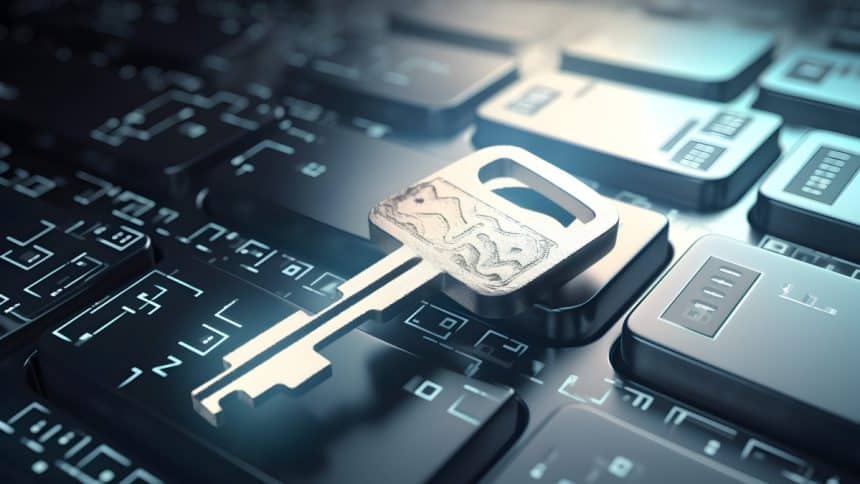
In the rapidly evolving landscape of technology, quantum computing has emerged as a transformative force. While this progress holds immense promise, it also presents challenges for current encryption methods, particularly with the anticipated ability of quantum computers to crack traditional cryptographic protocols. To address these concerns, two vital fields are advancing: post-quantum cryptography (PQC) and quantum networking. Both aim to fortify data protection against potential quantum threats, redefining digital security for an era of unprecedented computational power. For better insight you can take reference from Aipom Ai.
The Quantum Threat to Current Encryption
Quantum computers operate differently from classical computers, leveraging quantum bits (qubits) that can exist in multiple states simultaneously. This quantum superposition and entanglement allow quantum systems to perform complex calculations at speeds that would be infeasible for classical computers. Currently, widely-used encryption algorithms like RSA and ECC rely on mathematical problems that are computationally challenging for classical systems to solve. Quantum computers, however, can solve these problems exponentially faster, rendering conventional encryption ineffective.
As quantum computing technology progresses, sensitive data, ranging from financial transactions to personal records, could become vulnerable. The need for cryptographic methods that can withstand quantum attacks has spurred the development of post-quantum cryptography.
What is Post-Quantum Cryptography?
Post-Quantum Cryptography (PQC) refers to cryptographic algorithms that are designed to be secure against quantum computer attacks. These algorithms rely on mathematical problems that are hard even for quantum systems to solve, such as lattice-based cryptography, multivariate polynomial cryptography, and hash-based cryptography.
A primary goal of PQC is to transition current security protocols to these more resilient algorithms before quantum computing becomes widespread. The National Institute of Standards and Technology (NIST) has been actively working to standardize PQC algorithms. They have initiated a public competition to select the most effective quantum-resistant algorithms, a process expected to finalize by the mid-2020s. Once standardized, PQC can be integrated into various sectors like banking, healthcare, and government, protecting data that could otherwise be compromised in a quantum-capable future.
Quantum Networking: A Parallel Development
In addition to Post-Quantum Cryptography (PQC), quantum networking provides an extra layer of security by using quantum principles to safeguard data transmission. These networks exploit quantum entanglement to facilitate secure communication, employing methods such as Quantum Key Distribution (QKD). In QKD, entangled particles generate encryption keys that are intrinsically secure—any interception attempts disturb the quantum state, warning users of potential eavesdropping.
Quantum networking also holds promise for connecting future quantum computers, creating a “quantum internet.” This network would enable quantum computers to collaborate on complex problems, exponentially increasing their processing power. Quantum networks could also extend the security benefits of QKD to a global scale, providing an ultra-secure platform for transmitting sensitive information.
Post-Quantum Cryptography vs. Quantum Networking: Complementary Approaches
While PQC and quantum networking serve similar goals, they operate in distinct ways. PQC focuses on making existing cryptographic methods quantum-resistant, meaning it adapts current infrastructure to withstand future quantum threats. This approach is particularly useful because it allows for a more straightforward integration into classical computing systems without the need for immediate overhaul.
Quantum networking, on the other hand, represents a fundamental shift in how data security is approached. Instead of retrofitting existing encryption methods, quantum networking leverages the principles of quantum mechanics to prevent interception and ensure secure data transfer. While it has the potential to secure communications between quantum computers, quantum networking is still in its nascent stages, with technological and logistical hurdles to overcome before it can be widely implemented.
The Path Forward: Challenges and Opportunities
Both PQC and quantum networking face challenges. For PQC, the difficulty lies in balancing security and performance. Many quantum-resistant algorithms are computationally intensive, which can hinder their deployment in resource-constrained environments like mobile devices. Researchers continue to refine PQC algorithms to ensure they are efficient enough for widespread use.
Quantum networking, meanwhile, requires infrastructure that is not yet widely available. Quantum communication relies on specialized hardware, such as entangled photon sources and quantum repeaters, to maintain signal integrity over long distances. Developing this infrastructure and integrating it into existing networks is an ongoing task.
Why These Technologies Matter
Quantum computing may still be a few years away from practical applications that could compromise traditional cryptography, but the urgency to act is real. Sensitive data currently encrypted with traditional methods may remain vulnerable if intercepted and stored for future decryption by a quantum computer. By advancing PQC and quantum networking now, we are proactively securing a future where quantum computing is commonplace.
Conclusion
Post-quantum cryptography and quantum networking are foundational technologies for safeguarding data in a quantum-enabled world. As research continues, these two fields promise to reshape the landscape of cybersecurity, offering solutions that protect against both current and future threats. Preparing for the quantum era requires foresight and innovation, and the work being done in PQC and quantum networking marks a significant step toward a secure digital future.