
In today’s competitive landscape of AI-powered image generation and editing tools, developers are seeking solutions that combine powerful capabilities with affordability. Whether working on e-commerce, gaming, or social media applications, integrating an effective AI image generator API is key to creating high-quality visuals that stand out in a crowded digital marketplace. The ability to quickly generate and customize images for various use cases is essential to meeting user expectations and staying ahead of the competition.
As the demand for advanced visual content grows, choosing the right API has become increasingly crucial. Nano Banana API, with its cutting-edge capabilities in AI image generation and image editing, offers a versatile solution for developers looking to enhance their applications. However, the pricing of Nano Banana API varies across different platforms, with each offering distinct models that can impact the cost-effectiveness for developers.This article will explore the pricing of Nano Banana API across various platforms, highlighting how different pricing models affect developers and businesses. By examining these pricing structures, helping developers make informed decisions when selecting the right AI image generator or editing API for their projects.
Key Features of Nano Banana API
Precise Image Editing for High-Quality Customization
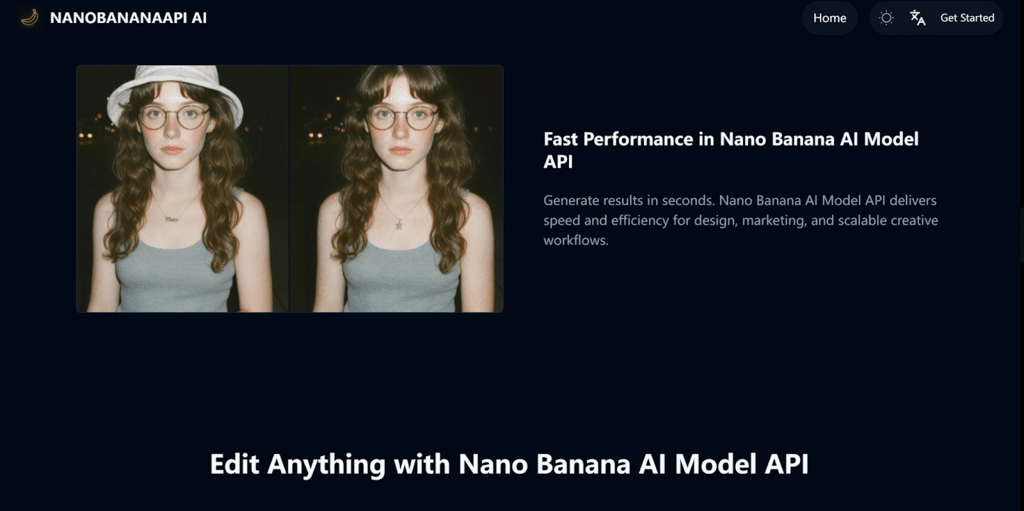
One of the most powerful aspects of the Nano Banana API is its ability to deliver precise image editing. Developers can use the API to fine-tune images by adjusting specific details such as colors, textures, and elements within the scene. Whether you’re looking to refine a product image or modify the style of a visual, Nano Banana AI image editing gives you the flexibility to achieve the exact look you envision. This level of customization ensures your images meet the high standards of both creative and professional projects.
Consistency in Characters and Visual Design
Maintaining character consistency across multiple images is essential for projects that involve storytelling or brand identity. The Nano Banana API ensures that elements like characters, logos, and design patterns remain consistent across images, making it ideal for applications like branding and illustrations. This feature helps businesses create a cohesive visual language that resonates with their audience, ensuring that the look and feel of the visual content are uniform throughout.
Realistic and Physically Accurate Image Effects
With the Nano Banana API, you can generate images that follow physical laws to achieve realistic effects. The API ensures that lighting, shadows, and reflections make sense within the context of the image. This adherence to realistic light and shadow logic makes the images appear natural and believable. Whether you’re creating complex scenes or realistic product visuals, Nano Banana AI image generator provides the tools needed to ensure your images are not only visually stunning but also grounded in physical realism.
Integration with Gemini World Knowledge for Contextual Accuracy
One of the standout features of Nano Banana API is its integration with Gemini world knowledge. This integration enhances image generation by providing contextual relevance based on vast global data. Whether you’re creating visuals for a specific cultural context, region, or subject matter, the API leverages this knowledge to produce images that are both accurate and meaningful. This feature ensures that your content is not only visually appealing but also aligned with real-world contexts.
Pricing Comparison: How Nano Banana API Stacks Up Across Different Platforms
When considering which platform to use for Nano Banana API, pricing plays a pivotal role in determining which solution offers the best value. Whether you’re an independent developer or a growing startup, understanding the different pricing structures available across various platforms will help you maximize your resources and stay within budget. In this comparison, we will examine Google’s official pricing, Fal.ai, and nanobananaapi.ai, focusing on the costs and features each platform offers for developers seeking AI image generation and editing capabilities.
Official Google Pricing: The Baseline
Google’s Gemini 2.5 Flash Image API, accessible through Google AI Studio or Vertex AI, is one of the most well-known options for Nano Banana API integration. The pricing is set at $0.039 per image (approximately 1290 output tokens at $30 per million tokens), which follows a straightforward pay-as-you-go model. This pricing structure is ideal for developers needing enterprise-grade reliability and direct access to Google Nano Banana.
While this platform offers robust Nano Banana API documentation and a free trial, the costs can escalate quickly for high-volume projects. For developers working with small-scale applications or prototypes, Google’s pricing is manageable, but those scaling larger applications or projects may find the cost-per-image to be prohibitive as usage increases.
Fal.ai: Flexible but Standard Pricing
The Fal.ai platform offers Nano Banana API at the same price point as Google—$0.039 per image for both text-to-image and image-to-image tasks. Known for its ease of use, Fal.ai simplifies request handling through a client API, making it an excellent choice for developers building real-time applications or prototypes. The platform also supports file storage and webhooks, making it easy for developers to integrate and manage the API seamlessly.
However, Fal.ai’s pricing mirrors Google’s and lacks any additional discounts for high usage. While this platform is ideal for smaller-scale or quick prototyping tasks, it may not be the most cost-effective solution for larger projects that require high-volume image generation. For developers looking to scale their applications, Fal.ai’s pricing may not offer the same level of value as other platforms with more flexible pricing models.
Kie.ai: The Most Cost-Effective Option
Kie.ai offers Nano Banana API at a significantly more affordable rate of $0.02 per image, making it one of the most cost-effective options available. This pricing is ideal for indie developers or startups where budget is a crucial factor. With a free Playground for testing, Kie.ai provides developers with an easy entry point to explore the Nano Banana AI API without any initial costs.
In addition to its affordable pricing, Kie.ai excels in offering high-concurrency performance, making it a great choice for developers looking to scale their projects without worrying about increasing costs. The platform ensures that your applications will maintain high performance, even as your usage grows.
Kie.ai’s pricing is ideal for developers looking for a low-cost solution without compromising on the quality of AI image generation and editing capabilities. Its competitive pricing combined with robust features and scalability makes it the best value for many development teams.
Conclusion
In comparing the Nano Banana API pricing across Google, Fal.ai, and Kie.ai, it’s clear that each platform offers unique advantages based on the needs of the developer. Google and Fal.ai provide solid, reliable solutions, but their pricing can become expensive for high-volume usage. For developers looking to maximize cost-efficiency without sacrificing quality or performance, Kie.ai provides the best value, with its affordable pricing of $0.02 per image and scalability to meet growing project demands. Whether you’re just starting or scaling up, Kie.ai offers the most cost-effective solution for integrating Nano Banana API into your projects.
How to Integrate Nano Banana API into Your Application
Step 1: Obtain Your Nano Banana API Key
To start using the Nano Banana API, sign up for an account on the platform and retrieve your Nano Banana API key. This key is required to authenticate all of your requests. You can generate it from the API Key Management Page and securely store it for future use. Ensure the key is not exposed in your client-side code to maintain security.
Step 2: Select Your Endpoint and Make the API Request
Once you have your API key, you need to select the correct endpoint based on your project needs. For image generation, use the Text-to-Image Generation endpoint; for editing existing images, use the Image-to-Image Editing endpoint. After choosing the appropriate endpoint, you’ll need to send a POST request to the Nano Banana API. This request should include the required parameters, such as the text prompt for image generation, image URLs for editing, and a callback URL for receiving task completion notifications. Don’t forget to include the Authorization header with your API key for authentication.
Step 3: Monitor Task Status and Retrieve Results
Once your request is submitted, you can use the Query Task API to track the progress of your image generation or editing task. After the task completes, the results, including the generated image URL or error messages, will be sent to your callback URL. This allows you to easily retrieve and integrate the final image into your application.
Choosing the Right Platform for Nano Banana API Integration
The Nano Banana API offers a wide range of powerful features, including precise image editing, realistic and physically accurate image effects, quick processing speeds, and integration with Gemini world knowledge for enhanced contextual accuracy. Whether you’re working on e-commerce, gaming, or social media applications, Nano Banana API provides the flexibility and performance needed to generate high-quality visuals tailored to your project’s needs.
When it comes to pricing, each platform offering Nano Banana API has its strengths and weaknesses. Google’s official pricing provides enterprise-level reliability but at a higher cost per image, which may not be sustainable for high-volume projects. Fal.ai offers similar pricing but lacks significant discounts for high usage, making it less cost-effective for larger applications. In contrast, NanoBananaapi.ai offers the best value with affordable pricing at just $0.02 per image, ideal for indie developers and startups. With high-concurrency support and robust performance, NanoBananaapi.ai ensures scalability without exceeding budgets. By comparing these options, developers can choose the best provider for their needs and budget.