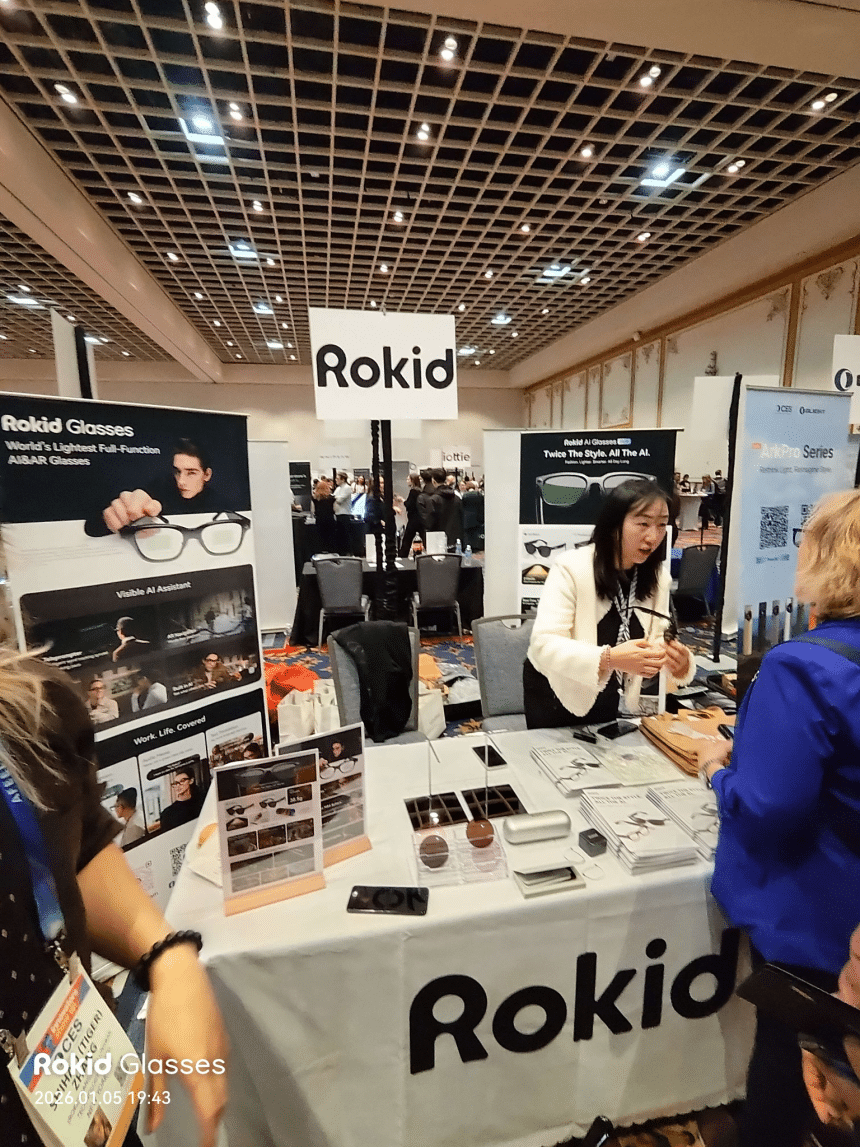
It’s pretty clear which products are still concept-driven and which are already focused on daily use at CES. Rokid fell firmly into the latter category across their newest line of two products: Rokid Glasses and the new Rokid Ai Glasses Style.
Both products reduce friction between what you see, what you capture, and what you want to remember. The difference lies in how that intent is expressed.
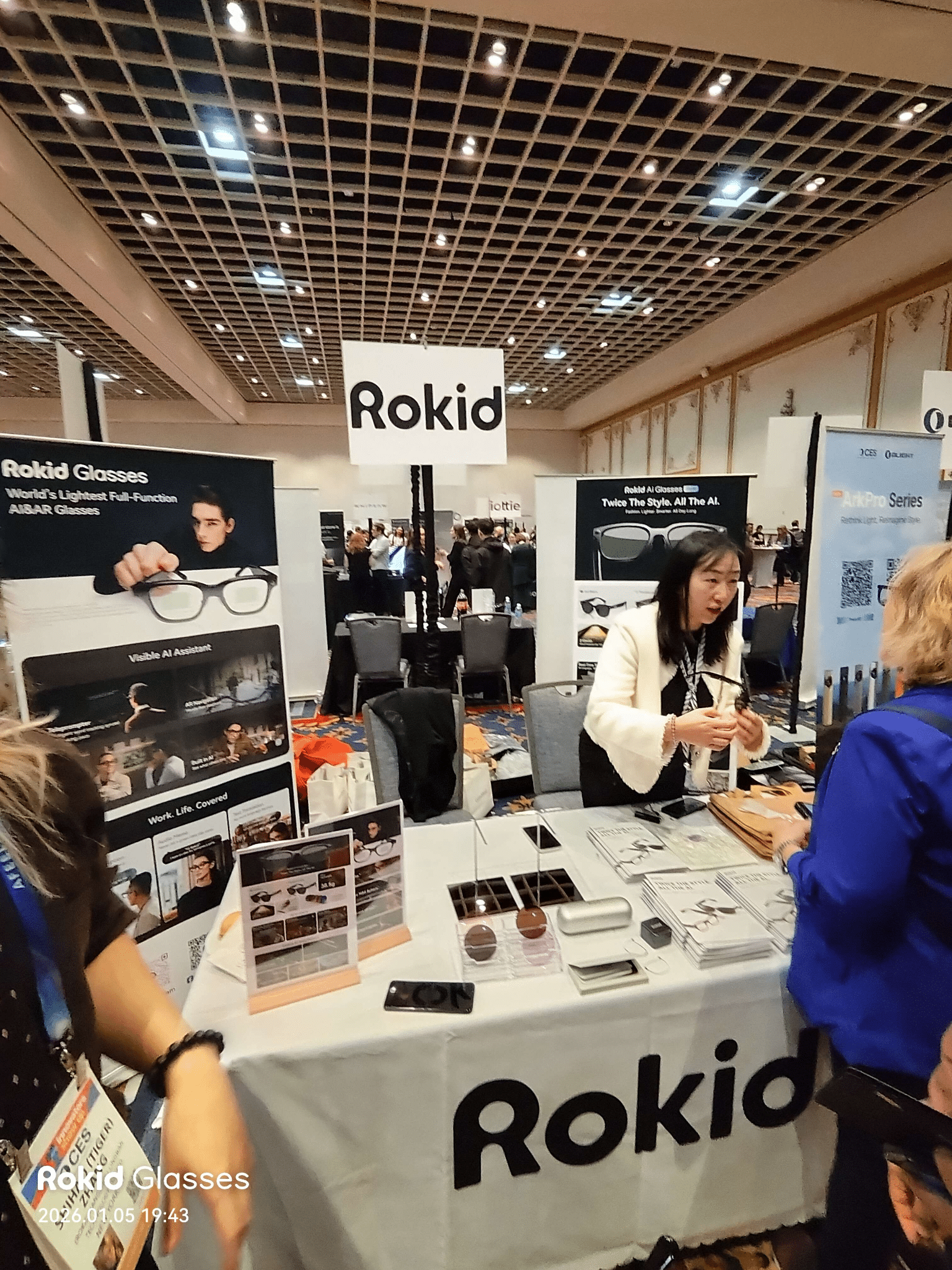
The camera experience on Rokid Glasses is tightly integrated with the heads-up display. A simple voice command or physical input triggers the camera, while subtle on-display cues confirm framing and capture without pulling attention away from the scene itself.
The camera helps surface contextual information through AI functionalities: translated text from a multilingual menu, keywords during a meeting, or navigation prompts while walking the show floor.
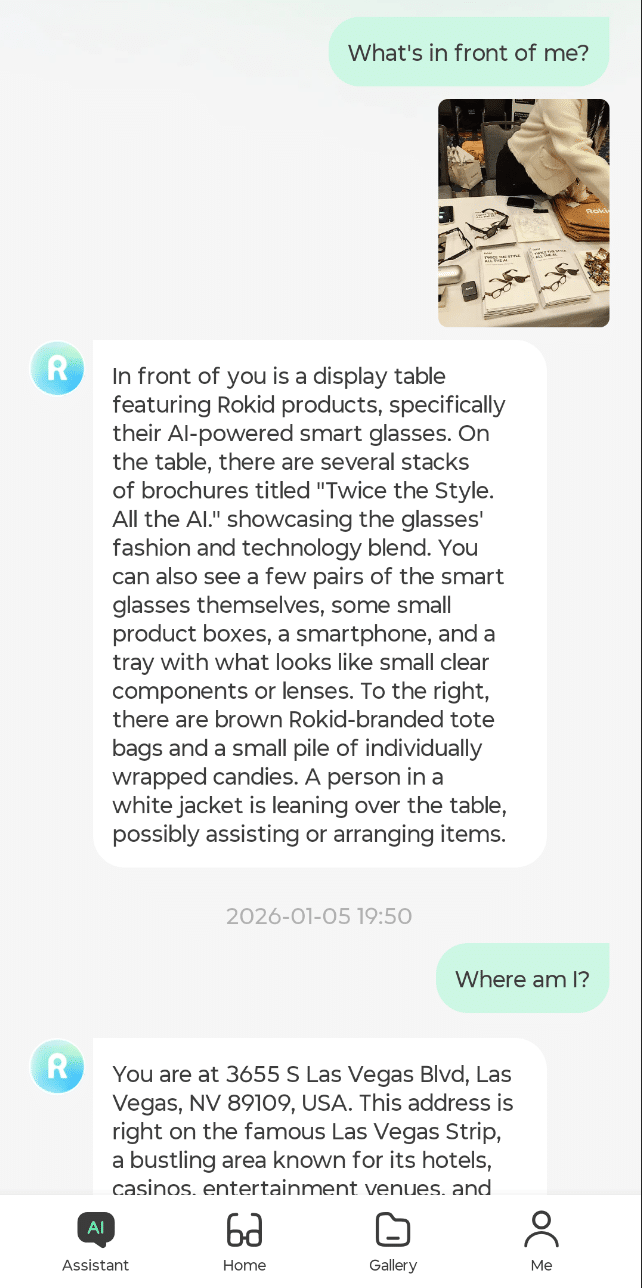
In practice, this meant the glasses were less about “shooting content” and more about capturing a first-person perspective tied to understanding.
By contrast, Rokid Ai Glasses Style removes the display entirely, and that changes how the camera is experienced. There’s no visual confirmation floating in front of you. Instead, capture relies on voice feedback, audio cues, and physical interaction.
Using the camera on Style felt like it didn’t interrupt the moment at all. A voice prompt confirms capture, and the glasses immediately return to silence. There’s no temptation to check framing or review shots on the spot. You stay present, trusting that what you saw is what was captured.

Rokid isn’t treating the camera as a headline feature. Instead, it’s treated as infrastructure, a way to support memory, understanding, and communication. On Rokid Glasses, the camera benefits from light visual feedback and contextual overlays. On Rokid Ai Glasses Style, the camera fades almost completely into the background. In both cases, the goal is to reduce the distance between seeing something and saving it meaningfully.
CES is full of moments where technology feels impressive but distant. Rokid’s camera demos felt different because they were grounded in behaviors most people already understand: remembering conversations, capturing experiences, and navigating unfamiliar environments.
By the end of the hands-on sessions, neither product felt like a “CES device,” but tools already waiting for a place in daily routines.