
The iPad began as a device designed primarily for browsing, reading, and watching videos. Over time, it has steadily evolved into something more versatile, with Apple marketing it as a true computer alternative. Yet many owners still ask themselves a pressing question: can this slim tablet really replace the weight of a laptop bag? For those who spend their days traveling between meetings or working from cafés, the potential is there—but only with the right apps and smart workflows.
Email and scheduling as the foundation of mobile work
For most professionals, email and calendar management form the backbone of everyday business. Apple’s built-in Mail and Calendar apps cover basic needs, but alternative clients such as Microsoft Outlook and Spark have become popular because they combine multiple accounts, offer built-in scheduling tools, and simplify inbox management. With iPadOS supporting multitasking, it is possible to draft a reply while reviewing a document side by side. That integration saves time and keeps the focus on what matters most: communication.
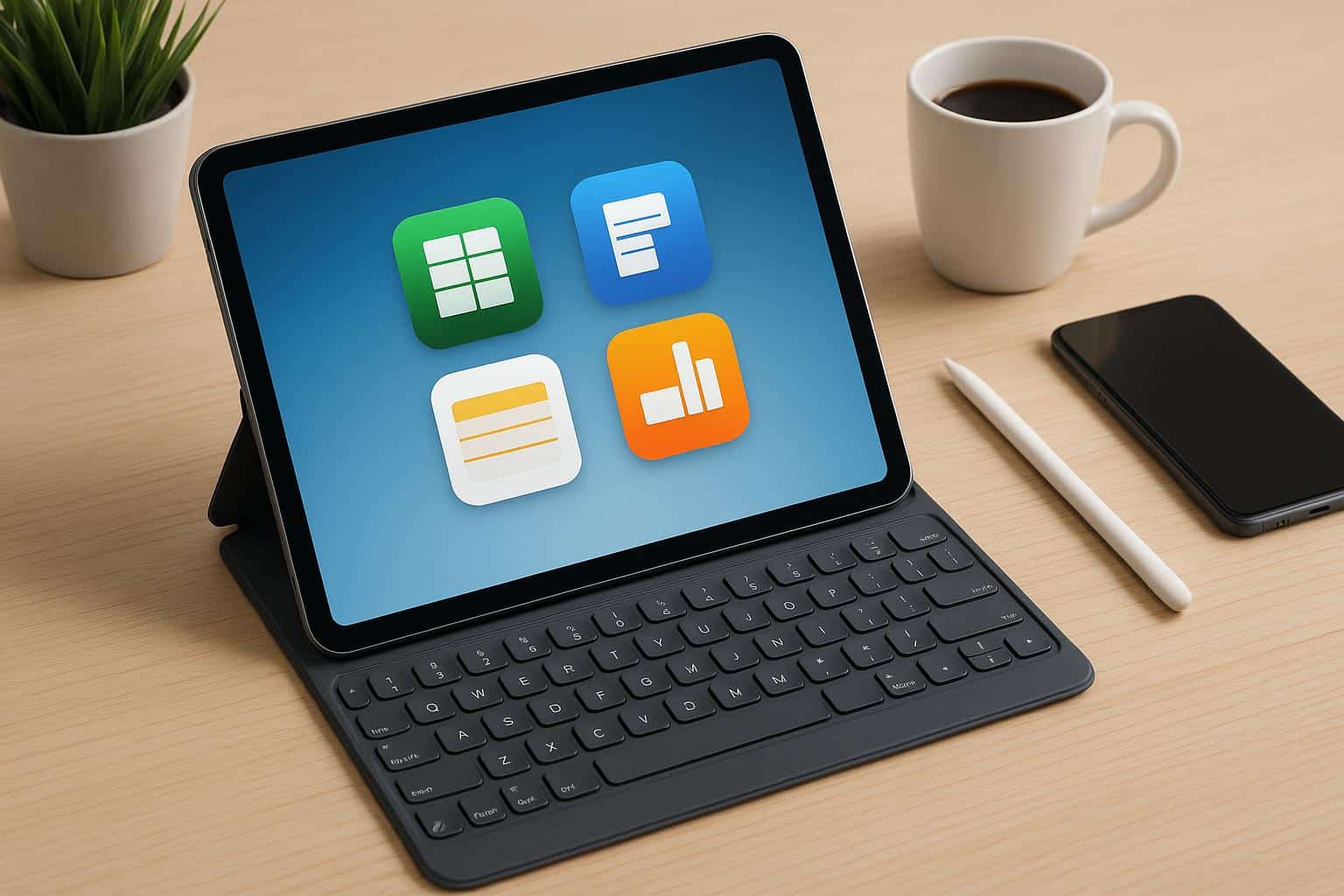
While communication tools are crucial, many freelancers face another challenge: billing clients quickly and without delay. Using invoicing software directly on the iPad allows them to send professional invoices immediately after a job is completed, rather than waiting until they return to a desktop. This simple step turns downtime into productive time and helps maintain a professional image with clients who expect efficiency and speed.
Writing, editing, and creating documents on the move
Producing content on an iPad once felt clumsy, but that has changed significantly. Word processors such as Microsoft Word and Google Docs now offer nearly full desktop functionality on iPadOS. Documents can be drafted, edited, and shared in real time with colleagues, making collaboration practical even on the go. For those who prefer distraction-free environments, apps like Ulysses and Bear create focused writing spaces that minimize clutter and encourage deeper concentration on the text at hand.
Beyond text, the iPad also works well for handling PDF documents. Apps such as PDF Expert and Apple’s built-in Markup tools enable users to annotate directly with the Apple Pencil, highlight passages, and sign contracts digitally. This combination of mobility and precision makes the device appealing for consultants, educators, and professionals who regularly exchange documents with clients or colleagues. What was once seen as a consumption tool now supports genuine professional document workflows.
Creative professionals transforming the iPad into a studio
Visual artists and designers have embraced the iPad Pro in particular. Applications such as Procreate and Affinity Designer demonstrate how tablet software can reach professional standards, supporting high-resolution canvases and advanced tools. The Apple Pencil enhances this further by providing pressure sensitivity and natural drawing feedback. For many artists, it has become a portable sketchbook and studio combined, making creativity possible in spaces where laptops are impractical.
Musicians also use the iPad for both learning and production. Apple’s GarageBand allows multi-track recording, while apps like Cubasis provide more advanced editing environments. With external accessories connected through USB-C, an iPad can function as a mobile workstation for composing or recording ideas. This flexibility has encouraged a growing number of independent creators to adopt the device not only as a companion but as a core creative tool.
Security, storage, and setting realistic expectations
Working on the move raises legitimate concerns about privacy and security. Public Wi-Fi networks can expose sensitive data, and iPad users are not immune to common risks such as phishing attempts. Using a reputable virtual private network (VPN) app adds a valuable layer of protection when handling client communication or confidential documents. Apple also continues to emphasize security through features like Face ID, Touch ID, and on-device encryption, which provide a strong baseline for everyday work.
Storage is another practical consideration. Entry-level iPads may quickly reach capacity when loaded with apps, large documents, and creative projects. Cloud services such as iCloud, Google Drive, or Dropbox help, but professionals who rely on offline work during travel often find higher storage models more efficient in the long run. Choosing the right configuration is therefore essential for a smooth experience.
Video calls, remote teamwork, and the role of accessories
For many professionals, collaboration now happens through a camera lens. The iPad has steadily improved in this area, with features such as Center Stage on newer models automatically adjusting the front-facing camera to keep participants in view. Apps like Zoom, Microsoft Teams, and Webex run smoothly on iPadOS, providing access to screen sharing, chat functions, and breakout rooms. This makes it possible to attend or even host a virtual meeting without opening a laptop, which can be particularly helpful during travel.
The device also benefits from its ecosystem of accessories. Apple’s Magic Keyboard with trackpad converts the iPad into a near-laptop form factor, making typing long documents or managing spreadsheets less of a strain. The addition of external displays in recent versions of iPadOS further expands what the tablet can handle, turning it into a workstation that feels far less restrictive. Logitech and other third-party manufacturers offer alternatives that balance cost with functionality, giving professionals multiple entry points depending on their budget.