
Although manufacturers with each new model of their smartphones add new features and claim various advantages of their gadgets and an extensive range of functions, studies show that most people use less than half of the functionality and capabilities of their mobile phones. For most, a smartphone performs the tasks of a messenger, a device for watching videos and creating short clips or photos to post on social media. Directly as a phone for communication using calls, it is also used less and less often. The history of the development of gadgets can be studied in detail by ordering a custom essay service where you can find a lot of useful information about the technical evolution of phones and their social and cultural impact.
However, it is worth remembering that the modern smartphone has a huge number of sensors, which, with the help of various programs, can be used practically. They can be used to study physical phenomena, analyze the environment, and even predict the weather.
Smartphone as a Light Meter
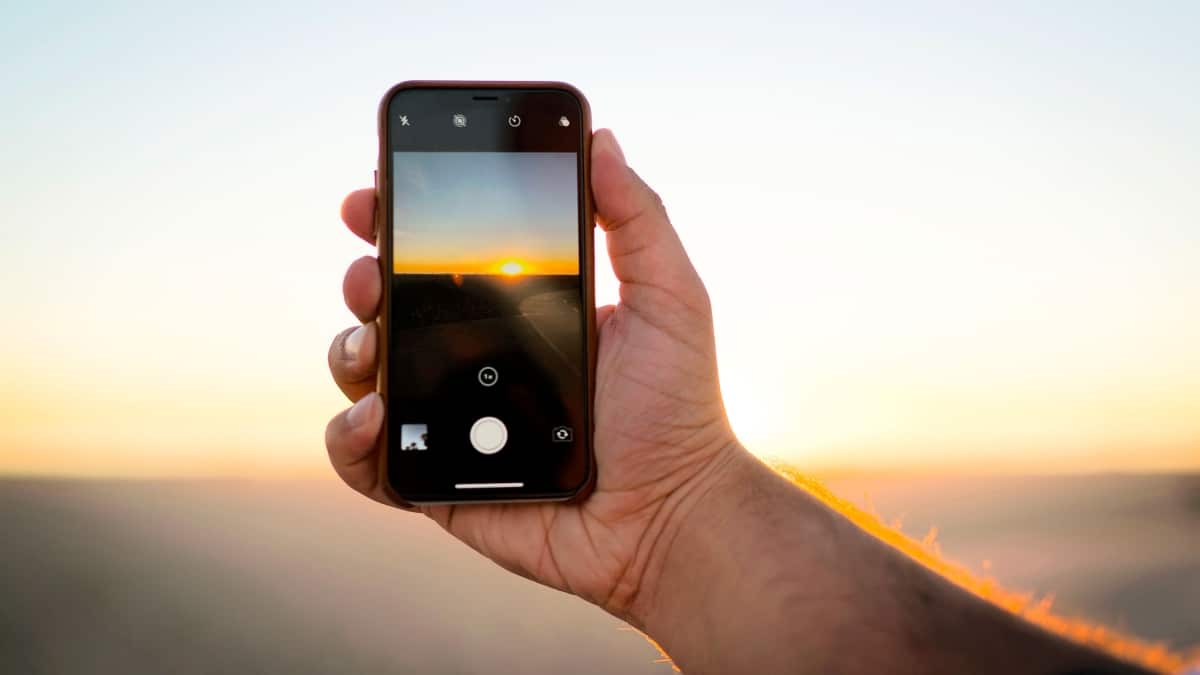
One of the most accessible experiments that can be done with a smartphone is measuring light levels. Every modern phone is equipped with a brightness sensor. In normal use, it plays the role of a screen brightness controller so that the smartphone adjusts the picture to the lighting conditions. But it can be used for scientific and useful purposes. The light sensor measures the amount of light that hits the screen’s surface. This data can be used to analyze the light level in different rooms in your home. All you need to do to experiment is download the Lux Meter app or something similar, allowing you to take numerical measurements. For example, measure the light level in the bedroom with the lights off and on, then repeat the experiment on a sunny and cloudy day outside. Using your findings, you can apply them to improve the lighting conditions in the room or create the desired atmosphere.
Illumination is measured in lux (lx). For example, the recommended lighting level for working at a computer, writing, or reading is about 500 lux, while in the bedroom, there is enough 100-150 lux to create a cozy atmosphere. By taking a series of test measurements, you can better adjust your lighting system to create a healthier environment and even save money on your energy bills.
Smartphone as an Accelerometer
Another interesting use of a smartphone is to utilize the built-in accelerometer. This sensor measures the acceleration of an object in three axes: X, Y, and Z. It allows you to determine the tilt, vibration, and even the force of shaking the smartphone. The measurements were taken in meters per second squared (m/s²). Using it, you can better understand how the laws of physics work and design a research project for a school or university.
For example, you can measure your acceleration while running, driving a car, or riding a bus, and the dynamics of that acceleration depend on the weather or road conditions. To use this feature, download an app that reads accelerometer data, such as Physics Toolbox Sensor Suite.
Smartphone as Spectrometer
Ever wondered how you might use a simple smartphone to see into the spectrum of light? Using improvised equipment makes it possible to construct a basic spectrometer. Essentially, this is all about analyzing light composition, which can also be done through your gadget camera. In basic terms, the light spectrum is mainly an intensity distribution over wavelengths. That would be how, by analyzing the spectrum, one finds out what chemical elements comprise a light source. Incandescent light bulbs can create a wider spectrum, while in contrast, light-emitting diodes- or LEDs- can do the opposite: emit more along a narrow range of wavelengths. This will enable you to plunge into optics basics and understand how light interacts with different materials.
You’ll need a smartphone and a regular DVD disk to build a home spectrometer. Cut the disk so that it can be placed against the smartphone’s camera, creating a narrow slit for light to pass through. This will allow you to separate the light into a spectrum. For example, by examining the spectrum of an incandescent light bulb, an LED bulb, and sunlight, you will notice that each light source has a unique spectrum that you can see on your smartphone screen.
Smartphone as a Noise Meter
Modern smartphones are equipped with not one but several built-in microphones. This is necessary to ensure that you are perfectly heard when you talk, and when recording video, the phone captures the surround sound. At the same time, thanks to the presence of several sufficiently sensitive microphones, your smartphone can be turned into a noise measurement sensor. Knowing the sound level is important not only for understanding acoustics but also for hearing care. Prolonged exposure to noise levels above 85 dB can damage hearing, and you can use your smartphone to monitor your condition. You’ll need a sound level measurement app like Sound Meter or Decibel X for this experiment.

You can check how loud different objects are, compare whether different noisy appliances meet the manufacturers’ stated noise levels, and even monitor decibel levels during a party to ensure they don’t exceed the legal limits.
Smatphone as a Barometer and Altimeter
Some smartphones have a barometric sensor that measures atmospheric pressure. In this way, one is capable of forecasting the weather and measuring the altitude above sea level. Special built-in apps or programs from the market, like Barometer & Altimeter, will help measure altitudes above sea level and atmospheric pressure.
Conclusion
A long time ago, the smartphone stopped being just a means of communication. Yet, we don’t use many of its functions because we simply do not need them or just because we don’t know about them. It would be justified to try at least to realize, even as just an experiment, more substantial capabilities of modern gadgets that cost decent money in order to expand your knowledge in various areas of physics or to improve the quality and safety of life with the help of available sensors.