Gas safety often takes a back seat in the world of smart-home tech, overshadowed by cameras, doorbells, thermostats, and lighting systems. Yet methane, LPG and natural-gas leaks remain one of the most overlooked household hazards, responsible for thousands of incidents worldwide each year. As homes become more connected and intelligent, a WiFi-enabled gas leak detector is no longer an optional device—it’s a practical essential.
Now, the market for smart gas-leak detectors has shifted significantly toward connected, app-enabled systems that provide real-time data and instant notifications. If you’re searching for the right WiFi gas-leak detector for your home, you’ll quickly find that options vary widely in design, functionality and sensitivity. This guide breaks down what you need to know before making a decision—and highlights one of the most balanced choices available today.
Why Smart Homes Need a WiFi Gas Leak Detector
Traditional standalone gas detectors have served households for years, but they come with clear limitations. Their alarms only work when you’re physically nearby, and they offer no real-time insights into actual gas-concentration trends. They often lack app connectivity, making them less useful when you’re away from home.
Smart WiFi gas-leak detectors go far beyond simple alerts:
- They send real-time mobile notifications via an app.
- They allow homeowners to check gas levels remotely from anywhere.
- They often include digital displays showing temperature, concentration levels and system status.
- They integrate smoothly with broader smart-home ecosystems.
Given the number of modern homes now using connected systems—from Tuya and Smart Life to HomeKit and Google Home—smart gas-leak detectors offer a valuable, affordable upgrade for safety.
How WiFi Gas Leak Detectors Work
Before choosing a model, it’s useful to understand what these devices actually do. Gas leak detectors monitor airborne concentrations of combustible gases such as methane (CH₄), propane, biogas or natural gas. When levels exceed a safe threshold, the detector triggers an audible alarm and sends an app alert if WiFi is connected.
So, a good detector should offer:
- Accurate detection of the gas type used in your home
- Fast response time
- Stable WiFi connectivity
- Clear information via display or app
Most WiFi gas detectors today rely on a 2.4GHz WiFi network, which offers long-range stability suitable for homes and commercial spaces.
A Quick Look at Sensor Technology (For Curious Buyers)
Most modern gas-leak detectors use one of several sensor technologies, such as catalytic-bead, semiconductor or electrochemical sensors. You don’t need to be an engineer to pick a good detector, but it helps to understand two basic ideas:
- Sensitivity and thresholds: Good detectors are designed to identify gas levels well below the lower explosive limit (LEL) or at low parts-per-million (PPM) concentrations, giving you early warning before conditions become dangerous.
- Stability over time: Sensors slowly drift as they age. That’s why reputable manufacturers specify a sensor lifespan and, in some cases, perform factory calibration to keep readings accurate throughout the device’s life.
For everyday buyers, the most important thing is to choose a detector from a brand that clearly states its detection range, supported gases and lifespan instead of vague claims like “high sensitivity” with no numbers behind it.
Key Factors to Consider When Choosing a WiFi Gas Leak Detector
Not all smart detectors are built the same. Here are the most important things to look out for:
3.1 Supported Gas Types & Detection Accuracy
The most versatile models support multiple gas types, including Methane (CH₄), LPG, propane and natural gas. If your home uses more than one type—or you want a detector suitable for kitchens, restaurants or storage areas—multi-gas detectors provide better long-term coverage.
3.2 App Connectivity, Real-Time Alerts & Cloud Functionality
WiFi-enabled detectors typically connect to the Tuya or Smart Life ecosystem. These apps allow you to receive immediate alerts, view historical gas-level data, monitor device status and pair the detector with automation (e.g., turn on a ventilation fan when gas is detected). A stable 2.4GHz WiFi connection is key—especially if the device is installed in a basement, garage or kitchen.
3.3 On-Device Display & User Interface
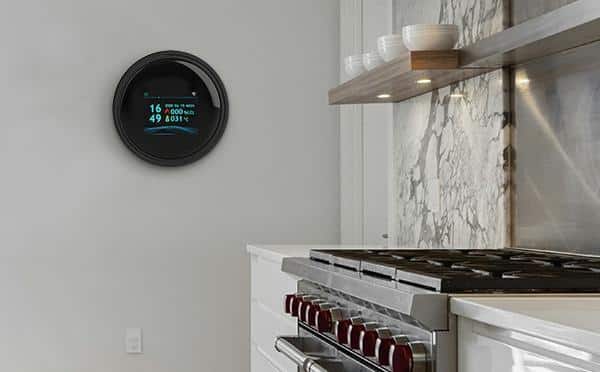
Some models have no screen at all; others offer small LED indicators. The most premium picks feature a large digital display showing current gas concentration, temperature, alarm status and WiFi connection status. A display is especially helpful in kitchens, rentals or commercial settings—delivering information at a glance without fussing with a phone app.
3.4 Alarm Volume & Response Time
Gas leaks can escalate quickly. A good detector should emit at least 70-85 dB, trigger quickly once threshold levels are reached and respond consistently without frequent false alarms. Models that allow sensitivity or threshold adjustments offer even better customization.
3.5 Installation: Wall-Mounted vs. Plug-In vs. Battery-Powered
Installation type has a major impact on performance, placement flexibility and long-term reliability:
| Item | Wall-Mounted | Plug-In | Battery-Powered |
|---|---|---|---|
| Pros | Stable & accurate | Easy no-drill setup | Highly portable |
| Cons | Requires mounting | Limited by outlet location | Needs battery replacement/recharge |
| Best For | Smart homes, long-term use | Rentals, quick installs | RVs, basements, no-outlet areas |
Overall: Wall-mounted detectors generally offer the best balance of stability, accuracy and smart-home integration.
3.6 Smart Home Integration
Some detectors integrate with broader smart-home systems, enabling automation such as turning on exhaust fans, triggering smart sirens or sending alerts to multiple family members. Compatibility with Tuya, HomeKit or Google Home is a significant advantage.
3.7 Certification, Lifespan & Warranty (Often Overlooked, but Critical)
Beyond features and design, it’s important to look at how trustworthy and durable a gas leak detector really is:
- Safety certifications: Choose detectors that comply with recognized standards (e.g., UL, ETL, CE).
- Sensor/Product lifespan: Many detectors are rated for 5–10 years.
- Warranty and support: Multi-year warranty and active app updates signal brand reliability.
Checking these three items takes little time—but it can make the difference between a device that works reliably when you need it and one that silently fails before a real leak happens.
3.8 Price, Build Quality & Warranty
Smart gas detectors range from $40 to over $120. Higher-end models usually offer:
- Better displays
- More precise sensors
- More gas type compatibility
- Wider installation options
The goal isn’t to buy the most expensive option—but to choose the model with the best balance of features for your home.
Best Overall Pick: GasDog WiFi Gas Leak Detector
Among the current options on the market, the GasDog WiFi Gas Leak Detector stands out as one of the most complete and well-rounded smart gas-safety devices available in 2025.
Designed to detect methane (CH₄), LPG and natural gas, it covers the most common combustible gases found in homes, apartments, restaurants and commercial spaces. Its most distinctive feature is the large digital display, which shows real-time gas concentration, temperature, WiFi status and alerts — giving users immediate visual feedback without needing to open the app.
Key Specs at a Glance
| Item | GasDog WiFi Gas Leak Detector |
|---|---|
| Gases Detected | Methane (CH₄), LPG, Natural Gas |
| Connectivity | 2.4 GHz WiFi, Tuya app support |
| Display | Large digital screen (gas level + temperature) |
| Installation | Wall-mounted |
| Typical Use Cases | Home kitchens, apartments, restaurants, storage rooms |
| Target Users | Smart-home owners wanting reliable real-time alerts & data |
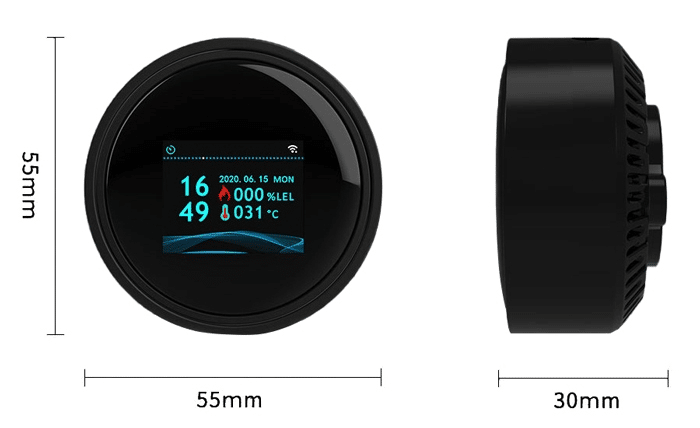
With its clean design, stable connectivity and competitive pricing starting around US $69, the GasDog WiFi gas leak detector delivers excellent value.
It offers the performance, display quality and usability typically found in higher-priced models — making it a strong choice for homeowners who want smart-home-level protection without overpaying.
Who Should Consider a WiFi Gas Leak Detector?
While every household using gas appliances can benefit, certain groups will find WiFi detectors especially helpful:
- Homeowners using natural gas or LPG in kitchens or boilers
- Families with elderly residents living alone
- Owners of Airbnb or short-term rentals
- Restaurant or commercial-kitchen operators
- Homes with basements, adjacent garages or poor ventilation
- Smart-home users wanting integrated automation and remote alerts
If any of these scenarios apply, a WiFi gas-leak detector is a smart, practical addition.
What to Do If Your Gas Leak Detector Goes Off
A detector is only useful if you know what to do when it alarms. While local instructions may vary, basic steps include:
- Stay calm—treat every alert as real until confirmed.
- Avoid creating sparks—do not switch lights or appliances on/off.
- Ventilate the area—open windows and doors safely.
- Shut off the gas supply if you can access the main valve.
- Evacuate people and pets from the area.
- Contact your gas supplier or local emergency services before re-entering.
- Do not rely solely on a “silent detector” to mean you’re safe—if you smelled gas or feel symptoms like nausea, seek help anyway.
Having a clear action plan in mind makes your detector far more effective in real life.
FAQs About WiFi Gas Leak Detectors
Do gas leak detectors replace smoke or carbon-monoxide alarms?
No. Gas leak detectors are designed to detect combustible gases; smoke alarms and CO detectors address different hazards. They complement one another, rather than replace each other.
How many detectors does a typical home need?
At minimum, one should be placed in every room containing a gas appliance (e.g., gas stove, boiler, gas dryer), plus any enclosed space where gas may accumulate (e.g., basement, utility room).
Where should I place a WiFi gas leak detector?
Placement depends on gas type, but as a rule of thumb: follow manufacturer instructions, avoid vents or fans, and ensure the WiFi signal is stable.
How often should I replace a detector?
Follow the manufacturer’s stated lifespan. Many models are rated for 5–10 years—even if the device powers on, the sensor may no longer be accurate once its service life is up.
Final Thoughts: A Smart-Home Essential
As homes become more automated, it makes sense to prioritize devices that protect both family and property. WiFi gas-leak detectors offer a level of safety and convenience that traditional detectors simply cannot match—especially when you’re away from home.
By focusing on the key factors—supported gas types, connectivity, display quality, alarm response, smart-home integration, certification and lifespan—you can confidently choose a device tailored to your needs. And for most households, the GasDog WiFi Gas Leak Detector strikes an excellent balance of advanced features, reliability and affordability.
Whether you’re upgrading your smart home or simply want peace of mind, adding a WiFi gas-leak detector is one of the smartest safety investments you can make for the future.