
salary, a traditional concept, now refers not only to a fixed monthly amount, but also to other forms of payment. New digital platforms, automation, and artificial intelligence, as well as global connectivity, have made big changes in the processes of salary calculation, payment, analysis, and optimization. Technology is the main factor in all these new salary management practices, that is, from remote work and global hiring to smart payroll systems and data-driven compensation strategies.
The Evolution of Salary in a Digital Economy
There was a time when salary structures were really simple. The staff usually worked on-site, the salaries were based on local market rates and the entire payroll process was either manually done or assisted by very simple accounting software. However, technology has come in and made a big difference to that model.
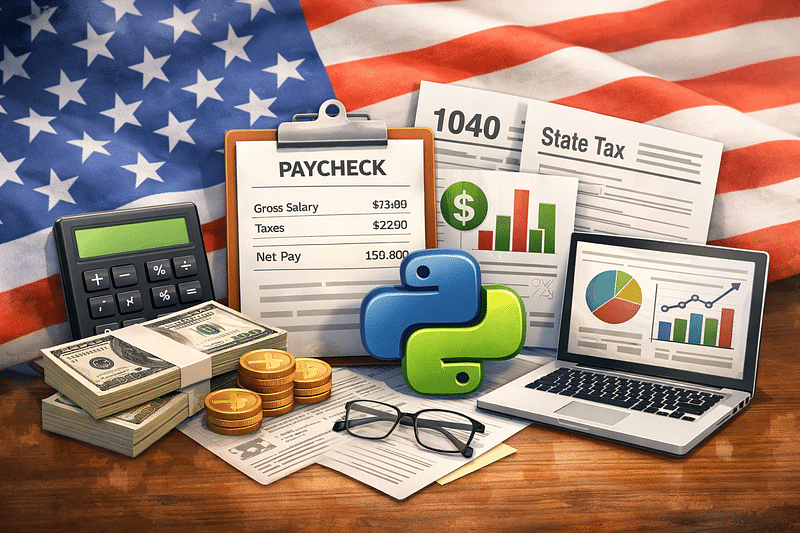
The cloud, secure online payment systems, and collaboration tools that are available worldwide, have given businesses the opportunity to attract talent regardless of the geographical barrier. Besides that, salary setting has turned out to be a more complex issue because of things like foreign exchange, different tax locations, and living cost adjustments.
Meanwhile, employees have been increasingly asking for more transparency and flexibility net salary calculator usa computation and payment. Technology has been actively sought after to meet these requirements by providing real-time information, automatic calculations, and one-on-one insights into what one earns.
The influence of technology on contemporary payment schemes.
Data-Driven Compensation Models
The data-driven approach has been at the forefront of the salary management methods. Companies not only know the wage rates that have been set but also get acquainted with the market and uniformly pay their workers, depending on the various divisions. Using the potent algorithms, job role, experience level, location, and even performance grading are taken into account when fixing the salary.
The whole process is so open that the employees can easily see and understand that their pay is in line with what the market is paying and the company’s goals. Moreover, this method guarantees the employees that their pay is based on objective factors.
Automation and Payroll Systems
The whole payroll process has undergone a radical change due to the automation and this has resulted in very few errors and the administration being less burdened. The current payroll systems are linked to attendance, performance reviews, and benefits management; consequently, salary figures are calculated automatically. The automation also helps to maintain the accuracy of all the above-mentioned elements in each payment cycle.
The Impact of Remote Work on Global Salary Approach
Remote work radically opened up the debate on salaries. The problems of fair and equal pay become much more intricate when employees come from diverse countries and areas. Thus, the question arises—where- is the payment to be based on the location of the employee, the location of the main office, or some universal standard?
Technology is the one that offers diverse solutions to these matters. The online service gathers local cost-of-living data, exchange rates, and tax laws to direct the companies in their off-site workers’ salary policies. In this manner, they can not only keep up with the competition but also avoid losing their financial power.
For the workers, remote work with technology support translates into the global job market’s opportunity along with its higher pay and better work-life balance.
Financial Transparency and Worker Empowerment
The most important demand of the employees in the current workplace is the transparency. The workers want to be informed about the salary structure, the deductions, and the impact of their performance or position changes on future earnings.
Digital technology usage empowers the employees as it allows them to make use of the company’s resources, like a virtual dashboard that simply explains the salary components in an easily understood way. The devices indicate the total pay, taxes, benefits, and net salary to the user and thus make financial planning more accessible.
In a society that is reasonably financially literate, it will be the employees who determine the best time to buy, save, or invest, and that is why they need technology-assisted salary breakdowns products.
Best Global Salary Calculators for Accurate and Transparent Payrolls
The digital salary ecosystem is based on the presence of specialized tools, which are very important to facilitate complex calculations and very successfully to improve decision-making processes. One of the best tools in the ecosystem is the global salary calculator that help users to compare salaries of diverse countries while considering the aspects of taxes, currency differences, and the living conditions variations. This is a major advantage for the likes of telecommuters, freelancers, and multinational companies working in the global market.
Besides, the use of calculators designed specifically for a particular country, such as net salary calculator usa, makes it easy for the employer and employee to comprehend the net salary after all the federal, state, and local deductions. These tools utilize the most recent tax rules and allow the user to input certain variables to get the correct answer which eliminates doubt and saves time.
The use of such tools allows both employers and employees to maintain a high standard of integrity and transparency in dealing with complicated salary issues amidst a world that is becoming increasingly interconnected.
Cybersecurity and Salary Data Protection
The protection of salary data has become a major issue due to its digital nature. Salaries are very sensitive areas and people’s financial information must be protected from unauthorized access and cyber threats.
Modern technology has proposed sliding security, multi-level authentication, and highly secure cloud computing as solutions to the issue. The implementation of high-level security systems is making it possible not to disclose the salary data to unauthorized persons but to grant the access to those who have rights.
From the standpoint of the companies, the cost of the secured systems for managing salaries is not merely a technical requirement but rather a means of trust-building that protects the employees and at the same time enhances the corporate image.
Conclusion
In the current era, salary is not a single item anymore but rather a combination of factors like transparency, flexibility, and strategic planning. Technology has been the most important reason for the change in computation, management, and understanding of salary, and as a result, it has led to the distribution of benefits between employers and employees.
By utilizing data-driven pay models, machine-operated payrolls, and very intelligent tools that simplify the handling of complex calculations, technology has given people total control over their financial destinies. As the digital world keeps on growing, the use of technology in salary management will be the basis for a company’s everlasting vitality, obeying the laws, and financial literacy.