
HBOT has become quite popular in the recent past due to its effectiveness in treating injuries, enhancing recovery, and boosting general health. Originally developed for healthcare facilities, this treatment entails inhaling high concentrations of oxygen under pressure to boost the amount of oxygen in the tissues and tissues and promote wound recovery more swiftly. However, as in many segments of medicine, technology is the main mover in this field as well. AI and sensor technology have been used to improve the functionality of hyperbaric chambers in a way that makes treatments more efficient and precise than before.
This article shall look into the details of how AI and sensors are making it easier for hyperbaric chambers to operate and how patients are benefiting from the existing HBOT solutions.
Understanding Hyperbaric Oxygen Therapy
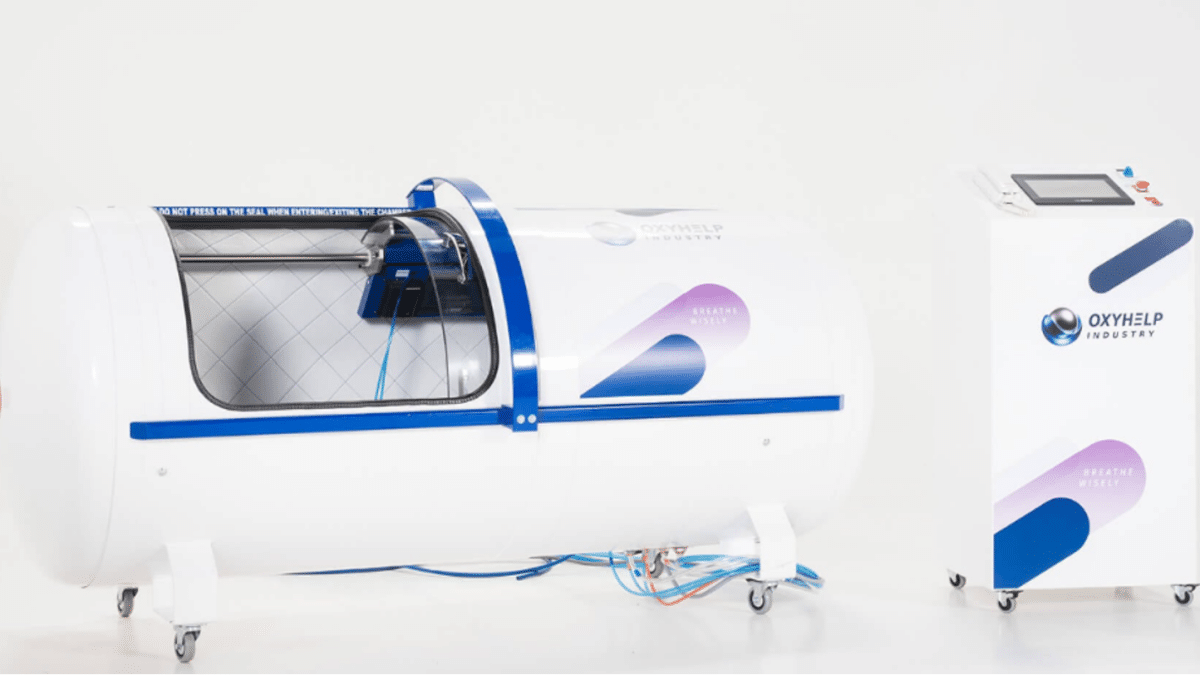
In order to determine the use of AI and sensors, one must first consider what hyperbaric oxygen therapy is. This therapy involves putting a patient in a chamber whose air pressure is regulated to be 2-3 times that of the normal atmosphere pressure. Under these conditions, patients breathe in pure oxygen which is absorbed in the bloodstream much better than under other conditions. It boosts the rate of healing, helps in cases of inflammation, enhances circulation and has several enhancements triggered by super-oxygenated blood.
Hyperbaric oxygen therapy is a well-known cure for chronic wound healing, divers sickness, and carbon monoxide poisoning. Other applications that technology is making possible include brain injury, sports recovery, and aging.
The Role of AI in Hyperbaric Chamber Efficiency
1. Personalized Treatment Plans
Perhaps, one of the greatest enhancements in hyperbaric chamber technology is the addition of artificial intelligence that will enable the formulation of individual patient treatment plans. AI algorithms can go through large datasets for a patient’s medical history, the patient’s current state, and the general goals of a certain therapy, and then modify the chamber’s settings based on all three. This allows attaining the precise amount of oxygen and pressure required to treat the patient, making the therapy more effective and minimizing side effects.
2. Predictive Analytics for Better Outcomes
The use of AI in healthcare is not restricted to the administration of treatments. The use of advanced algorithms and machine learning can be used to predict how a particular patient will do under hyperbaric therapy based on past results. This means that, based on the medical history and data collected, AI can forecast how particular treatments are going to affect the patient and how many sessions are going to go through before a particular condition is cured.
3. Automation of Monitoring and Controls
In the past, hyperbaric chambers posed significant challenges since they were operated and monitored by professional surgeons or technicians to ensure the pressure, oxygen levels, humidity, and temperature were ideal. Today, the use of AI techniques in automation can enable much of this monitoring and control work. Any additional data generated from the sensors within the chamber is used by AI systems to modify its values in real time to continue providing the right conditions for treatment inside the chamber.
The Impact of Sensors in Hyperbaric Chambers
1. Real-Time Health Monitoring
Sensors are particularly instrumental in improving the functioning of hyperbaric chambers. Regular collection of data like heart rate, level of oxygen, blood pressure, and respiratory rate by sensors gives useful information regarding the treatment.
Moreover, signs of stress or discomfort inclusive of changes in pulse rate or breathing rate, are also monitored with alarms sounded to relevant medical personnel for appropriate action to be taken.
2. Enhanced Safety Features
Hyperbaric oxygen therapy however has its side effects despite its non-invasive nature; this includes oxygen toxicity or barotrauma. These risks can be identified early by the sensors, and the AI system may change the chamber settings, or alert the healthcare provider to act. This improves the security of HBOT, especially for those who have other diseases or those who take long-term treatments.
3. Data-Driven Insights for Healthcare Providers
Data gathered by the use of sensors do not only have the advantage to the patient in the course of the session but also to the healthcare providers. Through this data, doctors will be able to see patients’ reactions to treatment and hence be in a position to make the right decisions concerning the number of sessions to offer in future.
AI and Sensors in Home Hyperbaric Chambers
With people becoming more interested in home-used hyperbaric chambers, technologies such as AI and sensors are equally instrumental in delivering enhanced HBOT to customers. Modern home hyperbaric chambers come with built-in pressure and oxygen targeting devices as well as AI systems to control the chamber.
To people who plan to use home hyperbaric chambers for an extended period of rehabilitation or health improvement, these technologies allow them to gain an enhanced feeling of safety and security knowing the chamber function is optimized and safe. Hyperbaric smart home units can also be linked to mobile applications so that patients can take their own vital signs, assess their own progress, and receive their own treatment recommendations.
As more home hyperbaric chambers expand their use of AI and sensors they become easier to use and more efficient for individuals who need to conduct hyperbaric oxygen therapy but do not require constant supervision of a doctor.
Future Trends: AI, Sensors, and the Evolution of Hyperbaric Therapy
It is also now clear that besides sensors and AI, hyperbaric chambers themselves are not the ultimate application of the technology. With the further progress of these technologies, even more, novelties in the sphere of hyperbaric oxygen therapy can be predicted.
For instance, Wearable technology is perhaps set to be more advanced and foster better reading on a patient’s vital health status. This can further allow for even finer changes to the atmosphere of the chamber that would help make the therapy even more effective.
Further, machine learning improvements could make outcomes predicting capabilities of the AI system even more accurate and result in better and faster treatment definitions for patients. With time, the collected data constantly fed into AI will make it even better to customize hyperbaric therapy for patients.
Conclusion
AI coupled with sensors is the new reality of hyperbaric chambers as they become smarter, safer, and more efficient. Such technologies make HBOT more personalized and efficient and increase the number of indications for its use, as the treatment is complemented by individual therapy plans, predictive analysis, and real-time monitoring.
The developments in the AI and the sensor technology are encouraging and the future of hyperbaric therapy seems prospective. These innovations may be in clinical application or for home use and the future of these technologies holds potential for the transformation of the perception of health care and recovery.