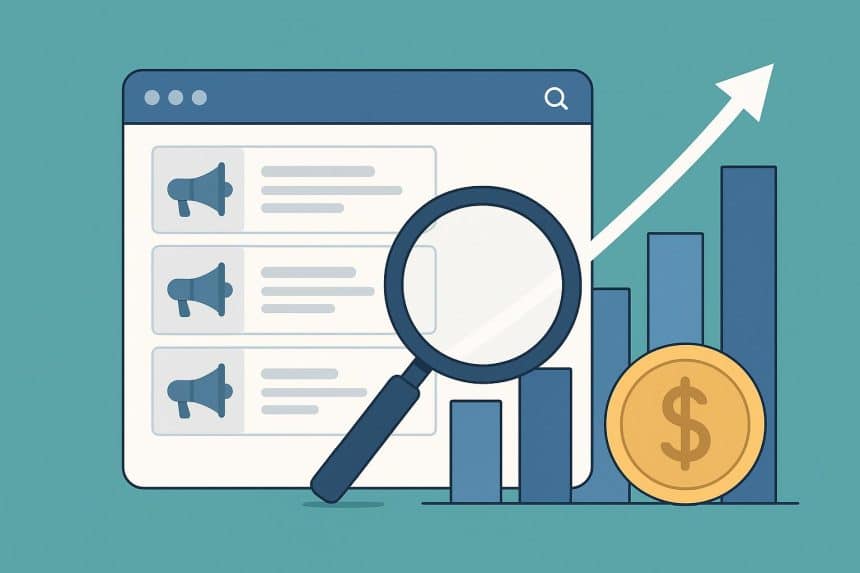
When you first open Ads Library, it feels deceptively simple. You search a brand, scroll through ads, and see what’s live. At face value, it looks like a transparency tool—something created for regulators and public accountability.
But once you’ve spent enough time running real campaigns, managing budgets, and being accountable for results, you realise something important:
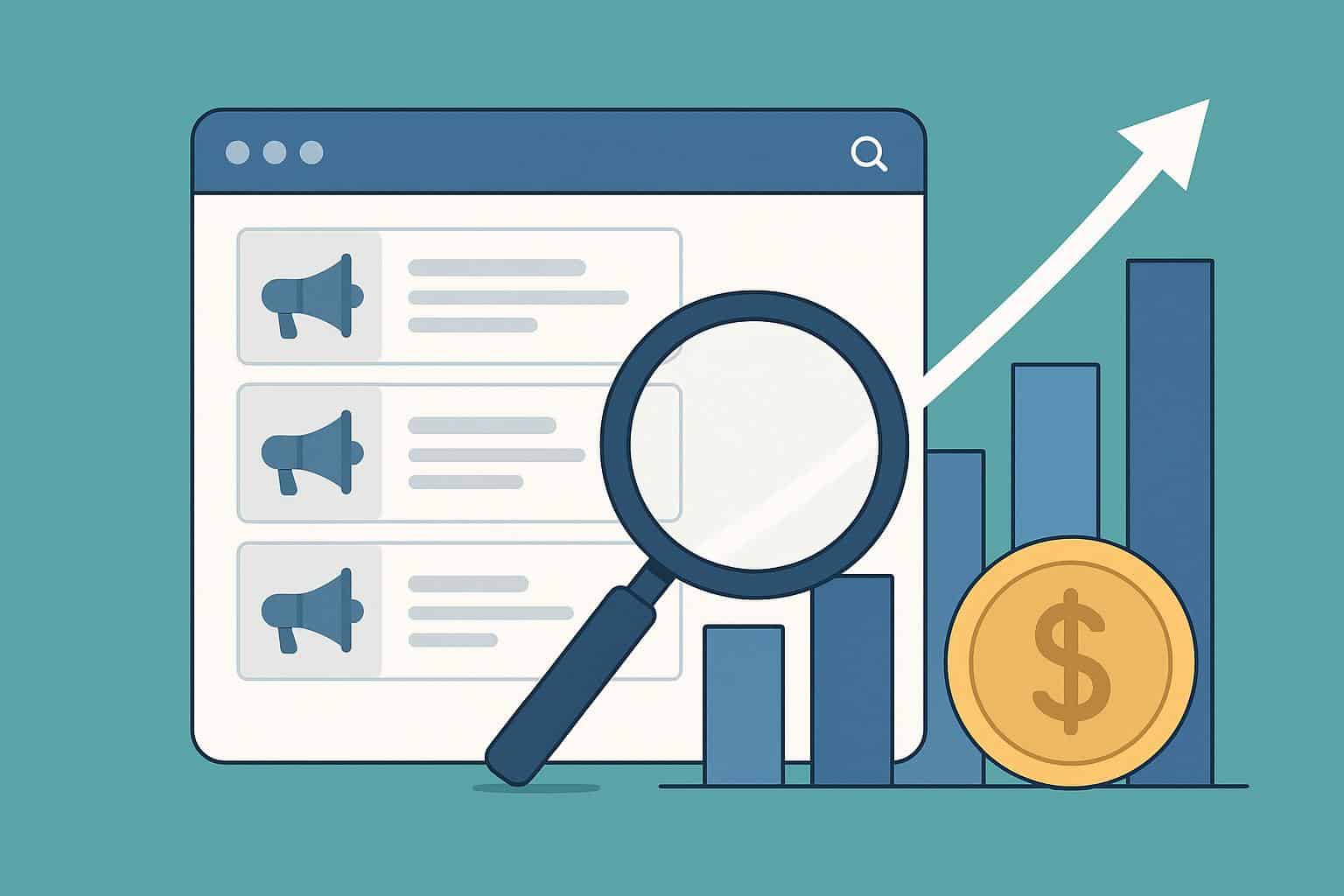
Ads Library isn’t about transparency. It’s about strategy.
If you know how to read it properly, Ads Library becomes one of the most reliable ways for you to reduce guesswork, spot proven angles, and scale campaigns with confidence—without burning budget on blind testing.
This is how you move from looking at ads to using Ads Library as a growth engine.
The Shift You Need to Make First
Most advertisers fail with Ads Library because they ask the wrong question.
They ask:
“What ads are my competitors running?”
You need to ask:
“What ads are my competitors still running—and why?”
That subtle shift changes how you interpret everything you see.
When you stop treating Ads Library like an inspiration board and start treating it like a live performance database, you begin to uncover insights that directly impact profitability.
Why Ads Library Matters When Scaling Campaigns
When you scale campaigns, your margin for error shrinks.
At low spend, bad ideas are cheap.
At scale, bad ideas are expensive.
Ads Library gives you something rare in paid advertising: external validation.
If another advertiser is:
- Running the same ad for months
- Launching multiple variations of one message
- Using identical offers across formats
They’re not experimenting—they’re reinforcing something that works.
That’s the signal you’re looking for.
Step 1: Use Ads Library to Identify Proven Offers
Your first job when analysing Ads Library isn’t to look at creatives—it’s to identify offers.
Look for:
- Repeated discounts or bundles
- The same lead magnet phrasing
- Identical value propositions across ads
If an offer appears again and again, it’s already passed the most expensive test: the market test.
Instead of guessing what your audience might want, you start with what people are already buying.
This alone can save you weeks of testing and thousands in ad spend.
Step 2: Decode Hook Patterns, Not Single Ads
When you’re scrolling Ads Library, individual ads can be misleading.
What matters is pattern repetition.
You want to notice:
- Similar opening lines across different ads
- The same emotional angle expressed in multiple ways
- Repeated pain points framed differently
When you see the same hook dressed in different formats, it tells you the message is doing the heavy lifting—not the design.
That’s how you create scalable creatives: by owning the angle, not copying the execution.
Step 3: Use Ad Longevity as a Profit Signal
One of the most overlooked features of Ads Library is time.
An ad running for:
- A few days → could be testing
- A few weeks → showing promise
- Several months → almost certainly profitable
Advertisers don’t keep losing ads live. At scale, that’s not how businesses survive.
When you find long-running ads, you’re not just seeing marketing—you’re seeing validated economics.
Use that insight to:
- Prioritise which angles you test first
- Decide where to allocate larger budgets
- Avoid chasing trends that don’t convert
Longevity is one of the cleanest signals Ads Library gives you—if you pay attention.
Step 4: Reverse-Engineer Funnels Without Seeing the Backend
You don’t need access to someone’s analytics to understand their funnel.
Ads Library gives you:
- Destination URLs
- Messaging alignment
- Changes over time
When you click through ads and notice:
- Consistent landing page structure
- Matching copy between ad and page
- The same CTA language repeated
You can map out the funnel logically—from awareness to conversion.
This is especially powerful when you’re entering a new niche. Instead of building funnels from scratch, you start with what’s already proven to convert.
Step 5: Spot Scaling Behaviour Before It’s Obvious
When campaigns scale, advertisers leave footprints.
Ads Library shows you:
- Sudden increases in live ads
- Rapid creative iterations
- The same ads deployed across regions
This tells you not just what works, but when a brand is confident enough to push budget.
If you notice a competitor expanding ad volume quickly, that’s often your early warning signal that:
- They’ve cracked a winning combination
- They’re defending market share
- The niche is heating up
That insight helps you act earlier instead of reacting late.
How You Use Ads Library to Reduce Testing Costs
Every test costs money. Ads Library helps you test smarter.
Instead of testing:
- Random hooks
- Unproven offers
- Untested formats
You test:
- Variations of already-validated messaging
- Offers with confirmed demand
- Creative formats proven to last
This doesn’t limit creativity—it focuses it.
You’re still testing, but now you’re testing within boundaries that protect your budget.
Common Mistakes You Need to Avoid
Even experienced marketers misuse Ads Library if they’re not careful.
❌ Copying Ads Word-for-Word
This leads to poor performance and brand dilution. Use insights, not replicas.
❌ Ignoring Context
An ad that works for one audience may fail for another. Understand why it works.
❌ Overvaluing Design
High-performing ads are often simple. Messaging beats aesthetics at scale.
When you avoid these mistakes, Ads Library becomes a strategic advantage—not a distraction.
Why Ads Library Is Critical in a Privacy-First Era
As attribution becomes less reliable and data becomes harder to access, Ads Library fills a crucial gap.
It doesn’t rely on:
- Cookies
- Pixels
- User-level tracking
It relies on observable market behaviour.
That makes it increasingly valuable as privacy restrictions tighten. You’re analysing what advertisers do, not what platforms report.
In many ways, Ads Library is becoming more relevant—not less.
How You Integrate Ads Library Into Your Workflow
At a professional level, Ads Library isn’t something you check occasionally.
You use it to:
- Validate ideas before campaign launch
- Monitor competitor behaviour monthly
- Support creative direction with evidence
- Educate stakeholders and clients
When Ads Library becomes part of your regular workflow, your decisions stop being emotional and start being strategic.
Final Takeaway: Strategy Beats Guesswork
If you want to scale profitable campaigns, Ads Library isn’t optional.
It helps you:
- Reduce risk
- Increase confidence
- Spot proven opportunities
- Scale with intent
You’re no longer guessing what might work.
You’re building on what already does.
When you move from transparency to strategy, Ads Library becomes exactly what experienced advertisers rely on most:
A quiet but powerful competitive edge.