

Visualize this— you’re walking into a boardroom meeting where everyone is talking about the digital transformation of their organization and others in the industry. All you’re hearing are—automation, AI, and cloud migration—but what do they really mean for your enterprise?
According to several studies done, it’s clear that digital transformation isn’t just a trend; it’s a necessity for staying competitive. But diving into digital transformation isn’t as simple as flipping a switch. It’s about completely rethinking how your business operates, from internal processes to customer engagement.
In this blog, we’ll break down the benefits, challenges, and solutions to help you make informed decisions. Ready to explore what digital transformation can do for your enterprise? Let’s get started!
What is Enterprise Digital Transformation?
Enterprise Software Development Services involves integrating digital technology into every aspect of your organization, fundamentally altering how you conduct business and deliver value to customers. It’s more than just upgrading IT systems or deploying new software; it requires a cultural and mindset shift to embrace innovation and agility.
Post pandemic, the need for digital business models has jumped. In essence, digital transformation is about rethinking how you use technology, people, and processes to change your business performance fundamentally.
Digital Transformation Strategy
Digital transformation is not just about digitizing your existing processes but about creating new capabilities and business models that can drive growth and competitive advantage in the digital age. This transformation requires a holistic approach, considering every facet of the business and how digital technologies can be leveraged to create new value.
A successful digital transformation strategy requires:
- Clear understanding of your organization’s goals, objectives, and challenges.
- Identify the key areas that need to be transformed, develop a roadmap for change, and implement the necessary technologies and processes.
- Align the strategy with your overall business, your customers, employees, and stakeholders.
- Conduct a thorough assessment of your current state, like evaluating existing technologies, business processes, and organizational culture.
As new technologies emerge and market conditions change, your strategy should evolve to meet new challenges and opportunities. Continuous monitoring and feedback loops are essential for ensuring that the transformation efforts remain aligned with your overall business objectives and deliver the desired outcomes.
Benefits of Enterprise Digital Transformation
You now know what digital transformation is and how to strategize it. So, without wasting much time, let’s understand how it benefits your business.
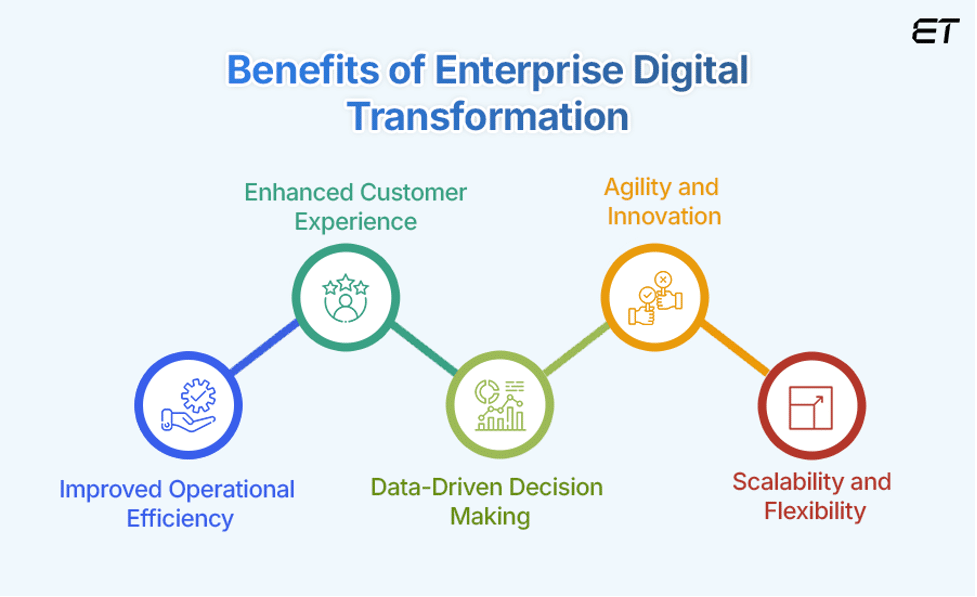
1. Improved Operational Efficiency
Digital transformation helps you automate your repetitive tasks and processes, resulting in faster workflows and reduced human error. For example, companies using Robotic Process Automation (RPA) have reported up to a 50% reduction in processing times. Numerous real-world examples of digital transformation across various industries illustrate how businesses have adapted by integrating digital technologies into their operations, impacting areas such as marketing, sales, customer service, and banking.
2. Enhanced Customer Experience
With digital transformation, you can now offer more personalized and engaging customer experiences. Data analytics and AI allow you to understand your customer preferences better and predict their needs. This assists you in establishing loyalty among your customers.
3. Data-Driven Decision Making
By leveraging digital transformation, you can harness the power of big data and AI to drive smarter business decisions. These assist you with real-time data analytics and in understanding trends, forecasting future outcomes, and aligning business strategies accordingly.
4. Agility and Innovation
Digital transformation enables faster time-to-market for your new products and services. It fosters a culture of continuous improvement and digital innovations, which is crucial for keeping pace with market changes and technological advancements.
5. Scalability and Flexibility
Digital tools, especially cloud solutions, allow you to scale up or down based on demand. This flexibility helps you manage your resources efficiently and adapt to changing market needs without overburdening your infrastructure.
Challenges of Enterprise Digital Transformation
Everything that has its pros also has its cons. As mentioned at the start, digital transformation is not as easy as flipping the switch. There are several challenges that you’ll face along your way. Below, we’ve narrowed down the major challenges for your understanding:
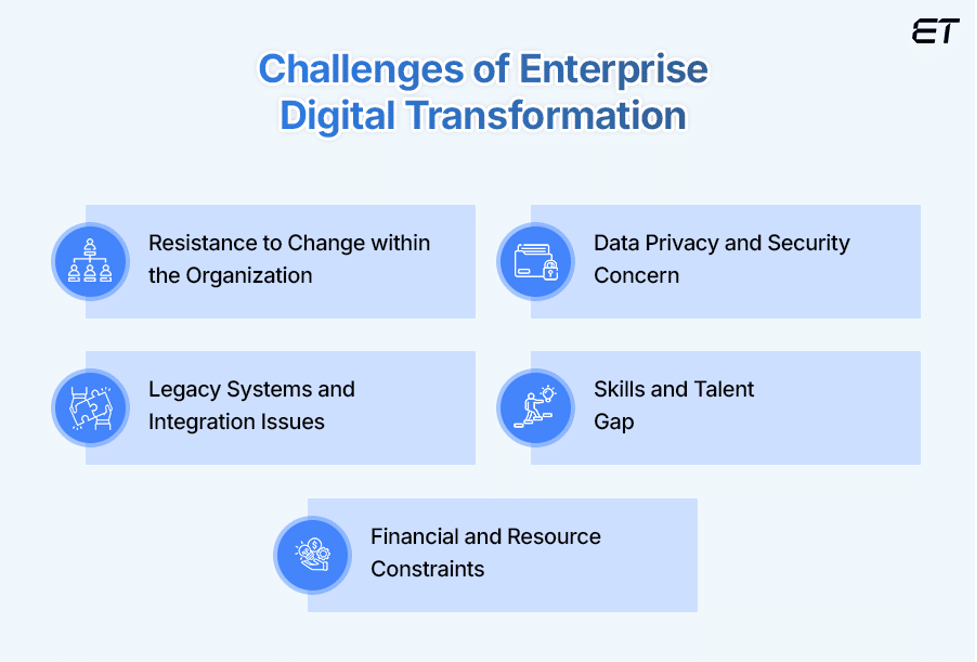
1. Resistance to Change within the Organization
One of the biggest challenges you’ll face is getting buy-in from employees and stakeholders. To overcome this, you need to establish strong leadership and a clear communication strategy among them. Show them that the change is for good and the accountability of its sides in the safe hands.
2. Data Privacy and Security Concerns
With the shift to digital comes the risk of data breaches and cyber-attacks. Ensuring compliance with data protection regulations like GDPR and implementing robust cybersecurity measures are critical.
3. Legacy Systems and Integration Issues
You’ll see that many enterprises still rely on outdated legacy technology that hinders their digital transformation efforts. Wondering how? Well, these legacy systems often create technical debt and are not compatible with new digital solutions. The cost and complexity of integrating these systems with modern digital infrastructure can be significant barriers, consuming a substantial portion of your IT budget and limiting funds available for innovation.
4. Skills and Talent Gap
The need for digital skills is more significant than ever, but there is often a gap in the available talent in the market. Upskilling and reskilling your employees and recruiting new talent is essential for overcoming this challenge.
5. Financial and Resource Constraints
Digital transformation is a substantial investment, and financial constraints can be a roadblock. Also, measuring ROI on digital transformation projects can be challenging. Therefore, make sure to plan your finances carefully before you move forward and make sure that you are aware of all the costs that you’re paying. Be aware and cautious of the hidden costs.
Solutions to Overcome Digital Transformation Challenges
Now that you’re aware of the challenges of digital transformation, let’s understand its solution as well.
1. Establishing a Clear Digital Transformation Roadmap
A well-defined roadmap helps you set realistic goals and milestones for the digital transformation of your business. It involves prioritizing key areas for transformation, such as customer experience, operational efficiency, or innovation.
2. Building a Digital-First Culture
Change starts from the top. Encouraging leadership buy-in and fostering a culture of continuous learning, innovation, and adaptability can help you overcome resistance to change.
3. Leveraging Right Technologies
Utilizing the right mix of technology—AI, machine learning, cloud computing, and automation—can accelerate your digital transformation journey. You must choose a technology stack that aligns with your company’s objectives and scales with your business growth.
4. Focusing on Customer-Centric Strategies
Digital transformation should be customer-centric. By focusing on delivering value to your customers, you can ensure that your transformation efforts are impactful. This involves incorporating customer feedback and leveraging data to improve your services continuously.
5. Partnering with Experts
Working with experienced service providers can bring specialized skills and knowledge to the table. They can guide you through the complexities of digital transformation and help you achieve your goals faster. Also, they will better understand your requirements if you do not have in-depth knowledge about them.
Conclusion
As we wrap up the blog, you now understand why enterprise digital transformation is more than just a technological upgrade. While the journey can be challenging, its rewards like greater efficiency, enhanced customer experiences, and new revenue streams are too significant to ignore.
As a decision-maker, your focus should be on aligning digital transformation efforts with
- Clear business goals
- Fostering a culture that embraces change
- Choosing the right technological partner
Are you ready to lead your enterprise into the future with effective digital transformation? Connect with us today, and let’s plan your business success on the right path!
Frequently Asked Questions
1. What are the three key enterprise benefits of digital transformation?
The benefits of digital transformation are:
- It streamlines processes and reduces costs through automation.
- Offers personalized, faster services using data and AI.
- Enables quick adaptation and development of new products.
2. What are the challenges of digital transformation?
The challenges of digital transformation are:
- It’s difficult to get employees and management to adopt new technologies.
- Risk of data breaches and privacy.
- Complexity and costs of integrating new technologies with existing systems.