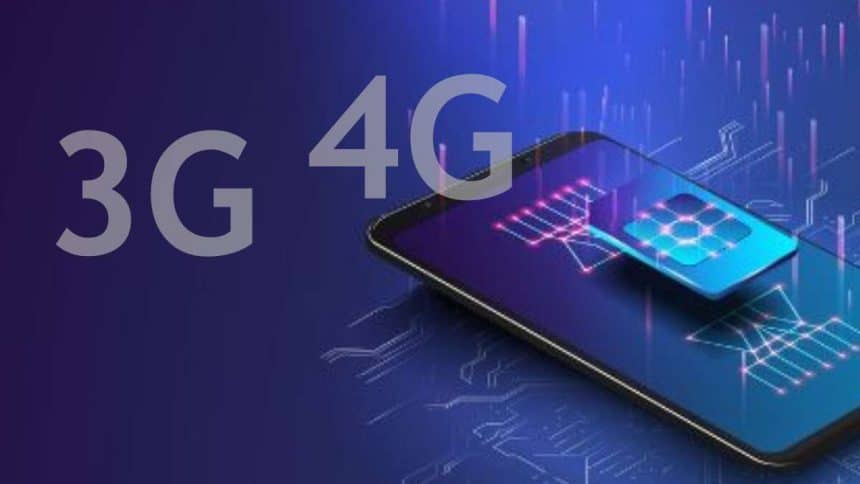
We live in a highly connected time and given how speed and reliability of communication have taken hold, access to generations such as 3G and 4G are important. Speaking of these two generations in particular, it’s pretty clear that one of them stands above the other, and a few things can be pointed to as reasons for this.
The following, as a result, will be quite useful as we look at both generations closely. From this, we’ll check the difference between 3G and 4G according to UCtel, which requires a description of several key performance areas!
The story of generations
If it isn’t obvious, “G” stands for generation, and in the realm of telecommunication, it speaks to the evolution of technology. You see, every decade or so, going back to the late 1970s, progress in this space is seen, and with it comes advancements in speed, data transfer capacity, and general capabilities. Below is a list of the generation already experienced, and when they were launched:
- 1G in 1979
- 2G in 1991
- 3G in 2001
- 4G in 2009
- 5G in 2018
It’s worth noting that between some of the above were several advancements, such as 3.5G, and 3.75G that came before 4G. Also, beyond 5G is 6G, which is the expected improvement over Its predecessor, but is currently working out the kinks, if you will.
The generations in question
Why is the above of any importance? Well, if we’re going to see the difference between 4G and 3G, the natural comparisons with what came before have to take place, which is especially the case for the former and 2G. Now that we have an idea of how we’re doing this, let’s just dive in:
The third iteration
2G, throughout its run (2G to 2.75G) had transfer speeds of up to 48kB/s. Its digital nature not only made phone calls clearer than its 1G predecessor, it added encryption to some extent, as well as the ability for SMS, and MMS.
3G took this to a new level by being much faster, with averages being at 3Mbps, and similar to what 2G did to 1G, this generation is more efficient due to its use of packet switching. The wider bandwidth also helps with this, creating a technology that’s practically superior in every way, especially when it comes to data transfer rates, which are much faster.
What this means is that 3G can do a lot more than facilitate calls and texts. In fact, in addition to these, 3G can allow for the following:
- Video calls
- Transfers of large emails
- Internet access
- Mobile television
The fourth iteration
Between 3G and 4G have been a few points of evolution namely the aforementioned 3.5G, and 3.75G. With 4G came higher speeds, and data rates made possible through the OFDM (Orthogonal frequency-division multiplexing) and MIMO (Multiple Input Multiple Output) technologies.
These help this generation achieve speeds upwards of 100mbps, thus giving it more abilities that its predecessor lacks. Among the things these devices capable of using this generation can do are things such as streaming music, and films, at the highest quality and online gaming.
Their differences in a nutshell
Having looked at each generation closely, it’s time to sum up their differences. Naturally, the first, and most obvious difference between 3G and 4G is the speed they provide devices configured to them. However, this major difference is flanked by several minor ones that you could point out in detail, and they include the following:
- 3G uses both circuit, and packet switching systems as its primary technologies, while 4G lacks the former, and uses the latter along with OFDM and MIMO
- 3G operates at the 2100MHz frequency, while 4G uses multiple ranging from 700MHz to around, and according to many, even beyond 2.5GHz
- 3G’s upload speed get upwards of 5Mbps, and its download speeds can get as high as 21Mbps, while both values in 4G can get upwards of 500 Mbps and 1 gigabytes per second
The above also means that 4G is not only faster than its predecessor, but has lower latency, and connectivity that’s best used in suburban areas. However, it isn’t as affordable as the alternative, so keep that in mind.
Why any of this matters
Signal issues are normal, if not annoying for any of the billions of people in the world using cell phones. Outside of weather phenomena, network congestion, and proximity to towers, incompatibility with network technology is another culprit for why your device isn’t working well. A 3G device can’t access a 4G network, and reasons such as the technology they’re based on exist, just in case you want to know.
Future-proofing connectivity
As we’ve already implied, one of the two examples has gradually become obsolete, while the other is not only still useful, but will continue to endure going forward. If you guessed that 3G was the one being phased out while 4G was continuing, you’d be right. Granted, 3G is still among the many technologies currently being used, but its place in the world is diminishing especially with 4G, and 5G already here in addition to others.
As for how 3G is being phased out, consider this example: In the UK, both 2G and 3G are in the process of being switched off completely by 2033 and all of the country’s major providers have agreed to this. Interestingly enough, 4G is set to go down the same path for the same reasons.
Final Thoughts
The world of telecommunications has certainly come a long way over the years, with several technologies being created including the ones in question. Knowing the distinction between 3G and 4G allows you to both get why your device isn’t working smoothly and help you understand the tech, giving you more insight into what works. Fortunately for you, the above gives you exactly that, which you can now use to seek out the right help.
If this doesn’t suffice, an experienced team of professionals will be of great use. With the above information as well as such a team on your side, getting the right fit for you is simplified.