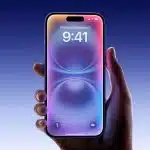

We’ve all felt it—that quiet satisfaction when using a well-designed iOS app.
The buttery scroll, the thoughtful transitions, the way everything just works without calling attention to itself. Apple’s design is intentional. And it’s a big reason users return to their apps again and again.

But here’s the good news: You don’t need to build a native iOS app to deliver that kind of experience.
Today’s Progressive Web Apps (PWAs) are closing the gap, offering responsive, installable, and offline-capable platforms that run right in the browser. With the right design principles, even a browser-based experience can feel just as refined as the apps we tap daily on our iPhones.
In this article, we’ll explore how web developers can draw from Apple’s human interface guidelines to build web experiences that feel smooth, fast, and user-focused.
What Makes Apple’s UX So Addictive?
Apple’s user experience is always about how everything feels invisible and obvious at the same time.
The moment you open an iOS app, there’s a quiet confidence baked into the interaction. You don’t have to think about where to tap, how to scroll, or whether a gesture will work. Things just respond. They animate with purpose. They move with grace. And you don’t even notice because that’s the point.
Here are a few key traits that define Apple’s approach to UX and make it so addictive:
Fluid Motion
Transitions glide rather than snap. Even loading states feel intentional, with animations that subtly inform the user without stealing attention.
Visual Hierarchy That Breathes
Apple interfaces make space for content. They prioritize clarity through spacing, font weight, and contrast—so users instinctively know what to do next.
Predictable Interactions
Swipe gestures, tap zones, and modal behavior all follow consistent patterns across apps. That familiarity makes users feel in control.
Microinteractions That Reinforce Feedback
Whether it’s a subtle bounce, a gentle vibration, or a fading highlight, every action comes with a soft confirmation that says, “yes, that worked.”
Minimalism That Doesn’t Feel Empty
Apple’s minimalism isn’t just visual—it’s functional. Interfaces reduce decision fatigue by hiding complexity until it’s needed.
What’s powerful is that none of these are exclusive to native iOS development. These are UX philosophies and with the right tools, Progressive Web Apps can adopt them too.
Let’s look at how.
How Progressive Web Apps Are Closing the Gap
For years, if you wanted your digital product to feel “premium,” you had to go native. But that’s no longer true.
Progressive Web Apps (PWAs) have quietly transformed what’s possible in the browser. They look and behave like native apps, but run on standard web technologies meaning faster development, easier updates, and a single codebase across platforms.
Here’s how PWAs are bridging the gap between the web and iOS-native polish:
Installable on Home Screen
PWAs can be saved to a device’s home screen with a custom icon and launch just like an app—no App Store required.
Blazing-Fast Load Times
Thanks to caching and service workers, PWAs can load instantly even on flaky or offline connections. This rivals the startup speed of lightweight native apps.
Offline Functionality
With the right architecture, PWAs allow users to interact with content (and even submit forms or queue actions) without being online. Once a connection is restored, data syncs seamlessly.
Push Notifications
PWAs now support native-style push alerts helping web apps keep users engaged without needing full app permissions.
Cross-Device Consistency
Since PWAs are built on web tech, they render beautifully on desktop, mobile, and tablet without separate builds for each OS.
Examples in the wild:
- Spotify Web: Caches music, runs offline, and installs as a PWA
- Starbucks: Customers can order coffee and browse menus offline
- Pinterest: Loads quickly and feels just as responsive as the native app
These aren’t just MVPs—they’re production-ready experiences that behave like real apps, while benefiting from the flexibility of the web.
And when paired with Apple-inspired UX (which we’ll explore next), PWAs are redefining what web apps can feel like.
Apple-Inspired Design Decisions for PWAs
A Progressive Web App can be fast and functional but if it doesn’t feel intuitive, users won’t stay. That’s where Apple’s design philosophy becomes a powerful guide—not just for native apps, but for modern web experiences too.
Here’s how PWA designers and developers can bring iOS-level refinement into the browser:
| Design Principle | How to Apply It in PWAs |
| Visual Hierarchy | – Use a clear typographic scale (inspired by Apple HIG) – Add generous spacing and padding – Group related content to reduce cognitive load – Prioritize content over decorative UI |
| Touch-Friendly UI | – Ensure tap targets are at least 44px – Mirror native gestures (swipe, long-press, pull to refresh) – Add subtle visual feedback (e.g., button scale or opacity changes) |
| Motion That Communicates | – Use smooth page transitions to minimize jarring loads – Animate feedback (button taps, loading states) – Apply easing curves or libraries like Framer Motion or GSAP |
| Adaptive, System-Aware Design | – Support light/dark mode using media queries – Use OS-native fonts like SF Pro or Roboto – Respect user preferences like reduced motion |
| Recommended Tools | – Tailwind CSS for atomic styling – Framer Motion or GSAP for animation – Workbox to handle offline caching and service worker logic |
Bottom line? Users don’t care what’s “under the hood.” If your PWA feels polished, fast, and intuitive—they’ll assume it’s native. And if it borrows from Apple’s best UX decisions? Even better.
Next, let’s talk about performance because elegance without speed is just decoration.
Performance is the New Aesthetic
You can have the cleanest layout and slickest animations but if your app lags, freezes, or takes more than a couple seconds to load, users will bounce. Fast is beautiful. And in the PWA world, performance is not just a feature—it’s a design standard.
Users have been conditioned by native apps to expect immediacy. No loading wheels. No page flashes. No hesitation.
Here’s how developers can bring that sense of speed to web:
Preload Key Assets
Use <link rel=”preload”> or strategic lazy loading for fonts, hero images, and interactive elements. Reduce perceived wait times by showing skeleton screens or placeholder UI while content loads.
Leverage Service Workers for Caching
With tools like Workbox, cache key files and API responses locally so your PWA loads even when offline—or on a weak connection. Think of it as native-style app booting for the web.
Prioritize Core Web Vitals
Lighthouse or PageSpeed Insights will tell you exactly where you’re slowing users down. Focus on:
- Largest Contentful Paint (LCP)
- First Input Delay (FID)
- Cumulative Layout Shift (CLS)
Minimize Script & CSS Bloat
Ship only what’s necessary. Use code splitting and tree-shaking to reduce initial payload. Lazy-load third-party libraries only when needed.
Monitor Performance Continuously
Use tools like Sentry, LogRocket, or Google’s Web Vitals reporting to monitor app behavior in the real world—not just in staging.
Pro Tip: Your performance budget is your design language. The faster your app responds, the more users will trust it.
And when your app feels like it was designed by Apple, users don’t care if it came from the App Store or the browser—they just keep coming back.
Accessibility and Cross-Device Polish
Sleek design is meaningless if your app isn’t usable by everyone.
Apple has long led the way in accessibility, and PWAs aiming for iOS-level quality should follow suit. Start by supporting assistive technologies with semantic HTML elements like <header>, <nav>, and <main> to provide clarity for screen readers. Use descriptive aria-labels and alt attributes for interactive elements and images, and ensure custom components such as dropdowns or sliders are fully navigable by both keyboard and screen readers.
Typography should scale dynamically—using em or rem units rather than fixed pixels—to ensure readability across devices and accessibility settings. Respect user preferences for larger text, and design layouts that maintain structure and usability as font sizes adjust.
Interaction design should account for both touch and keyboard navigation. All interactive elements must be focusable and triggerable without a mouse, and visual focus indicators should be preserved (or thoughtfully replaced) to aid navigation.
Additionally, PWAs should respect system-level preferences. This includes supporting dark mode based on user settings and honoring reduced-motion preferences to disable non-essential animations. Designers should also avoid relying solely on color to convey meaning, for example, not using red alone to indicate errors.
Finally, cross-device polish is crucial. PWAs should be tested on iPhones, iPads, Android devices, and a range of browsers (Safari quirks included). Use responsive grids and fluid design principles to avoid layout breakage, and be mindful of modern UI constraints like notches, bottom navigation overlaps, and edge gestures.
When your PWA works seamlessly across devices and welcomes every kind of user, you’ve not only built something Apple-worthy, you’ve built something future-proof.
When to Work with Professionals—and Why It Matters
There are plenty of low-code tools and templates that promise to make PWA development easy and for some projects, they do the job. But when you want a web experience that rivals the polish of a native iOS app, shortcuts will only get you so far.
Apple’s standard of UX is about precision, speed, accessibility, and emotional flow. And pulling that off in the browser? It takes a development team that understands how all those moving parts connect.
Here’s what seasoned professionals bring to the table:
| What You Need | What Top Developers Deliver |
| Fast loading, offline-ready performance | Service worker logic, asset preloading, caching strategies |
| Apple-style UI and UX | Deep knowledge of Human Interface Guidelines + adaptive styling |
| Smooth transitions and thoughtful motion | Custom animations using tools like Framer Motion or GSAP |
| Flawless rendering across browsers and devices | Rigorous QA on iOS Safari, Android Chrome, Firefox, and Edge |
| Real accessibility, not just checkboxes | WCAG-compliant markup, screen reader support, keyboard UX |
If you’re serious about creating a web app that doesn’t just function—but feels like it belongs next to native apps on a home screen—working with top New York’s web developers can help you build it with purpose and polish.
The Web Is Ready—Now It’s About the Execution
Progressive Web Apps have finally caught up to where users want them to be—fast, installable, offline-friendly, and beautifully responsive. But the difference between a PWA that works and one that wows? That’s all in the execution.
The best PWAs today don’t feel like a compromise. They feel intuitive, smooth, and polished just like the apps we love on iOS. And the developers behind those experiences are building trust, flow, and connection into every scroll and tap.
If your next product lives on the web but deserves to move like a native app, don’t settle for just functional. Build it to feel thoughtful. Build it to perform. Build it like it belongs on your home screen.
And when you’re ready to bring that experience to life, partnering with top New York’s web developers ensures you’re not just chasing Apple’s standards, you’re meeting them.