
Ship fast—but never ship a PHI leak. Healthcare breaches now average $7.42 million each, according to IBM’s 2025 Cost of a Data Breach report. In 2023, the Office for Civil Rights fined 13 small providers and vendors $4.17 million, proving no organization is too small to target.
That pain makes plug-and-play HIPAA platforms irresistible. Connect AWS, sign a BAA, and watch the dashboard turn green. Vanta says its platform automates up to 85 percent of the evidence auditors ask for, a shift that lets founders chase contracts instead of screenshots. This guide separates real accelerators from shiny shortcuts so you can keep shipping code with confidence.
The plug-and-play promise
What “plug-and-play” really means
Imagine logging in to a dashboard that connects to AWS, Google Workspace, and GitHub within minutes. The software maps every HIPAA control to live evidence, auto-generates policies, and schedules workforce training. That work used to steal weeks from consultants. Platforms such as Vanta report 85 percent automation of audit evidence collection, swapping brittle screenshots for continuous monitoring.
Instead of combing through the Security Rule line by line, you get:
- Templates aligned to every HIPAA standard, ready for quick edits
- One-click integrations that pull configuration data straight from your cloud stack
- Real-time alerts that surface gaps before an auditor does
Consistency is the hidden perk. After connection, the platform keeps watching: a new engineer joins the repo, and onboarding evidence appears instantly; an S3 bucket turns public, and you’re notified before protected health information leaks.
For a lean founding team, this shift turns binders and spreadsheets into an always-on control center, translating dense regulations into clear next steps so you can keep shipping code without losing sleep over fines.
Where plug-and-play stops: the reality check
Software speeds compliance, but it never replaces it. A dashboard can turn green only for the controls it can see; it can’t encrypt a forgotten laptop or quiz an engineer who skips training. That gap matters: According to the HIPAA Journal, a 2018 analysis found that 53% of healthcare data breaches were the result of internal negligence.
HIPAA separates responsibility into three rule sets: Privacy, Security, and Breach Notification. Most plug-and-play tools excel at the technical safeguards inside the Security Rule, yet they still rely on you to:
- Approve and enforce written policies
- Deliver and document live workforce training
- Rehearse incident-response steps so alerts become action
Think of the platform as autopilot. It can hold altitude and heading, but you remain the pilot in command. Regulators won’t accept “the software said we were compliant” any more than the FAA excuses a crash because autopilot was engaged.
Takeaway: Plug-and-play trims friction, not responsibility. The next sections show where these tools shine and where your team must stay hands-on to build a defensible HIPAA program.
Why startups race the clock on HIPAA
Hospital innovation teams now ask for proof of HIPAA readiness before they approve even a pilot. Procurement portals follow suit, blocking vendors that cannot show a signed Business Associate Agreement (BAA).
For seed-stage founders, that gate is existential: close the deal and extend runway; miss it and fundraising gets harder. A 2024 HIPAA Journal survey found that only 57 percent of covered entities use compliance software, leaving 43 percent to wrestle with manual processes. Many in that 43 percent admit they would fail an audit.
Budget pressure adds weight. Boutique compliance consultants often quote six-month engagements starting around $100,000, a non-starter for teams with one DevOps engineer splitting time between infrastructure, SOC 2, and support tickets.
Regulators are not waiting. In 2023 the Office for Civil Rights fined iHealth Solutions $75,000 for an exposed server, proving that small vendors are squarely on the hook.
Takeaway: Speed is a survival metric. The faster you document real safeguards, the faster you unlock revenue, calm investors, and sleep easier. Plug-and-play tools exist because a nine-month compliance project does not fit a twelve-month runway.
How we picked the “best” tools
Choosing HIPAA software is not a beauty contest. Our goal was practical: identify platforms that help a lean team pass an audit, grow smoothly, and stay within a startup budget. We scored each product on five weighted factors:
- Comprehensive rule coverage. HIPAA spans Privacy, Security, and Breach Notification rules. The HIPAA Journal warns that partial fixes, such as a risk assessment with no training, still leave costly gaps when auditors arrive. We favored suites that bundle policies, BAAs, training, and incident workflows in one login.
- Automation and integrations. Startups trade hours for velocity, so we rewarded tools that pull evidence from AWS, Google Workspace, Okta, and other SaaS systems, then monitor controls around the clock.
- Ease of use and human support. A slick UI matters only if backed by clear task lists and on-call compliance experts when edge cases pop up.
- Startup-friendly pricing. We looked for published entry tiers, documented discounts, or ROI stories, because a six-figure license that prevents a five-figure fine still fails a seed-stage balance sheet.
- Scalability and multi-framework muscle. Today you need HIPAA; tomorrow an enterprise customer may demand SOC 2. Platforms that add frameworks without re-auditing every control climbed the ranks.
When scores tied, we broke the tie by reviewing recent feature velocity: new integrations shipped and customer reviews from the past 12 months. The six winners that follow rose to the top of this rubric.
Takeaway: A transparent, weighted rubric keeps hype out and highlights the platforms that save founders the most time and risk.
1. Vanta: automated compliance that scales with your ambition
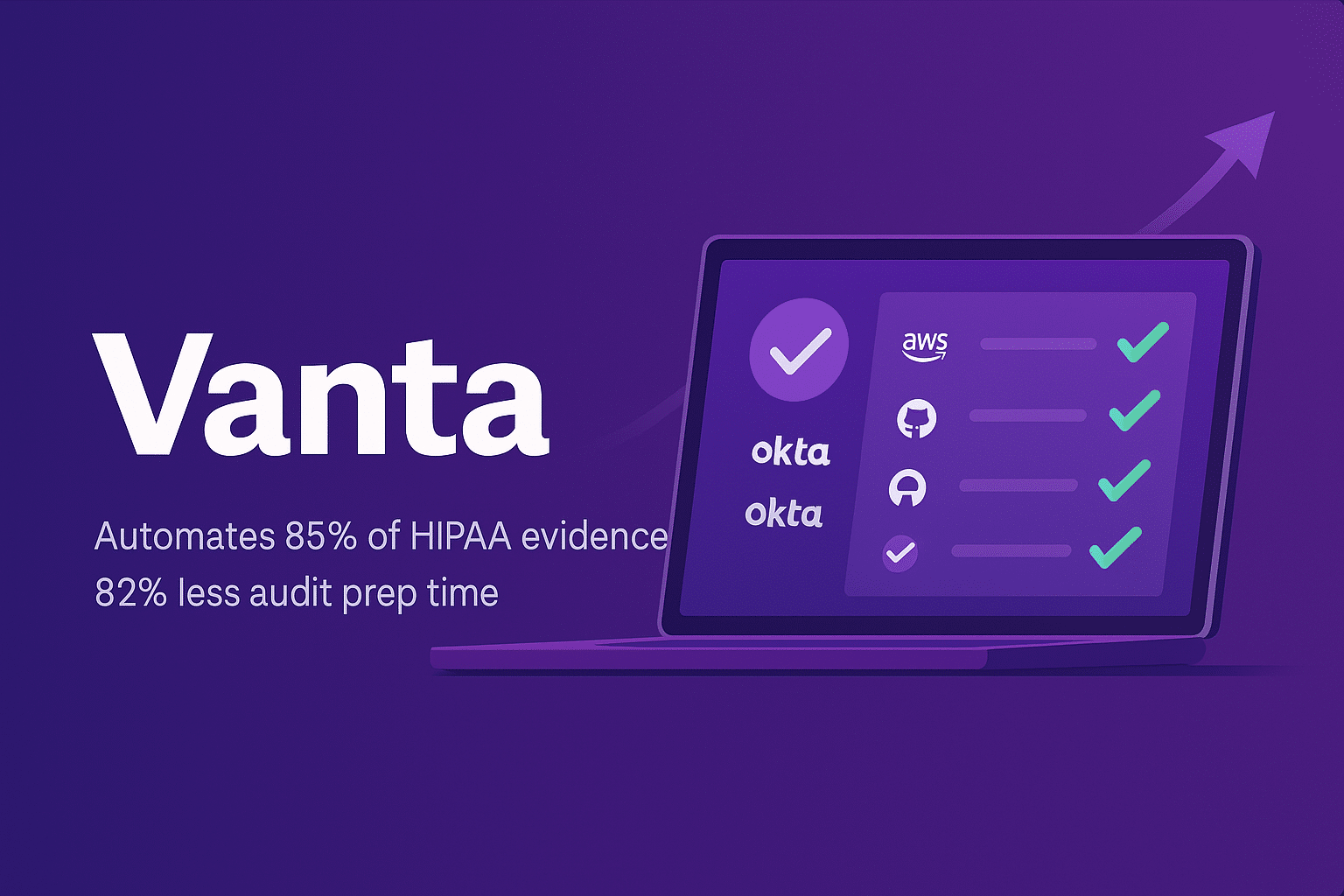
Vanta turns compliance into a background service. Connect AWS, GitHub, or Okta and the platform harvests logs, flags gaps, and assigns fixes in a single dashboard. IDC’s 2025 Business Value of Vanta report found that teams spend 82 percent less time per audit after adopting the platform. It also includes a dedicated HIPAA compliance solution for companies that handle protected health information, streamlining up to 85 percent of evidence collection and replacing brittle screenshots with continuous monitoring.
Why it stands out
- Breadth without bloat. Pre-built templates cover HIPAA policies, risk analyses, and workforce training, and each control can be cross-mapped to SOC 2, ISO 27001, or HITRUST so you never start over.
- Proven scale. More than 12,000 customers rely on Vanta, and a July 2025 Series D raised valuation to $4.15 billion, funding a steady stream of new integrations.
- Rapid payback. IDC reports a three-month ROI and a 526 percent return over three years.
Cost snapshot
Public pricing starts around $12,000 per year for one framework, with documented startup and partner discounts of about 20 percent. Most early customers recoup that fee by closing a single enterprise deal sooner, often the reason they adopt Vanta.
Takeaway: If you want a connect-and-keep-shipping experience, Vanta provides continuous HIPAA coverage today and room to grow tomorrow.
2. Compliancy Group: human coaches for hands-on assurance
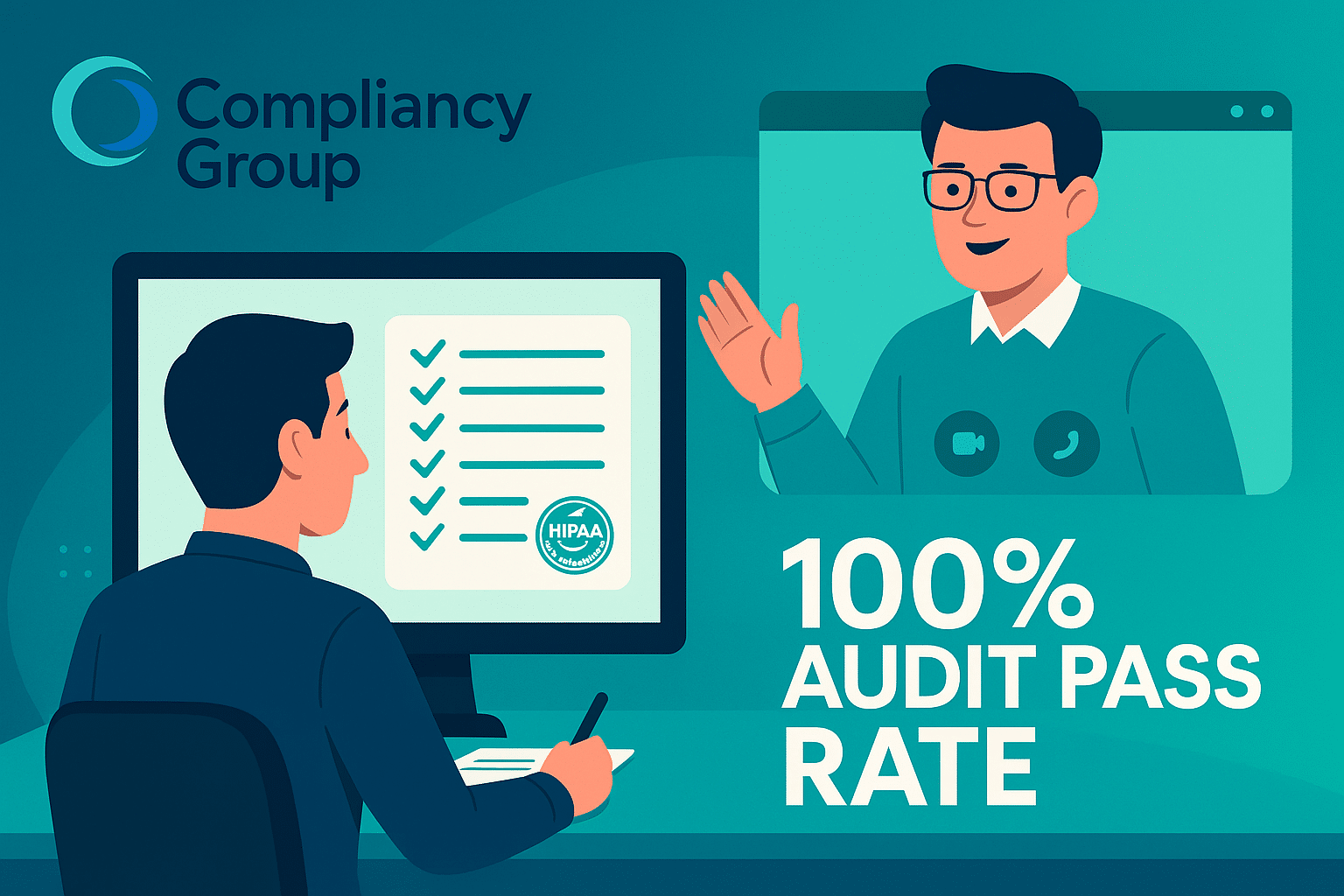
If you would rather talk to a person than chase dashboards, Compliancy Group is built for you. Its cloud platform, The Guard, walks you through every HIPAA task—risk assessment, remediation plan, policy library, workforce training, vendor management—then pairs each step with a live Compliance Coach. That coach reviews your work on scheduled calls and stays on standby if the Office for Civil Rights knocks.
The model works: Compliancy Group states on their website that they have a 100% client audit-pass rate. Finish the workflow and you earn the HIPAA Seal of Compliance, a third-party badge you can drop into sales decks to ease buyer anxiety.
Compliancy Group trades deep API integrations for human guidance. Follow the checklist, store evidence in The Guard, and its Audit Response Team will defend your program if regulators ask. Public G2 pricing starts at $99 per month for the Foundation plan and rises with advanced features, well below most automation suites.
Takeaway: Choose Compliancy Group when you need a part-time compliance officer more than another tool to configure, or when investor confidence depends on having an expert on every audit call.
3. Accountable HQ: budget-savvy compliance for tiny teams
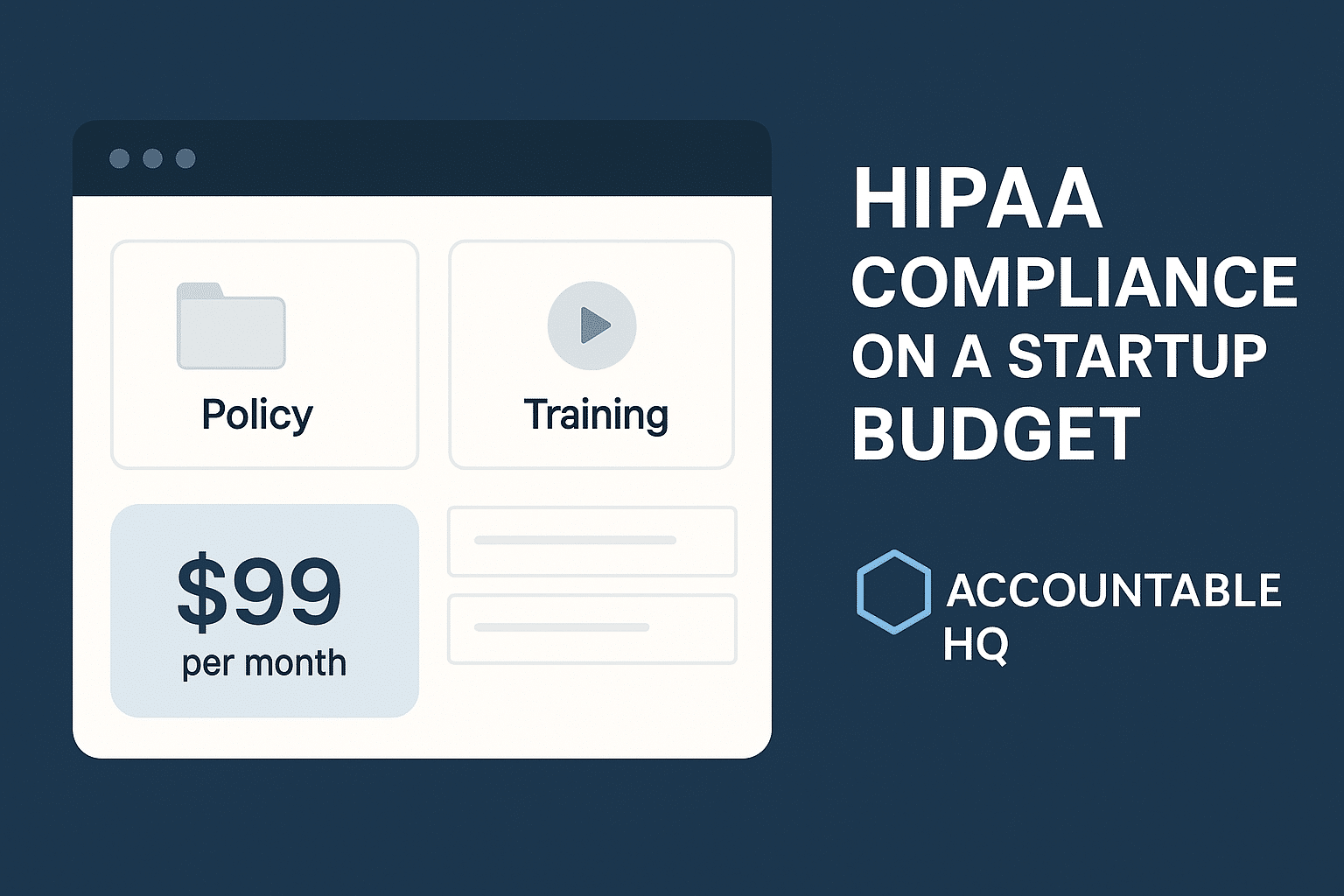
Accountable HQ trims HIPAA down to a single, plain-language dashboard, a relief when every dollar and developer hour is already spoken for.
What you get
- Guided risk assessment. Answer yes-or-no questions, and the platform auto-generates a ranked remediation plan.
- Policy and training library. Edit templates in the browser and send short courses employees finish in under 10 minutes.
- Built-in reminders. The system pings you when annual reviews or vendor BAAs are due, acting like a compliance calendar you never maintain.
Why it’s cost-effective
Public pricing starts at $99 per month for the Essential plan and includes a 7-day free trial. Accelerators such as Techstars and Y Combinator offer additional discounts of up to 20 percent. More than 4,000 businesses use Accountable’s training or full compliance suite, showing that small teams can satisfy HIPAA without five-figure tools.
Know the limits
Accountable does not monitor AWS buckets or Slack permissions in real time. If you outgrow a simple Firebase-plus-laptops stack, you may need to layer a technical monitoring tool later. Until then, it covers the administrative heavy lifting—risk analysis, policies, training, and vendor management—at a price that still leaves room in the budget for caffeine and cloud credits.
Takeaway: When every penny counts, Accountable HQ delivers the core HIPAA checklist in one login, proving compliance does not have to drain your runway.
4. Hyperproof: future-proof compliance for teams on a growth curve
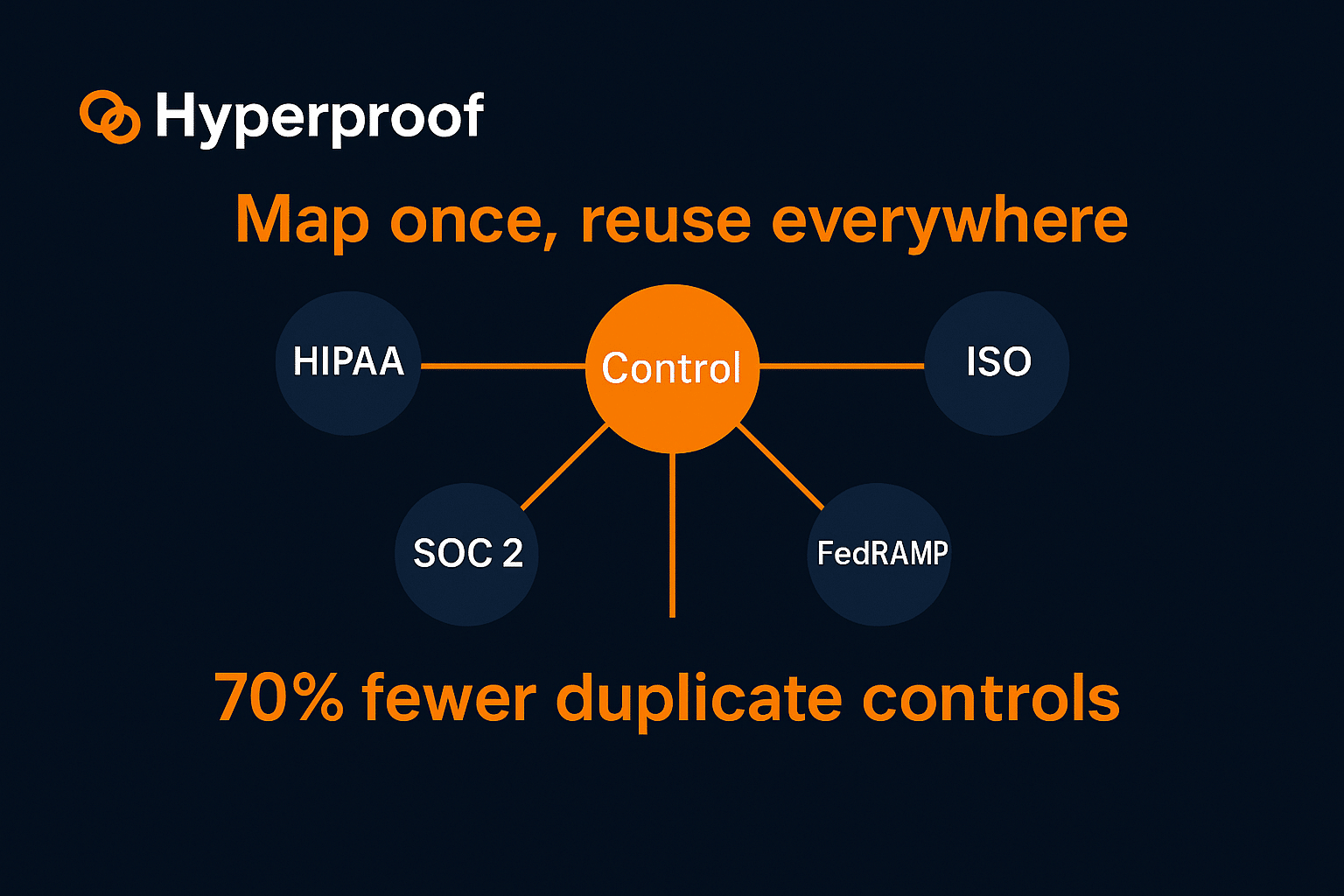
When one framework turns into five, Hyperproof can keep you sane. The platform lets you map a single control, such as encrypt data at rest, to HIPAA, ISO 27001, SOC 2, and FedRAMP in the same workspace, so you collect evidence once and reuse it everywhere. Customers report up to a 70 percent cut in duplicative controls and 40 percent less audit prep time.
Why it scales
- Evidence repository. Connect AWS, Jira, or your SIEM once, then tag each artifact so it meets overlapping requirements across frameworks.
- Collaboration built in. Assign control owners, set due dates, and receive Slack or email alerts when tasks slip, ideal for teams crossing the 50-employee mark.
- Crosswalk jump-start. Hyperproof ships with pre-built “crosswalks” that link requirements across more than 70 frameworks in seconds.
Things to know
G2 reviewers place pricing in the low five-figure range, roughly $25,000 to $60,000 per year, depending on user count and frameworks; if your roadmap eventually includes Department of Defense contracts, this in-depth CMMC compliance tools comparison shows exactly how Hyperproof stacks up against other CMMC-ready platforms. Founders who expect HIPAA to be the first of many audits often view that upfront cost as future insurance.
Takeaway: Choose Hyperproof if you would rather invest a bit more time now than migrate later, and if control reuse across multiple frameworks will save your team far more in staff hours than the tool costs.
5. MedStack: pre-secured cloud hosting for health-app builders
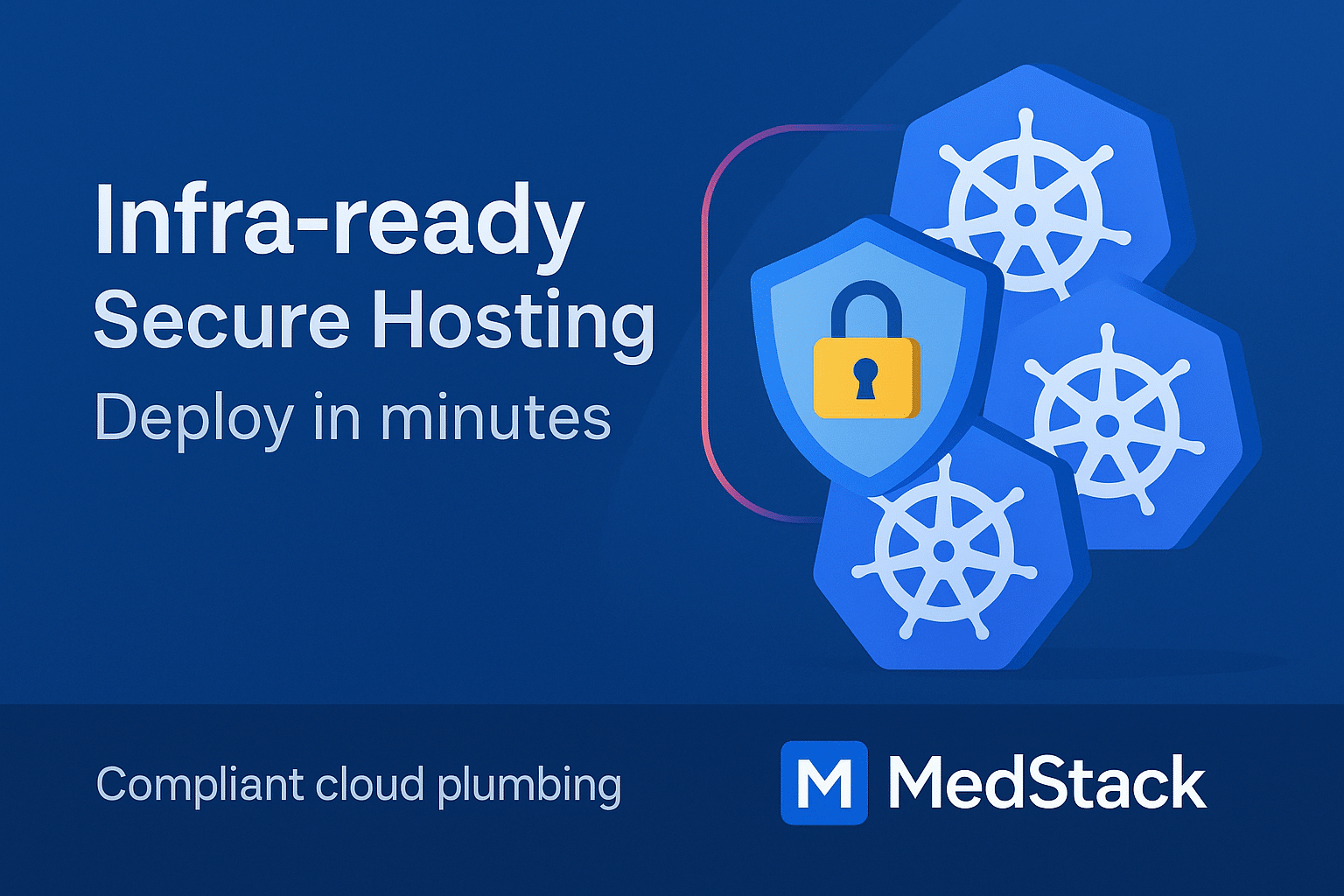
Security chores often stall digital-health MVPs: encrypt every database, manage keys, prove backups, and document logs. MedStack Control lets you deploy in a managed Kubernetes environment that already meets HIPAA technical safeguards, and it passes through up to 75 percent of required HIPAA evidence to your audit package.
How it works
- Spin up a cluster. Create an environment, push via Docker, and grab the endpoint.
- Inherit controls. Encryption at rest and in transit, 24/7 intrusion-detection monitoring, and automated backups are on by default.
- Prove compliance. Monthly reports map MedStack controls to HIPAA, SOC 2, and ISO 27001, ready for customers or investors.
Where it fits
MedStack covers the infrastructure layer; you will still need a policy and training tool (Accountable HQ pairs well). Pricing follows a pay-as-you-grow model, and startup customers report bills under $500 per month until traffic scales. For engineering-heavy teams, outsourcing these safeguards can trim months from launch timelines and return headcount to product.
Takeaway: MedStack gives you compliant cloud plumbing on day one, so your developers focus on features, not firewall rules.
6. HIPAAtrek: checklist discipline for the operationally minded
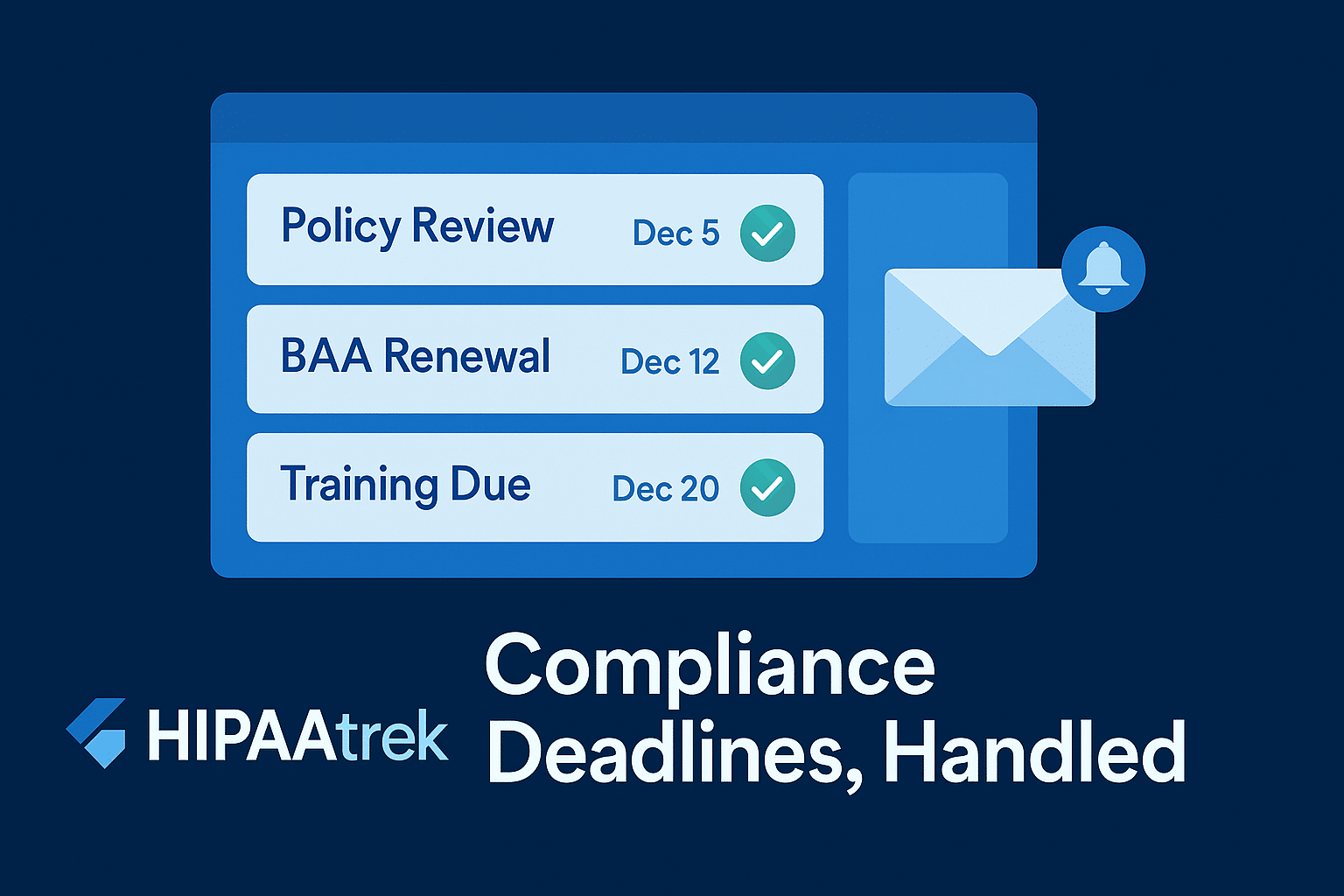
When your product is a staffed service, such as tele-nursing, remote scribes, or clinic management, policies and deadlines—not code—pose the main risk. HIPAAtrek turns HIPAA into an assignable, trackable project plan.
- Task board. Every requirement appears as a task with an owner, due date, and auto-reminders. You see upcoming policy reviews and expiring BAAs before they become emergencies.
- Policy and training hub. Edit expert-written templates, route them for e-signature, and push short training videos to staff. Completion certificates live inside the platform for audits.
- No-code simplicity. There are no API keys or DevOps hooks. Onboarding is as easy as adding users and choosing a policy set.
Pricing on G2 starts at $6 to $10 per user per month, and the company reports serving hundreds of healthcare organizations with teams as small as 5. If your biggest risk is a missed renewal rather than a rogue S3 bucket, HIPAAtrek’s disciplined reminders keep operations—and auditors—happy.
Takeaway: HIPAAtrek replaces sticky notes and shared drives with a living task board, so your service team never misses a compliance deadline.
Turning Features Into Protection: Your Next Steps
Plug-and-play platforms shorten the journey, but they don’t fly solo. After you choose a tool, spend an afternoon mapping ownership: who reviews alerts, who updates policies, and how often leadership scans the dashboard. Set a simple cadence (weekly checks, monthly policy touch-ups) so the software’s signals become action.
Treat onboarding as the starting gun, not the finish line. Within the first two weeks, run a quick incident tabletop, test your breach-notification workflow end to end, and file the artifacts (notes, screenshots, timestamps) in your evidence library to reinforce these tips for ensuring HIPAA compliance. Regulators look kindly on teams that can prove they practiced before game day.
Fold compliance wins into your go-to-market. Continuous-monitoring screenshots or a Compliancy Group Seal of Compliance calm procurement teams and shorten security reviews—often more than features alone.
Bottom line: Plug-and-play is worth it when it replaces scattered spreadsheets with structured evidence and automated checks—and your team owns the habits. Pick the platform that fits your growth curve, keep a steady review rhythm, and turn HIPAA from a blocker into a competitive edge.
Conclusion
Plug-and-play HIPAA tools are absolutely worth it when you treat them as accelerators, not autopilot. They shrink timelines, convert scattered evidence into living dashboards, and help you unlock deals faster than a consultant-led slog—as long as someone on your team owns alerts, policies, and practice drills. Use the rubric above to shortlist two options that fit your stack, budget, and roadmap, run demos, and commit to a simple RACI for who reviews what. Do that, and you’ll turn HIPAA from a blocker into a repeatable trust engine that speeds sales instead of slowing shipping.
FAQ
1) Can software alone make us “HIPAA compliant”?
No. Software automates evidence and monitoring, but you still need to approve policies, run training, and rehearse incident response.
2) How fast can a lean startup get audit-ready with these tools?
Many teams reach credible HIPAA readiness in weeks, not months, if they connect core integrations on day one and assign clear owners.
3) Do we still need a Business Associate Agreement (BAA)?
Yes. Always sign a BAA with any vendor handling PHI and keep it in your evidence library; auditors will ask for it.
4) What should we budget at the seed stage?
Expect low hundreds per month for admin-focused tools and low five figures annually for automation suites; actual quotes vary by seats and added frameworks.
5) Which type of tool fits our team?
Engineering-heavy teams often benefit from automation and infra-secure hosting; ops-heavy or non-technical teams tend to prioritize guided checklists and live coaching.